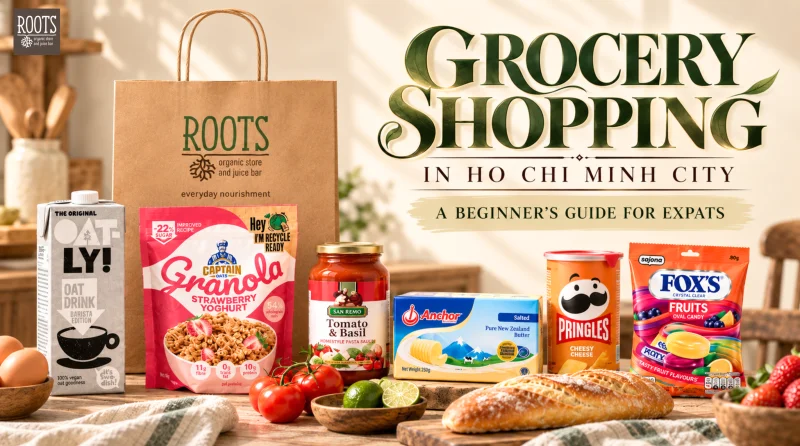
Grocery shopping in Ho Chi Minh City gets much easier once you stop looking for one store that does everything.
For many expats, the most practical routine is a mix: local markets or supermarkets for everyday Vietnamese ingredients and fresh food, a grocery store for regular packaged staples, and a specialty retailer such as ROOTS when you need imported foods, familiar international brands or ingredients that are harder to find locally.
If you have just moved to HCMC, you do not need to understand every supermarket chain in your first week. Start with the foods you use most often, see what is easy to find near you, and only add another shopping option when there is a clear gap in your basket.
This guide focuses on how to build that routine: where to buy everyday groceries, when local options make sense, when an imported grocery store becomes useful, what to check on unfamiliar food labels and how to avoid turning grocery shopping into a cross-city mission every weekend.
Where should you buy groceries in Ho Chi Minh City?
There is no single best place to buy every grocery item in HCMC. The easiest approach is to match the type of store to what you are actually trying to buy.
|
If you need... |
Start with... |
Why it fits |
|
Fresh Vietnamese vegetables, herbs and fruit |
Local market or supermarket |
Easy access to everyday local ingredients |
|
Rice, noodles, sauces and basic pantry food |
Supermarket or grocery store |
Convenient for regular household staples |
|
Imported cereals, sauces, dairy alternatives or familiar international brands |
ROOTS or another specialty grocery store |
More useful when the exact product or brand matters |
|
A larger household restock |
Supermarket or hypermarket |
Practical for a broad basket of food and household items |
|
Drinks, snacks or a forgotten item |
Convenience store |
Better for quick top-ups than full grocery shopping |
|
Products you already buy regularly |
Online grocery delivery |
Useful when you already know the exact item and pack size |
The point is not to choose one winner.
A local market can be excellent for vegetables and herbs but not particularly useful when you are looking for a specific imported cereal. A large supermarket can cover most weekly basics but still miss the exact cheese, milk alternative or cooking ingredient you are used to.
That is where a specialty grocery store earns a place in the routine.
ROOTS focuses on imported and specialty grocery products, so it makes the most sense as part of the basket where product choice matters rather than as a replacement for every other way of shopping in HCMC.
If you are still getting used to prices, markets and fixed-price shopping, the separate ROOTS guide to shopping in Vietnam, markets and bargaining explains those basics in more detail.
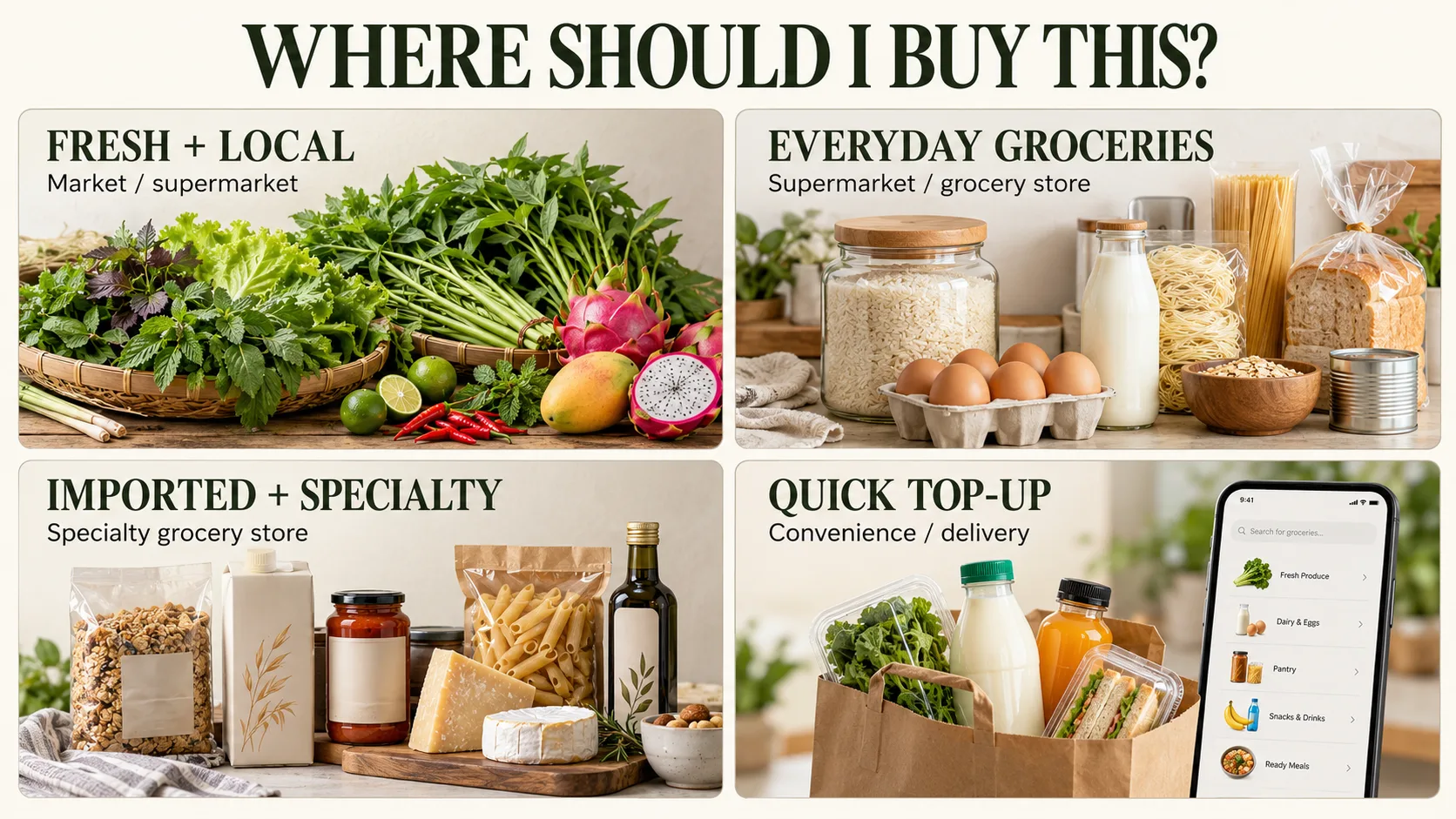
A simple grocery routine for your first weeks in HCMC
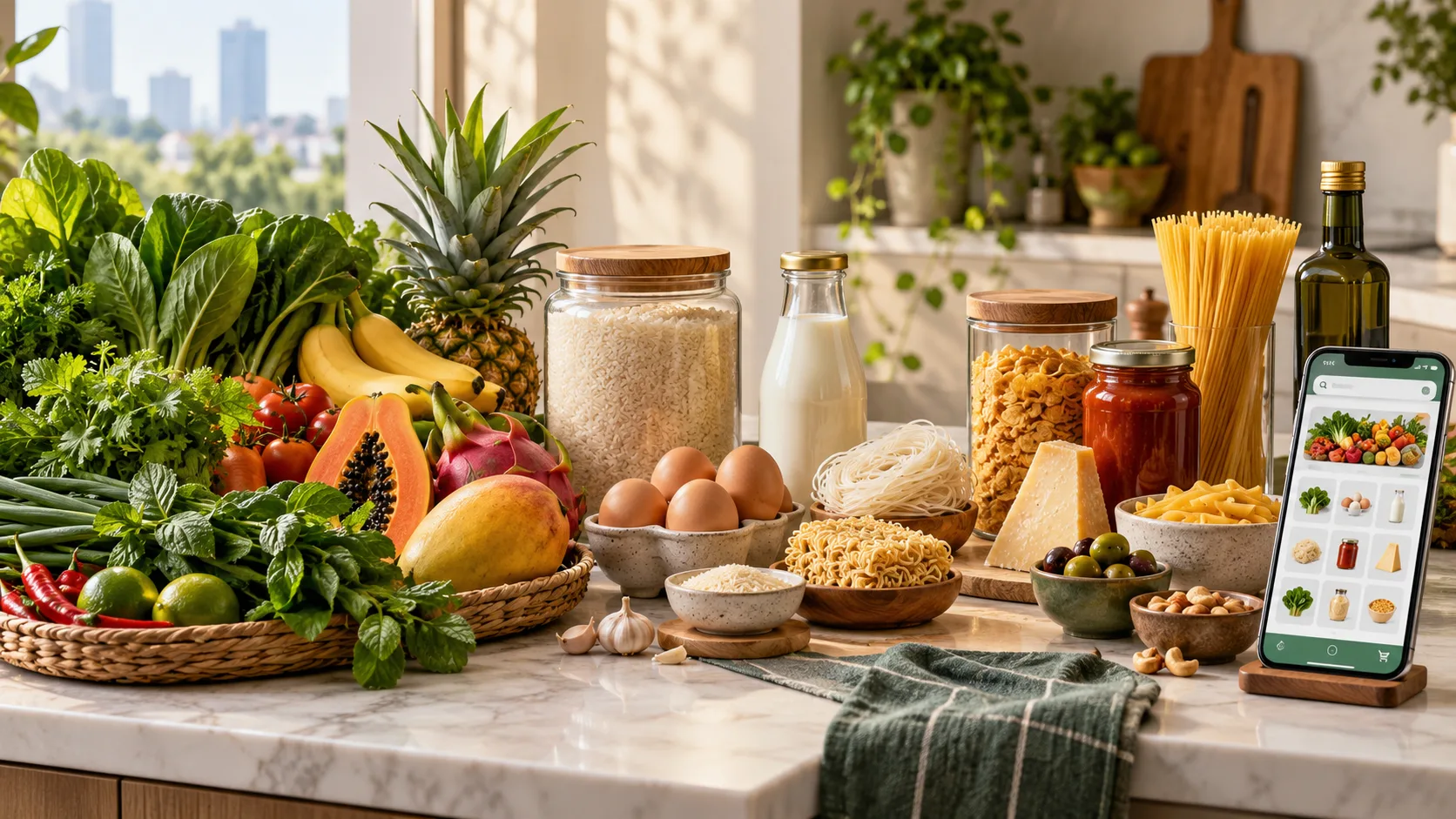
You do not need to build the perfect grocery system immediately.
A simple four-part routine is enough for most newcomers.
1. Start with the foods you use every week
Your first shop should cover the basics rather than recreate your entire home-country pantry.
That may include:
-
rice, noodles or bread;
-
eggs;
-
milk or a milk alternative;
-
vegetables and fruit;
-
cooking oil;
-
basic sauces and seasonings;
-
breakfast food;
-
coffee or tea;
-
snacks;
-
a few household essentials.
Once you have done one or two grocery shops, the gaps become much easier to see.
You may discover that local rice, vegetables and sauces are easy to buy nearby, while the cereal, cheese, oat drink or pasta sauce you normally use requires a more specialized store.
That is a much better way to build your routine than deciding in advance that everything needs to come from one supermarket.
2. Use local shops for foods that do not need a specific brand
Many everyday groceries in Vietnam do not require an imported equivalent.
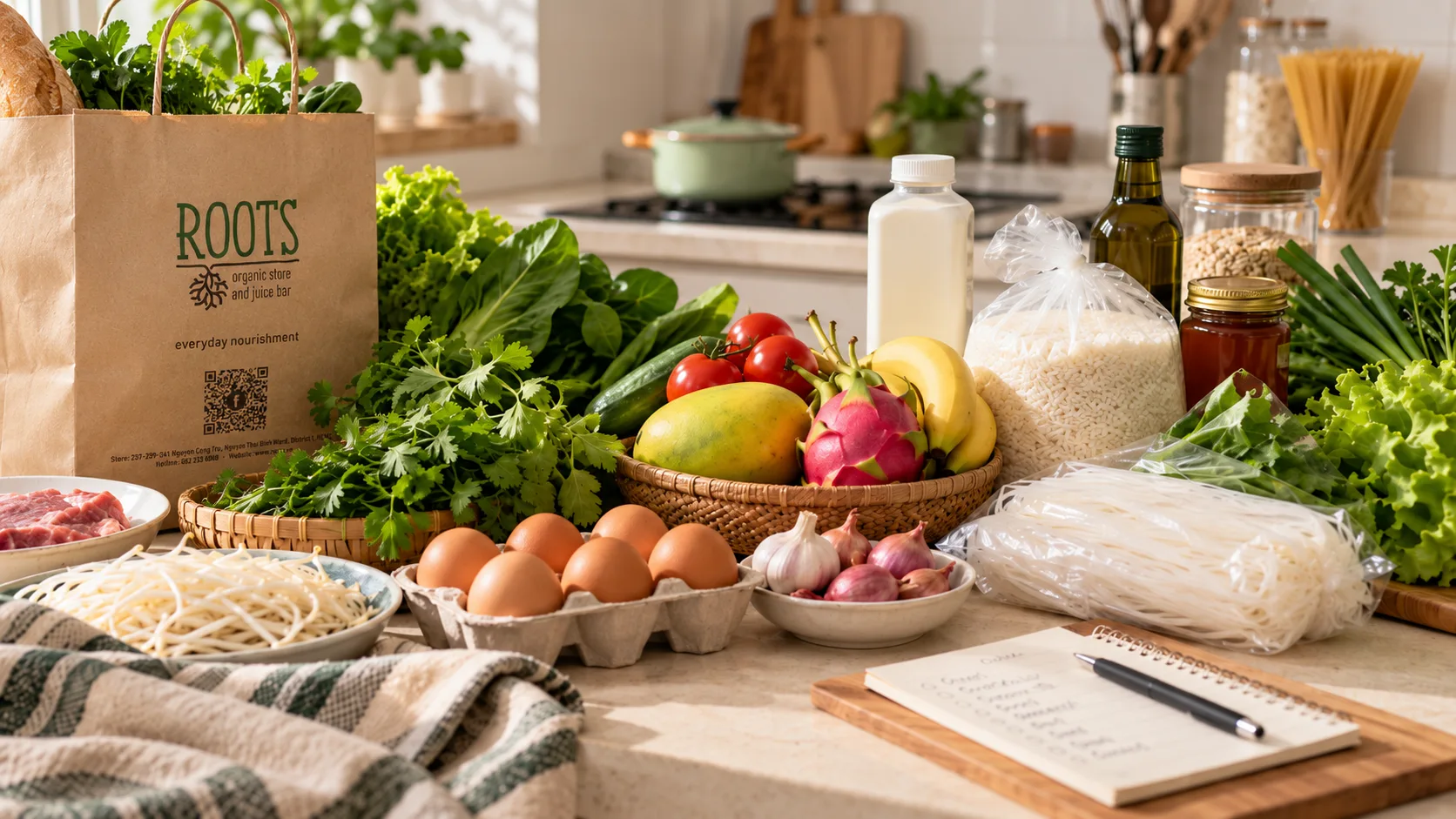
Fresh vegetables, tropical fruit, rice, noodles, herbs, garlic, shallots and many basic pantry ingredients are easy places to start buying locally.
For newcomers, this is also a useful way to learn what Vietnamese ingredients actually look like before ordering them online.
If you plan to cook Vietnamese food at home, start with versatile pantry ingredients rather than buying every unfamiliar sauce you see. The ROOTS guide to essential Vietnamese ingredients for home cooks explains how staples such as fish sauce, rice noodles, rice paper and common seasonings fit into everyday cooking.
3. Make a separate list for harder-to-find items
This is where specialty grocery shopping becomes useful.
Keep a second list for products where the exact style, brand or ingredient matters, for example:
-
a particular breakfast cereal;
-
oat, almond or other non-dairy drinks;
-
European-style cheese;
-
an imported sauce;
-
baking flour or another specific baking ingredient;
-
international snacks;
-
a familiar brand from home;
-
ingredients required for a particular recipe.
Instead of visiting several general supermarkets hoping one of them carries the item, check a specialty grocery store directly.
ROOTS is most useful in this part of the routine because its selection includes imported and international grocery products across categories such as breakfast food, pantry ingredients, drinks, snacks and specialty items.
4. Use online shopping once you know what you want
Online grocery shopping becomes much more useful after the discovery stage.
If you already know the brand, flavor and pack size you normally buy, there is little value in physically searching the same shelf every week.
ROOTS supports online ordering, which makes it a practical option for repeat purchases of specialty or imported groceries when you already know what you need.
A physical store visit is still useful when you are comparing unfamiliar products, checking labels or exploring new ingredients. Online ordering works best when the decision has already been made.
Where does ROOTS fit into an expat grocery routine?
ROOTS makes the most sense when your grocery list moves beyond basic local staples.
It is not necessary to buy every tomato, bag of rice or bunch of herbs from an imported grocery store. Those products may already be easy to find near your home.
The stronger use case is the part of the basket where you care about a specific type of product.
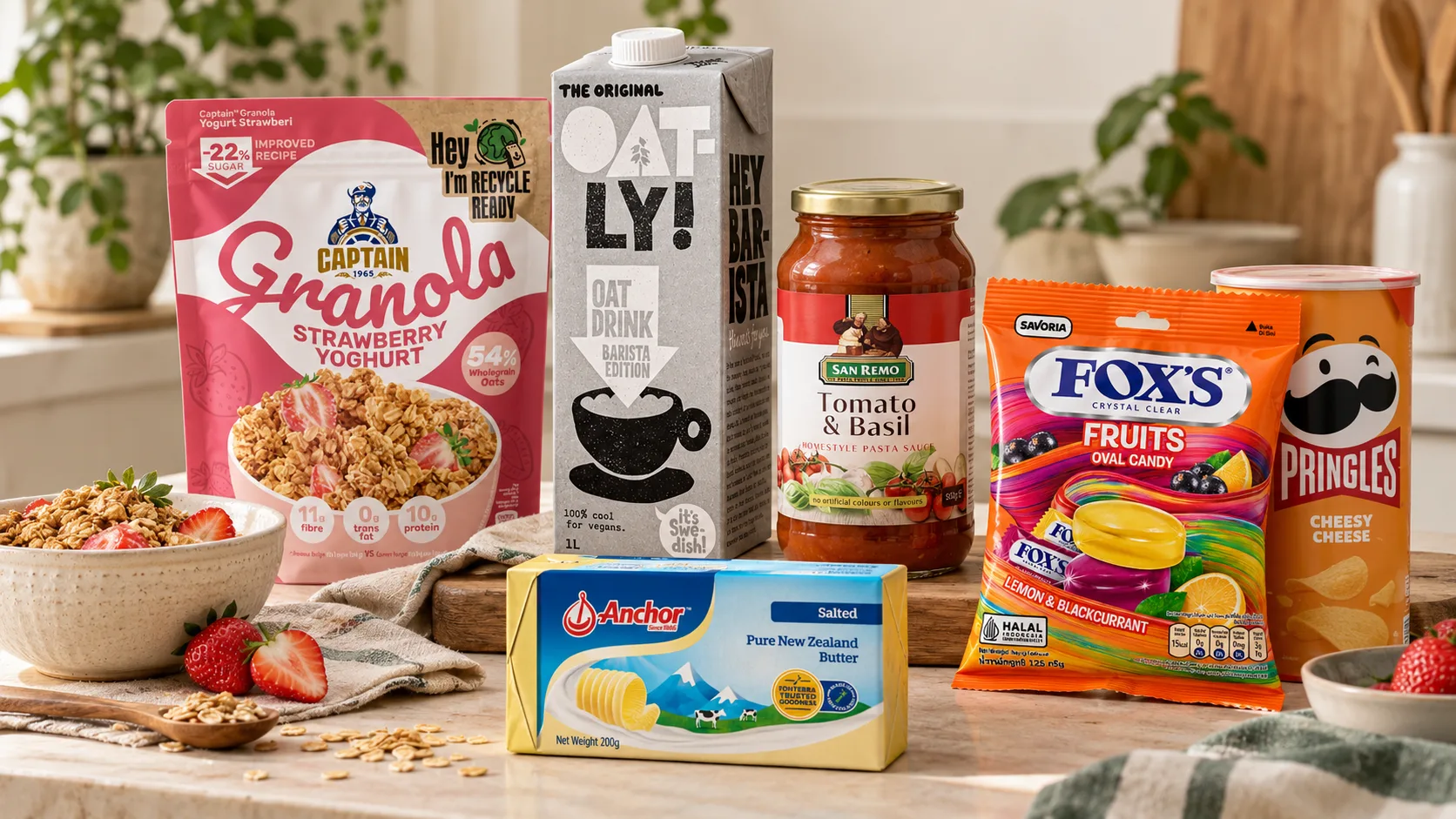
Breakfast foods
Breakfast is often one of the first categories where newcomers notice a difference between what they normally buy and what is easy to find locally.
If your usual breakfast includes granola, oats, international cereal brands or other packaged breakfast foods, a specialty grocery store can save time.
ROOTS currently carries a broad breakfast cereal range that includes products from brands such as Kellogg’s, Nestlé, Calbee, Captain Oats, Quaker and Sanitarium.
If breakfast is one of the categories you struggle to recreate after moving to HCMC, browsing the breakfast cereal selection at ROOTS is a more targeted next step than checking unrelated supermarkets one by one.
Milk alternatives and specialty drinks
Milk alternatives are another category where the exact product style can matter.
Someone making a latte, for example, may care about whether the oat drink is designed for coffee rather than simply wanting any oat beverage available.
ROOTS lists products such as Oatly Oat Drink Barista Edition 1L, which is specifically positioned for use with coffee and tea.
That is the type of purchase where a specialty retailer becomes useful: not because an imported product is automatically better, but because the shopper is looking for a particular use or product style.
Pantry and cooking ingredients
The same logic applies to cooking.
If you only need basic rice, garlic or soy sauce, there is little reason to complicate the trip.
But if a recipe calls for a particular flour, imported seasoning, sauce, canned ingredient or specialty product, searching a store with a broader international range may be faster.
ROOTS' current assortment includes pantry and specialty items ranging from flours and seasonings to canned foods and international cooking products.
For an expat who cooks a mix of Vietnamese and international dishes, this makes ROOTS more useful as a gap-filler than as a one-store-fits-all solution.
Snacks and familiar brands
Snacks are less essential, but they matter when you have just moved abroad.
Sometimes you simply want a biscuit, cereal, chocolate, chip or drink that tastes familiar.
Specialty grocery stores tend to be useful here because the decision is often brand-specific rather than category-specific.
A generic bag of crackers may be easy to find anywhere. Finding the exact international snack you already know is a different search task.
Should you buy local or imported groceries in Vietnam?
Do not treat this as a quality hierarchy.
Imported does not automatically mean better, and local does not automatically mean the cheaper compromise.
The useful question is:
Does the product need to be specific for what you are trying to do?
Choose local comfortably when:
-
the ingredient is common in Vietnamese cooking;
-
freshness matters more than brand;
-
several acceptable alternatives exist;
-
you are cooking local dishes;
-
the exact country of origin is not important to the recipe.
Look for an imported or specialty version when:
-
the recipe requires a particular ingredient style;
-
the brand matters to you;
-
you need a specific cereal, cheese, sauce or milk alternative;
-
you are cooking a dish that depends on a product not commonly used in Vietnam;
-
you have already tried local alternatives and they do not fit the result you want.
This simple distinction keeps imported grocery shopping useful without making it the default for everything.
What should you buy locally when you first arrive?
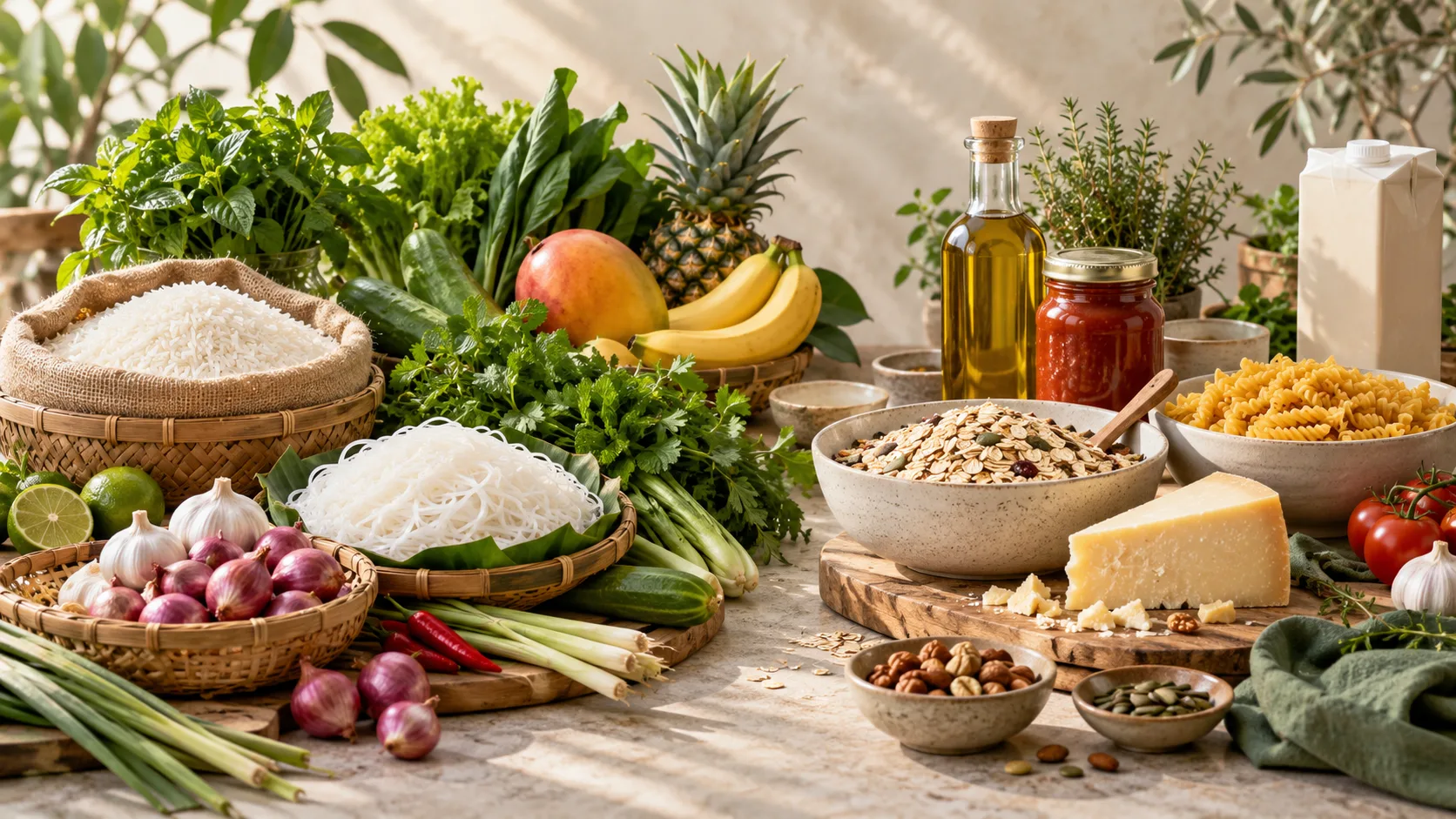
If you are setting up a kitchen in HCMC, start with foods that are versatile and easy to use.
A practical first local basket might include:
-
rice;
-
one type of rice noodle;
-
eggs;
-
garlic and shallots;
-
cooking oil;
-
fresh vegetables;
-
fresh herbs;
-
seasonal fruit;
-
fish sauce;
-
soy sauce;
-
rice vinegar.
Then add more specialized ingredients when a recipe actually calls for them.
Vietnamese grocery aisles can be confusing at first because products that look related may serve different purposes.
For example, nước mắm (fish sauce) and nước chấm (prepared dipping sauce) are not automatically interchangeable. Different rice noodles can also look similar on the shelf while being intended for very different dishes.
The guide to 15 essential Vietnamese ingredients for home cooks is a useful next step if you want to build a local pantry without buying too much at once.
Fruit is another easy place to start shopping locally. Vietnam has a wide range of tropical fruit, but availability changes through the year. The ROOTS Vietnamese seasonal fruit calendar can help you see what is typically in season and how to choose fresh fruit.
What should you check before buying packaged or imported food?
Imported food can come with more than one layer of information: the original packaging and a supplementary Vietnamese label.
Before putting an unfamiliar product in your basket, check the parts that affect your decision.
Product name and version
Similar packages may contain different flavors, formulations or sizes.
Make sure you are buying the exact version you intended, especially when the front packaging is in another language.
Pack size
Do not judge only by the size of the box or bag.
Check the listed quantity so you can compare products properly.
Manufacturing and expiry information
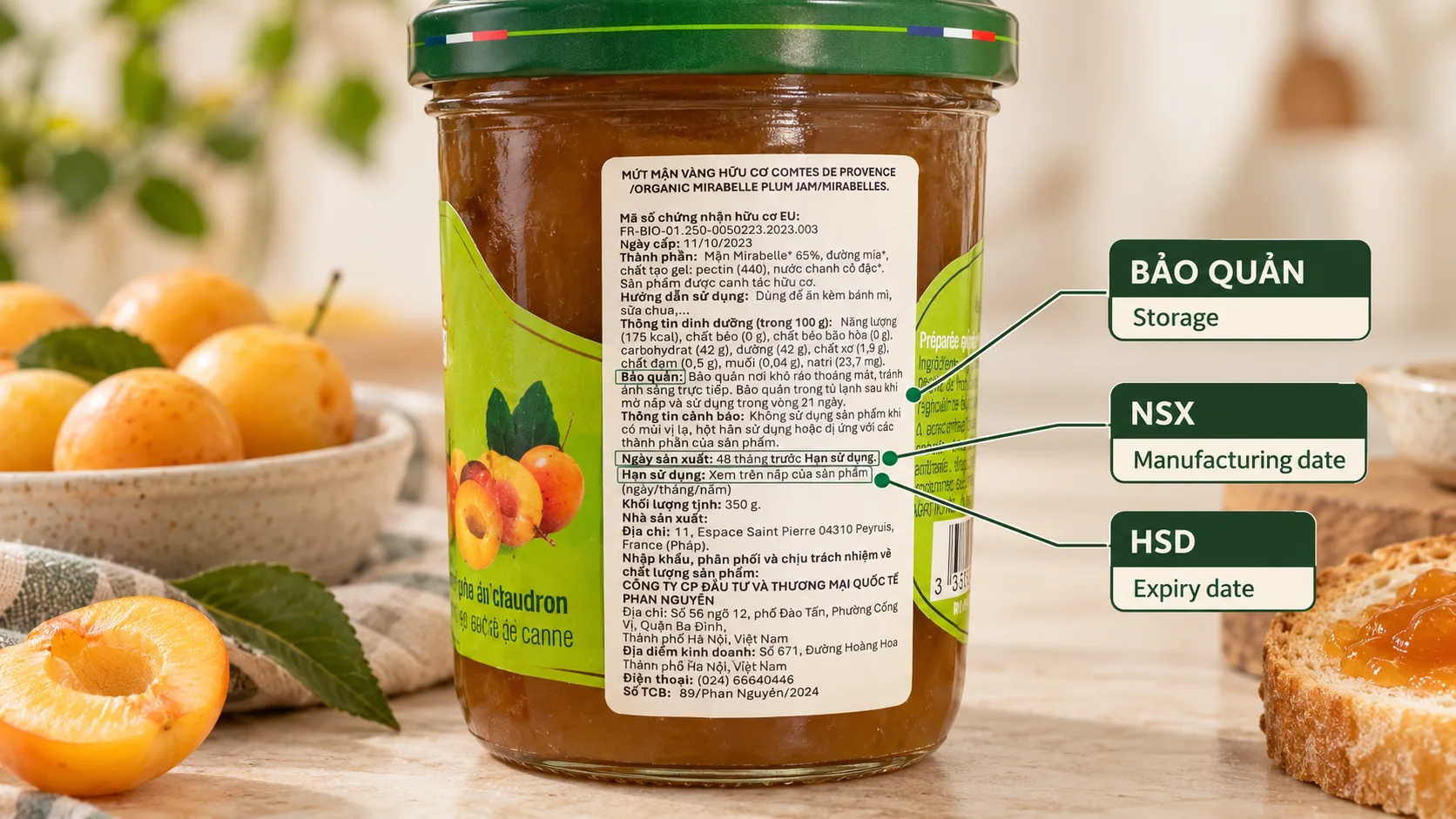
Common Vietnamese label terms include:
-
NSX — ngày sản xuất: manufacturing date;
-
HSD — hạn sử dụng: expiry date.
Check the date format carefully rather than assuming it follows the convention you use at home.
Storage instructions
Look for bảo quản, meaning storage instructions.
This matters particularly for chilled or frozen food and for products that require refrigeration after opening.
Ingredients and allergens
If you need to avoid a particular ingredient, check the ingredient and allergen information rather than relying only on the product name or front-of-pack claims.
Country of origin
Imported packaging, an international brand name and country of manufacture are not always the same thing.
If origin matters to your purchase, check the label rather than guessing from the branding.
Can you order groceries online in Ho Chi Minh City?
Yes. Online grocery shopping is a practical part of life in HCMC, especially once you already know the products you buy regularly.
The easiest way to decide whether to shop in person or online is to separate discovery from repetition.
Shop in person when:
-
you are comparing unfamiliar products;
-
you want to read several labels;
-
you are exploring Vietnamese ingredients;
-
you want to select fresh produce yourself;
-
you are still learning which brands or pack sizes suit you.
Order online when:
-
you know the exact product;
-
it is a repeat purchase;
-
you are restocking packaged groceries;
-
you need a specific imported item;
-
you would rather avoid another store trip.
ROOTS' online store is particularly useful for the second group because shoppers can search directly for specialty and imported items instead of using delivery only for generic household basics.
Availability can change, so checking the product page before building the rest of your grocery list around one item is still a good habit.
Your first grocery shop in HCMC: a simple checklist
If you have just arrived, keep the first week uncomplicated.
Before you shop
-
Choose one nearby place for your everyday groceries.
-
Write down the foods you actually use during a normal week.
-
Separate “I need this exact product” from “any suitable version is fine.”
-
Avoid buying an entire pantry just because the ingredients are unfamiliar.
During the shop
-
Start with everyday staples.
-
Compare pack sizes on unfamiliar products.
-
Check NSX and HSD where relevant.
-
Read storage instructions.
-
Try local alternatives where the exact brand does not matter.
-
Note anything important you cannot find.
After the shop
Sort the missing items into three groups.
Fresh or local ingredient?
Try a local market, produce shop or another nearby grocery store.
Specific international product?
Check a specialty grocery store such as ROOTS.
Regular product you simply forgot?
Order it online or pick it up from a nearby convenience store.
After a few weeks, this becomes your personal grocery map of Ho Chi Minh City.
You may buy vegetables in one place, everyday pantry food in another and imported products from ROOTS. That is not an inefficient system — it is usually more practical than forcing every grocery need into a single store.
Conclusion
The easiest way to shop for groceries in Ho Chi Minh City is to divide the basket by need.
Buy local where local works well. Use a regular grocery store for the everyday basics. Save specialty stores for the products where brand, origin or product style actually matters.
For expats looking for imported breakfast foods, specialty pantry ingredients, international snacks, milk alternatives or familiar brands, ROOTS can fill the part of the grocery basket that is harder to solve through everyday local shopping.
Once you know which items belong in which store, grocery shopping in HCMC stops feeling unfamiliar and becomes a routine.