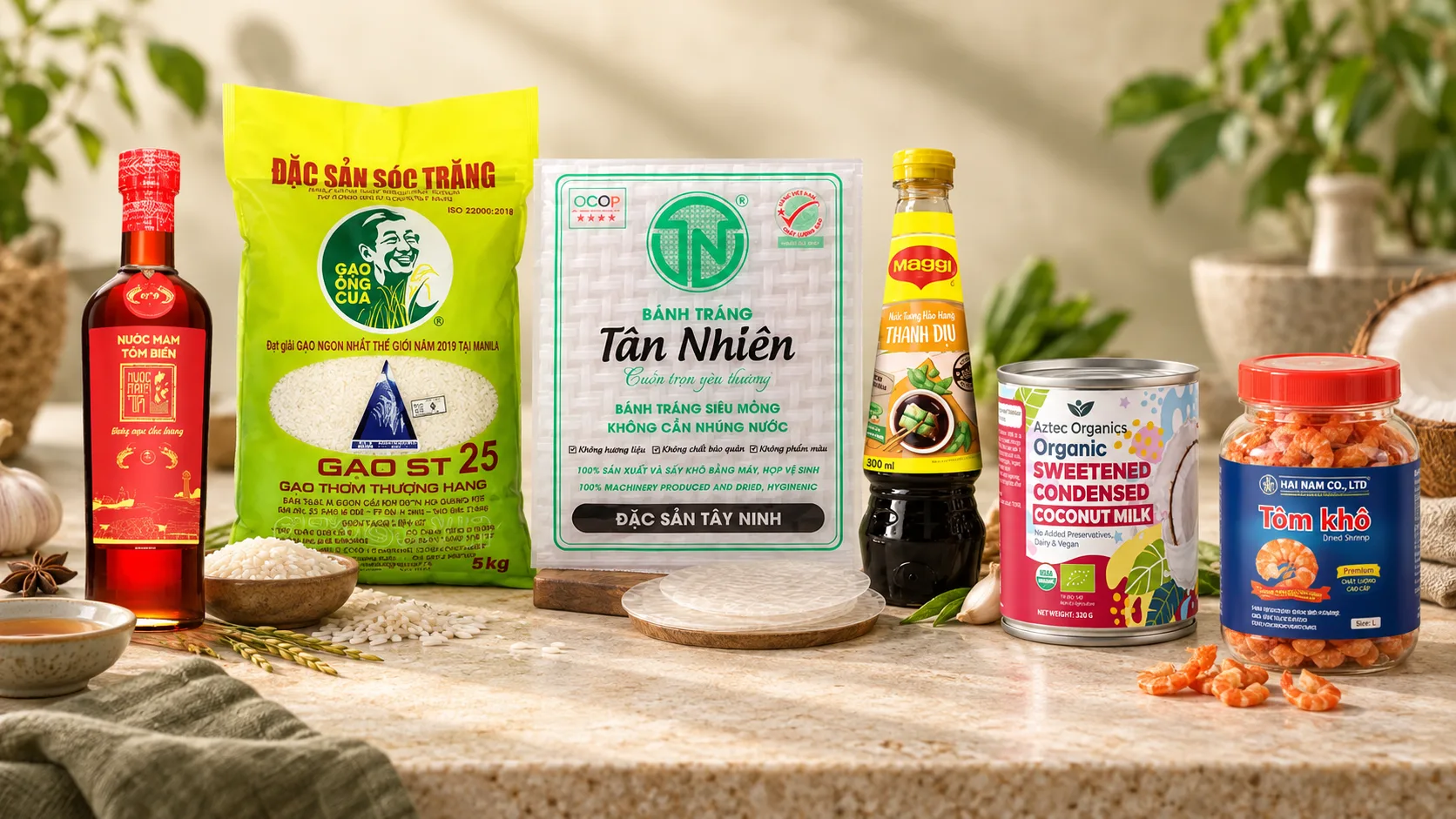
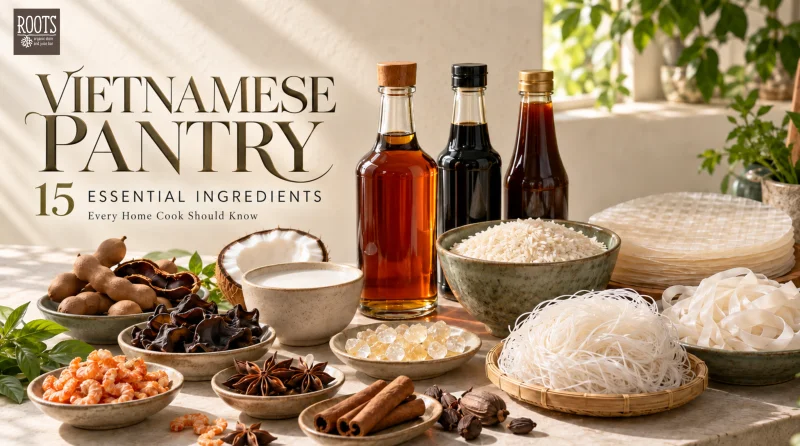
Essential Vietnamese ingredients include fish sauce, rice, rice noodles, rice paper, soy and oyster sauces, fermented seasonings, dried goods, and aromatic spices. Beginners do not need to buy everything at once: start with versatile staples you can use across several dishes, then add more specialized ingredients as your Vietnamese cooking repertoire grows.
The challenge is that a Vietnamese grocery aisle can look deceptively complicated. Bún and bánh phở are both rice noodles but behave differently; nước mắm and nước chấm are related but are not the same product; and some ingredients are everyday workhorses while others are useful only for specific dishes.
This guide explains 15 essential Vietnamese pantry staples, what each one does, which dishes use it, and which Vietnamese ingredients are worth buying first.
What Are the Essential Vietnamese Ingredients?
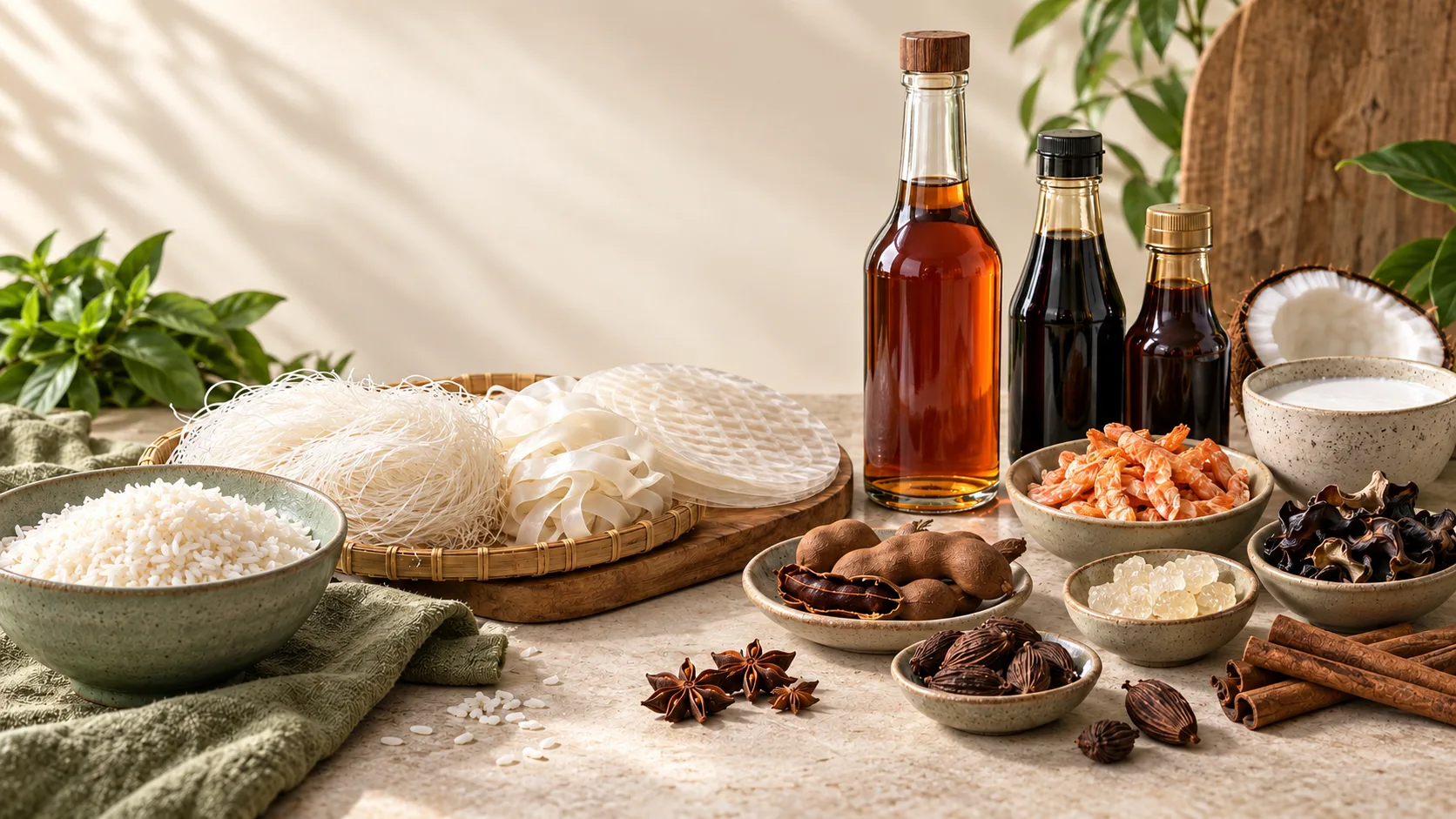
The most useful Vietnamese ingredients fall into several functional groups: fermented seasonings for savory depth, rice products for the meal's base, sweet and sour ingredients for balance, and dried goods or spices that build aroma and texture. A practical Vietnamese pantry should help you cook multiple dishes rather than simply collect unfamiliar bottles and packets.
Fresh herbs and aromatics are equally important to Vietnamese food, but they are better treated separately from shelf-stable pantry staples. Keeping that distinction clear makes the pantry easier to build, store, and actually use.
15 Vietnamese Pantry Essentials at a Glance
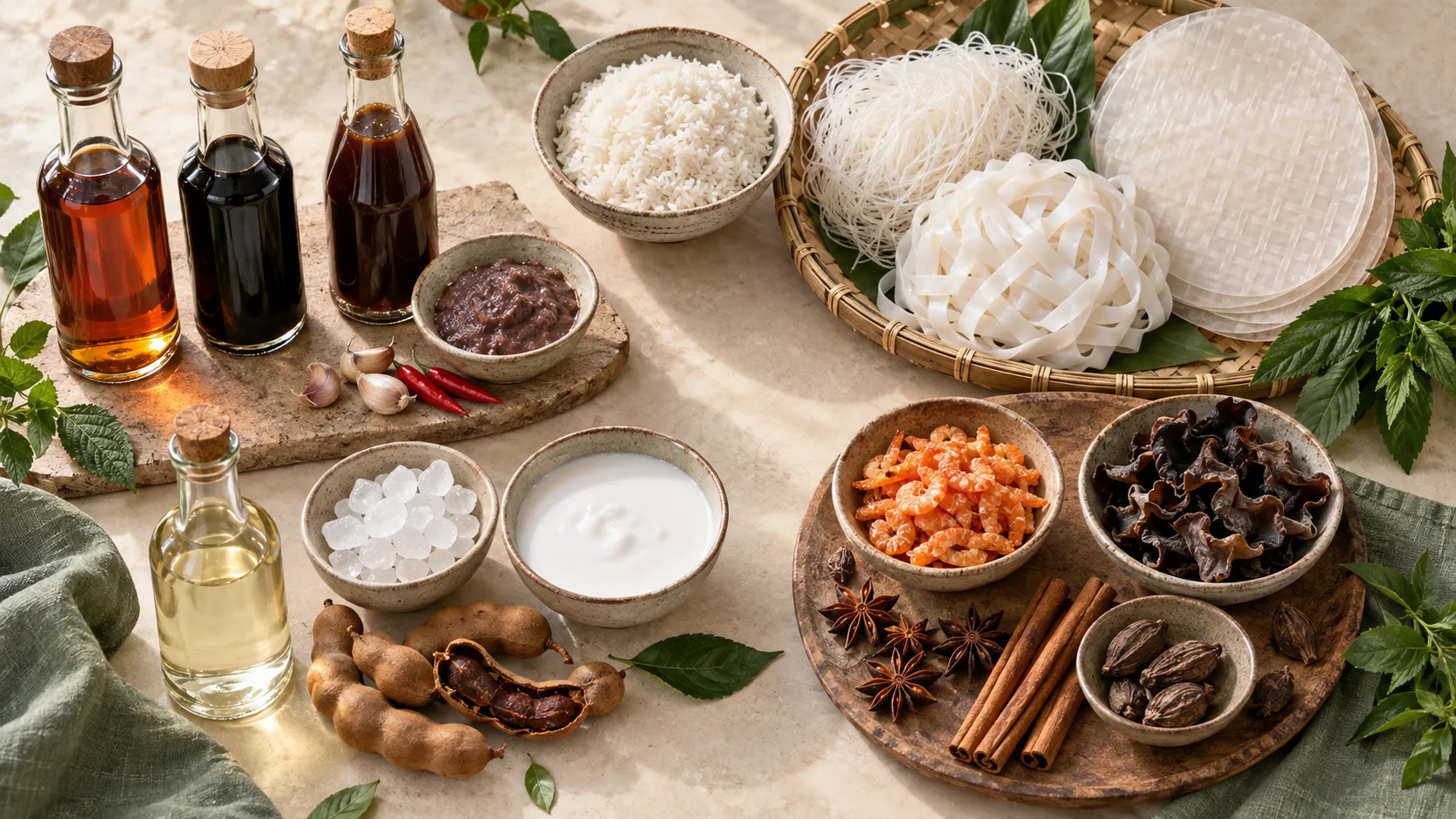
These 15 Vietnamese pantry essentials cover the ingredients that unlock a broad range of home cooking, from phở and bún dishes to spring rolls, soups, braises, stir-fries, and dipping sauces. The priority column is especially useful for beginners: “Start Here” ingredients are versatile, while “Dish-Specific” items can wait until a recipe calls for them.
|
Ingredient |
Vietnamese Name |
Main Role |
Common Uses |
Beginner Priority |
|
Fish sauce |
Nước mắm |
Salty, fermented umami |
Marinades, broths, braises, dipping sauces |
Start Here |
|
Soy sauce |
Nước tương |
Savory seasoning |
Dipping, stir-fries, vegetarian dishes |
Start Here |
|
Oyster sauce |
Dầu hào |
Savory-sweet richness |
Stir-fries, vegetables, meat |
Add Next |
|
Fermented shrimp paste |
Mắm tôm |
Intense fermented flavor |
Bún đậu, dipping sauces, regional dishes |
Dish-Specific |
|
Vietnamese rice |
Gạo |
Staple carbohydrate |
Everyday meals, cơm tấm, fried rice |
Start Here |
|
Rice vermicelli |
Bún |
Thin rice noodle |
Bún chả, noodle bowls, rolls |
Start Here |
|
Pho rice noodles |
Bánh phở |
Flat rice noodle |
Phở, stir-fried noodle dishes |
Start Here |
|
Rice paper |
Bánh tráng |
Wrapper |
Gỏi cuốn, chả giò |
Start Here |
|
Rice vinegar |
Giấm gạo |
Mild acidity |
Pickles, sauces, marinades |
Start Here |
|
Tamarind |
Me |
Fruity sourness |
Canh chua, sauces, soups |
Dish-Specific |
|
Rock sugar |
Đường phèn |
Clean sweetness |
Broths, soups, braises |
Add Next |
|
Coconut milk |
Nước cốt dừa |
Richness and sweetness |
Southern dishes, curries, desserts |
Add Next |
|
Dried shrimp |
Tôm khô |
Concentrated seafood umami |
Soups, fillings, stir-fries |
Add Next |
|
Wood ear mushrooms |
Nấm mèo / mộc nhĩ |
Crunchy texture |
Chả giò, fillings, soups |
Add Next |
|
Pho spices |
Gia vị phở |
Warm aromatic profile |
Phở and aromatic broths |
Dish-Specific |
Sauces and Ferments: The Savory Base of Vietnamese Cooking
Sauces and fermented seasonings are among the most important Vietnamese ingredients because a small amount can shape the saltiness, aroma, color, and savory depth of an entire dish. Fish sauce is the most distinctive starting point, but soy sauce, oyster sauce, and fermented shrimp products each serve different purposes.
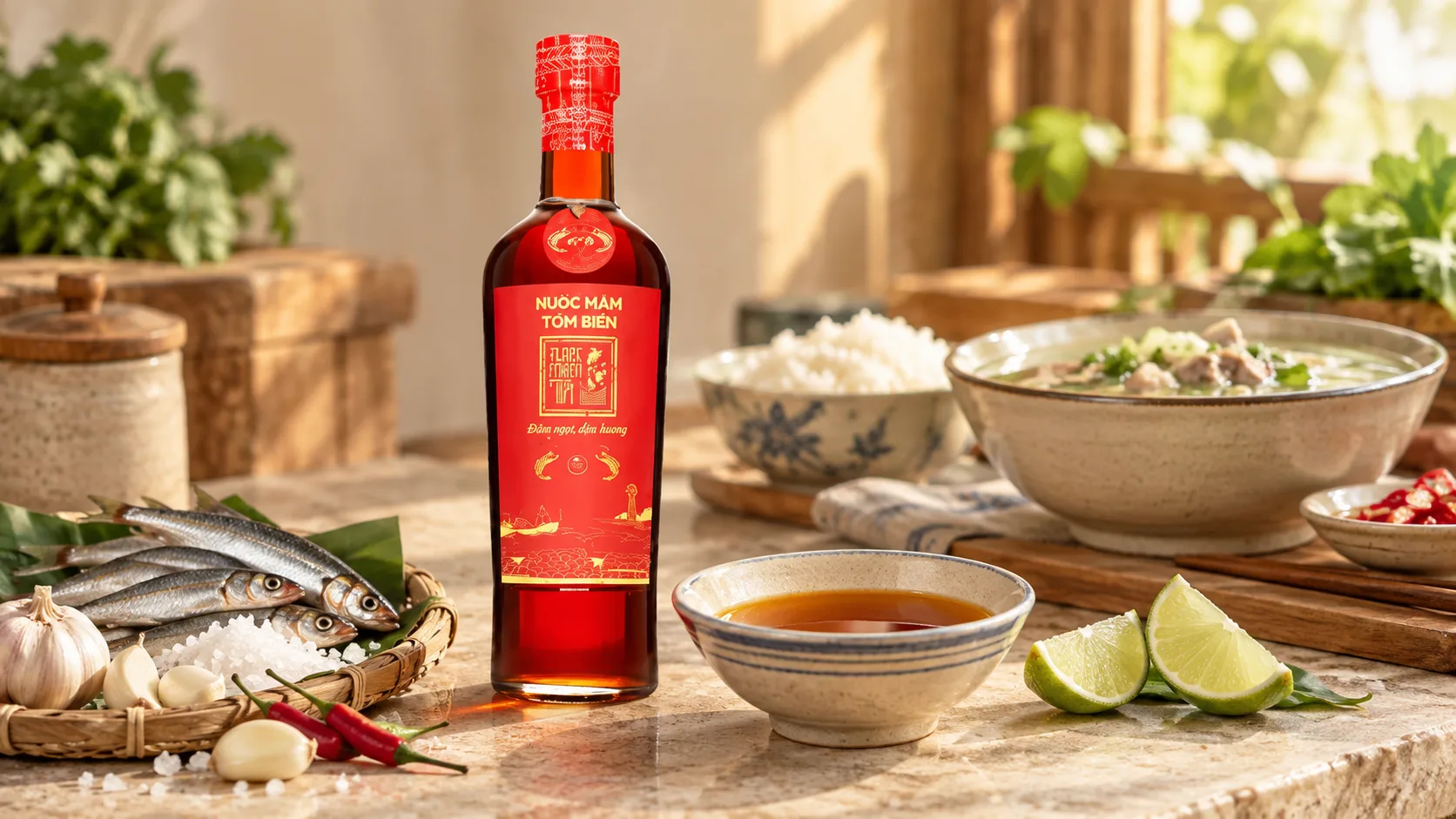
1. Fish Sauce — Nước Mắm
Fish sauce, or nước mắm, is a fermented liquid seasoning traditionally produced from fish and salt. The international Codex Standard for Fish Sauce defines fish sauce as a translucent liquid obtained through fermentation of fish and salt, with fermentation generally lasting at least six months.
In Vietnamese cooking, fish sauce can season broths, marinades, stir-fries, and braised dishes or form the savory base of a dipping sauce. Nước mắm itself should not automatically be confused with nước chấm, which usually refers to a prepared dipping sauce containing additional ingredients.
For a deeper explanation of fermentation, °N ratings, label reading, and the difference between nước mắm and nước chấm, see this Vietnamese Fish Sauce 101 guide.
2. Soy Sauce — Nước Tương
Soy sauce, or nước tương, is another versatile savory seasoning, particularly useful for dipping sauces, stir-fries, noodles, and many vegetarian dishes. It adds saltiness and fermented soy flavor, but it does not taste identical to fish sauce.
For a beginner pantry, a straightforward soy sauce can cover many everyday recipes. Check whether a recipe specifically requires light soy sauce, dark soy sauce, or another style before substituting one for another.
3. Oyster Sauce — Dầu Hào
Oyster sauce, or dầu hào, adds concentrated savory flavor with a touch of sweetness and a thicker texture than soy or fish sauce. It is particularly useful for stir-fried vegetables, meat, noodles, and quick pan sauces.
Different formulas can vary substantially, so read the ingredient list and allergen information rather than assuming every bottle has the same composition. Vegetarian mushroom-based alternatives are also available for recipes where an oyster-free seasoning is preferred.
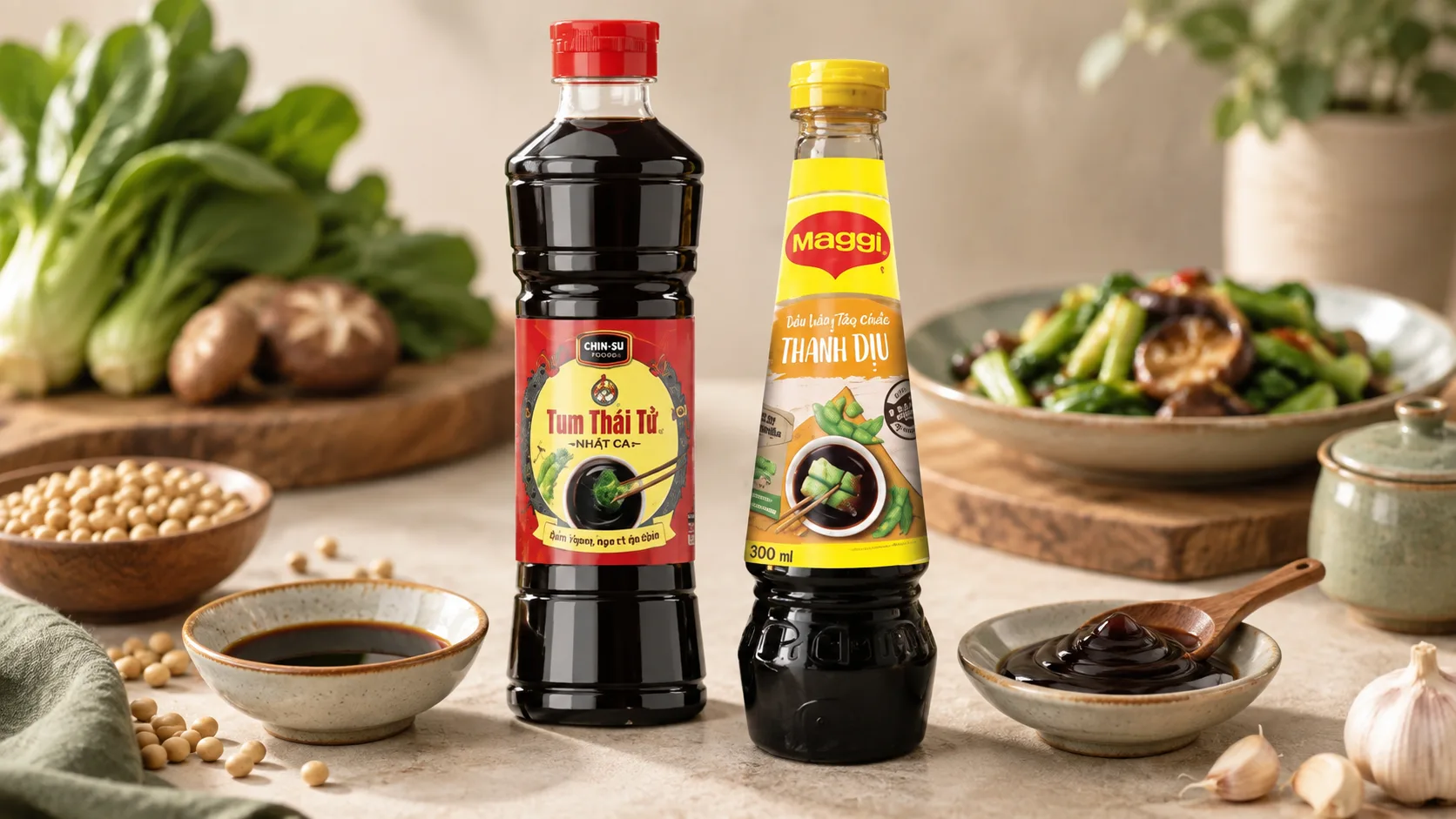
Real soy sauce and oyster sauce products shown as two different Vietnamese pantry seasonings.
4. Fermented Shrimp Paste — Mắm Tôm
Mắm tôm is a strongly aromatic fermented shrimp paste used in dishes such as bún đậu mắm tôm and in selected northern and regional preparations. Its concentrated flavor means a small amount can have a large effect.
Mắm tôm and mắm ruốc belong to the broader family of fermented shrimp products but should not automatically be treated as interchangeable. Beginners can usually wait to buy these Vietnamese ingredients until a specific recipe calls for them.
Rice, Noodles and Wrappers: The Vietnamese Pantry Foundation
Rice-based staples are foundational Vietnamese ingredients because the same cuisine may use whole rice, thin round noodles, flat noodles, or rice wrappers in completely different ways. Learning the Vietnamese names on the package is one of the easiest ways to avoid buying the wrong product.
5. Vietnamese Rice — Gạo
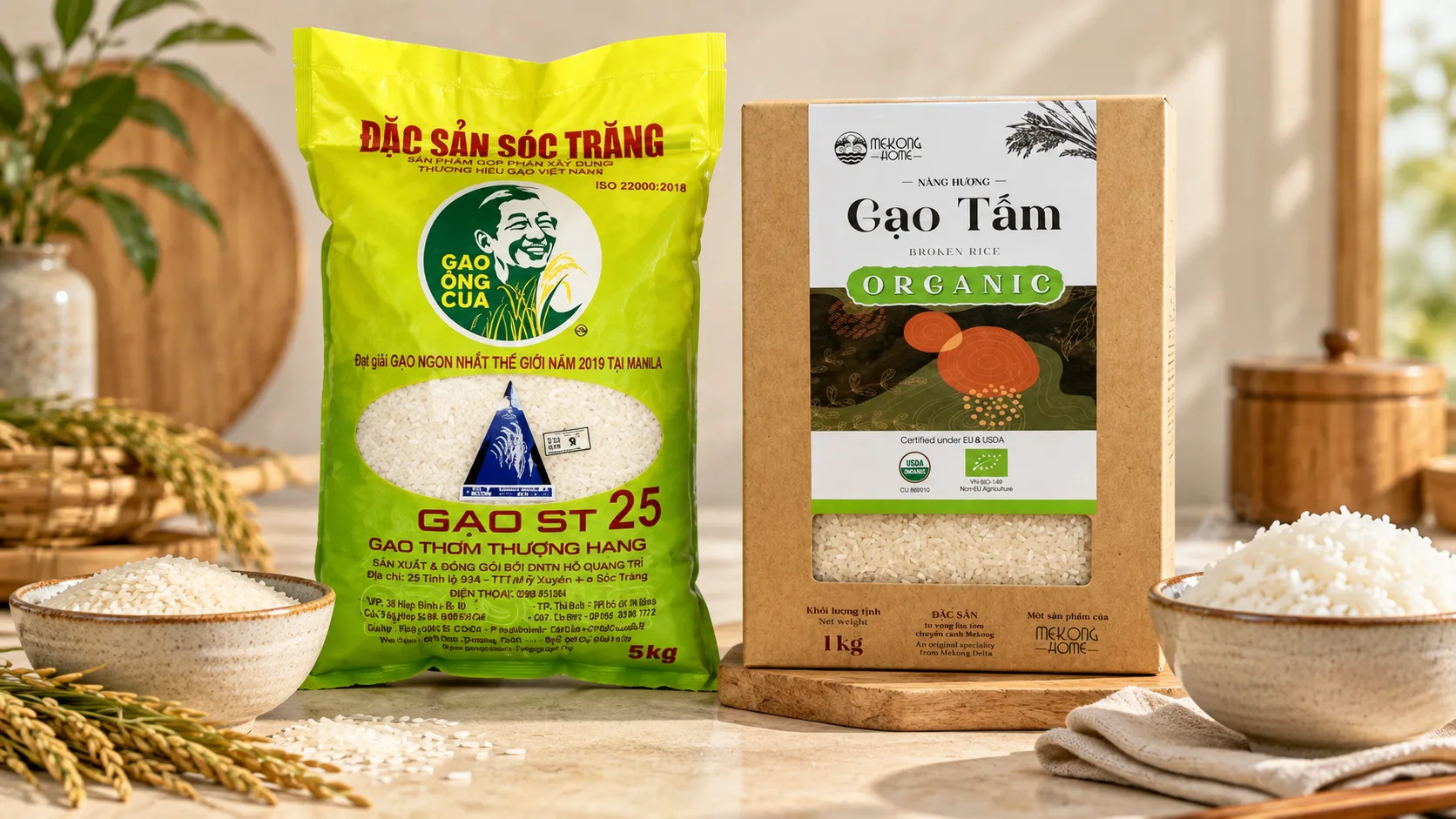
Rice is the everyday base of countless Vietnamese meals, but “Vietnamese rice” is not one single variety. Fragrant jasmine-style rice, ST25, broken rice for cơm tấm, and whole-grain options can differ in aroma, grain structure, and cooked texture.
For a first pantry, fragrant white rice is a flexible choice. If you want to understand ST25, jasmine rice, broken rice, and how to match each variety to a meal, use this Vietnamese Rice Guide rather than choosing solely from claims such as “premium.”
6. Rice Vermicelli — Bún
Bún usually refers to round rice vermicelli noodles used in dishes such as bún chả, bún thịt nướng, noodle salads, soups, and some fresh rolls. Dried versions are easy to store and make a practical pantry staple.
Cooking time varies by thickness, so package instructions are a better starting point than using one fixed boiling time for every type of bún.
7. Pho Rice Noodles — Bánh Phở
Bánh phở are flat rice noodles most closely associated with phở. They are different from the thin, round noodles normally sold as bún, even though both are rice-based.
Dried bánh phở are convenient for the pantry, while fresh versions may be available in Vietnamese markets and refrigerated sections. Choose the width according to the dish and follow the package directions to avoid over-softening the noodles.
8. Rice Paper — Bánh Tráng
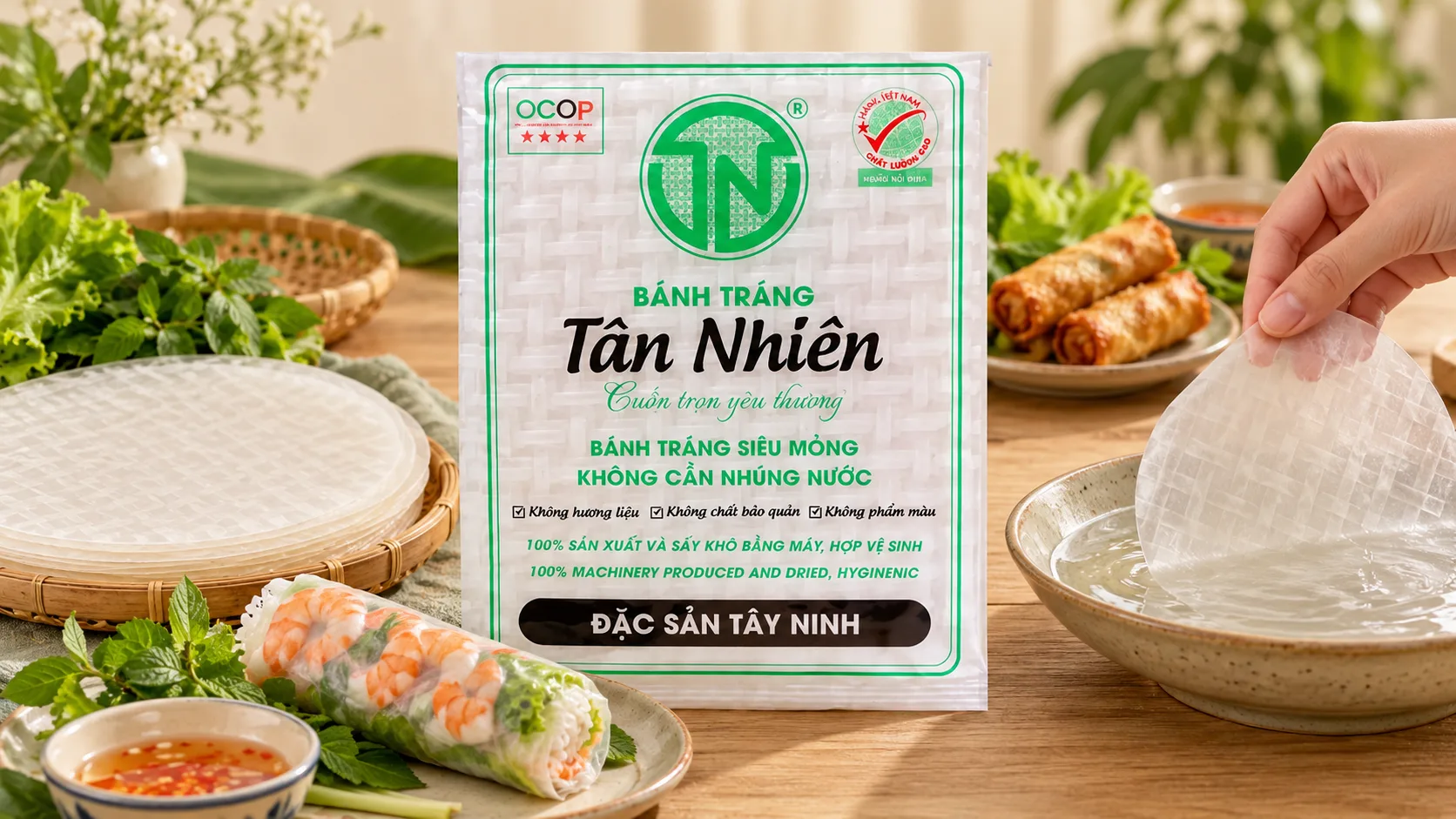
Bánh tráng, commonly called rice paper in English, is a thin wrapper used for dishes such as gỏi cuốn and various fried or fresh rolls. Rice paper comes in different diameters, thicknesses, ingredient combinations, and intended uses.
A wrapper designed for fresh rolls may behave differently from one intended for frying. Instead of choosing only by package size, check the product description and preparation instructions.
Sour, Sweet and Rich Ingredients That Balance Vietnamese Food
Vietnamese cooking often balances salty, sour, sweet, aromatic, and savory elements rather than relying on one dominant flavor. Ingredients such as vinegar, tamarind, sugar, and coconut milk therefore work as balancing tools, not just standalone flavors.
These Vietnamese ingredients are especially useful once the basic sauces, rice, and noodles are already in the pantry.
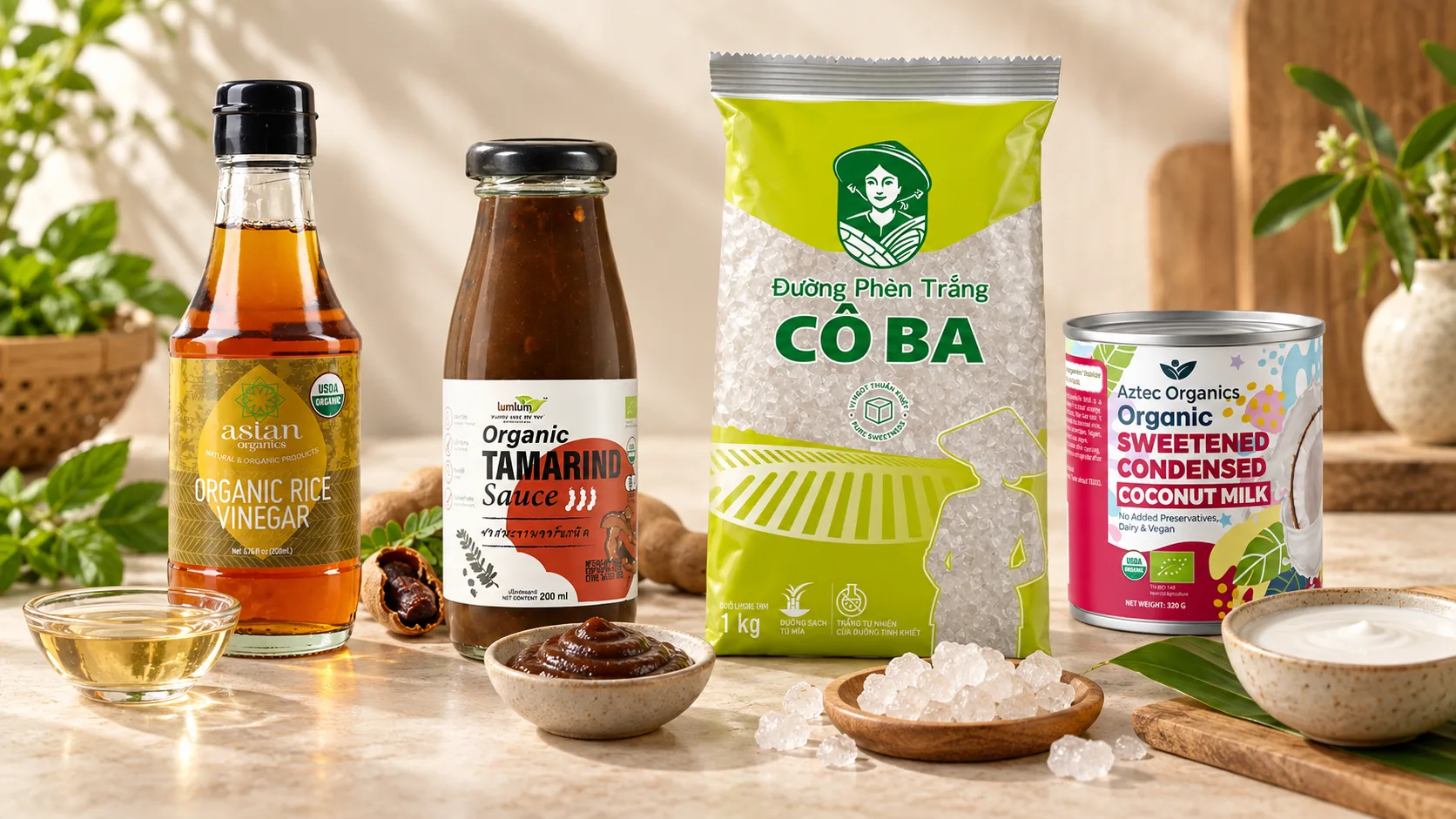
9. Rice Vinegar — Giấm Gạo
Rice vinegar provides mild acidity for quick pickles, dipping sauces, marinades, and dressings. Its softer flavor can make it useful when a recipe needs acidity without the brighter citrus character of fresh lime.
Different rice vinegars may contain added sugar, salt, or seasoning, so check whether a bottle is plain or seasoned before adjusting a recipe.
10. Tamarind — Me
Tamarind, or me, adds a fruity, rounded sourness that differs from both vinegar and lime. It is closely associated with sweet-and-sour soups such as canh chua as well as selected sauces and seafood preparations.
Tamarind may be sold as whole pulp, compressed blocks, paste, or concentrate. Concentration varies, so recipe quantities should be adjusted according to the form being used.
11. Rock Sugar — Đường Phèn
Rock sugar, or đường phèn, is commonly used when cooks want gentle sweetness in broths, soups, beverages, and some braised dishes. It dissolves into the cooking liquid rather than adding a separate aroma.
Rock sugar is useful but not mandatory for every Vietnamese recipe. Regular sugar may be more appropriate in recipes designed around it, so treat đường phèn as another cooking tool rather than a universal upgrade.
12. Coconut Milk — Nước Cốt Dừa
Coconut milk, or nước cốt dừa, brings richness and a naturally sweet coconut aroma to curries, desserts, sauces, and many southern Vietnamese preparations. Its importance varies by region and dish, so it should not be presented as equally central to every style of Vietnamese cooking.
Canned or boxed coconut milk is pantry-friendly. After opening, follow the manufacturer’s refrigeration and storage instructions.
Dried Goods and Spices Worth Keeping on Hand
Dried Vietnamese ingredients can add substantial flavor and texture without requiring frequent fresh shopping. Dried shrimp, mushrooms, and aromatic spices are especially useful because they keep well and can transform soups, fillings, and broths.
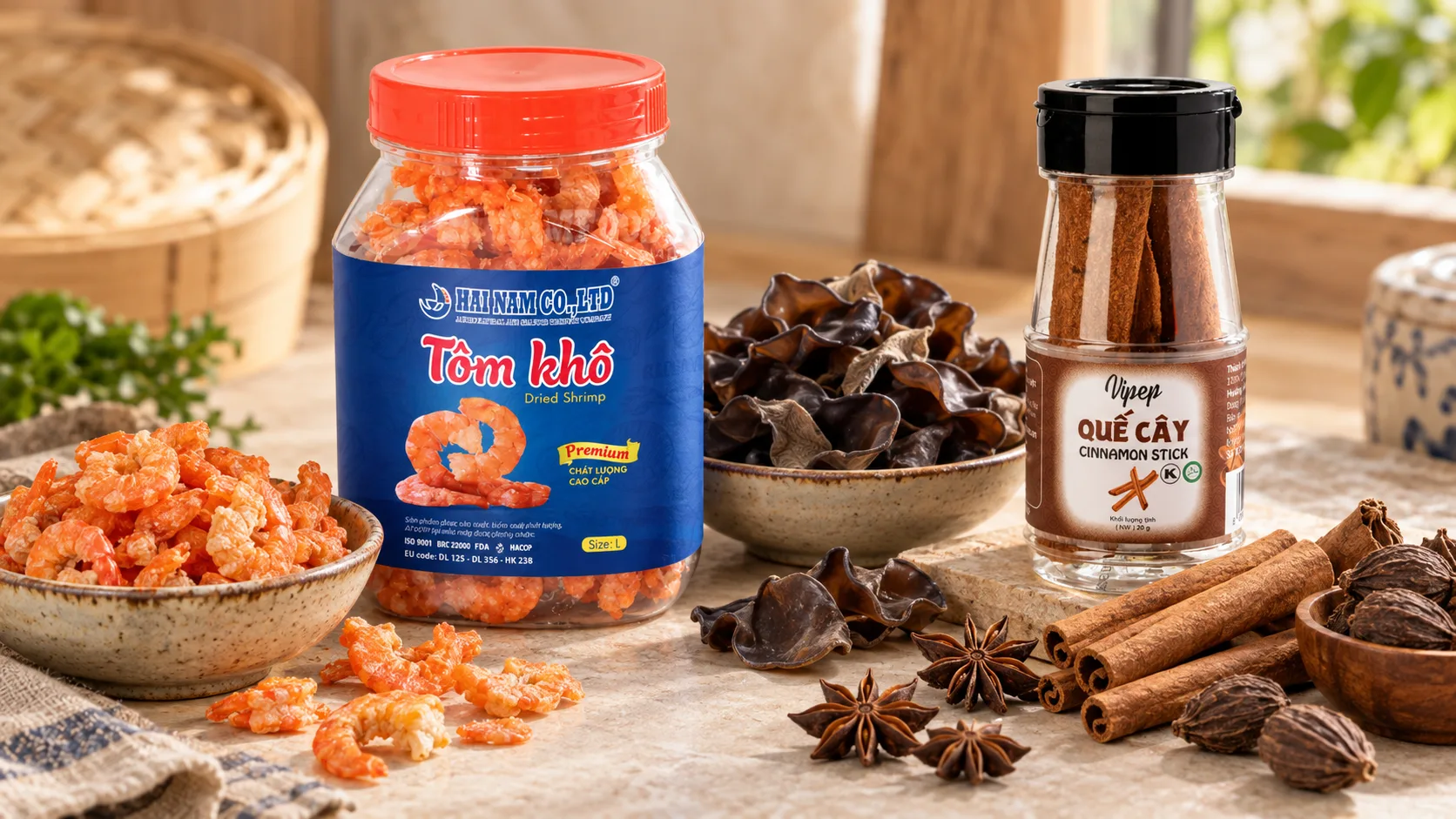
13. Dried Shrimp — Tôm Khô
Tôm khô is dried shrimp with concentrated seafood flavor. It can appear in soups, fillings, savory toppings, stir-fries, and dishes where a small amount of seafood umami is useful.
Quality, saltiness, and size vary, and some recipes require soaking before use. Store dried shrimp according to the package instructions; refrigeration may be recommended after opening depending on the product.
14. Wood Ear Mushrooms — Nấm Mèo / Mộc Nhĩ
Wood ear mushrooms are valued more for their springy, lightly crunchy texture than for an intense mushroom flavor. They are commonly rehydrated and added to fillings, soups, meat mixtures, and fried rolls such as chả giò.
Dried wood ear mushrooms expand considerably after soaking. Prepare only what the recipe requires and cook them according to safe package directions.
15. Pho Spices — Hoa Hồi, Quế and Thảo Quả
Aromatic phở broth typically relies on a combination of spices, not one universal “pho spice.” Common ingredients include star anise (hoa hồi), cassia or cinnamon (quế), and black cardamom (thảo quả), with cloves, coriander seed, or other spices appearing in some recipes.
Whole spices keep well and allow more control than a pre-ground mix. Buy them for phở and other aromatic broths rather than assuming the full set is needed for everyday Vietnamese cooking.
Which Vietnamese Ingredients Should a Beginner Buy First?
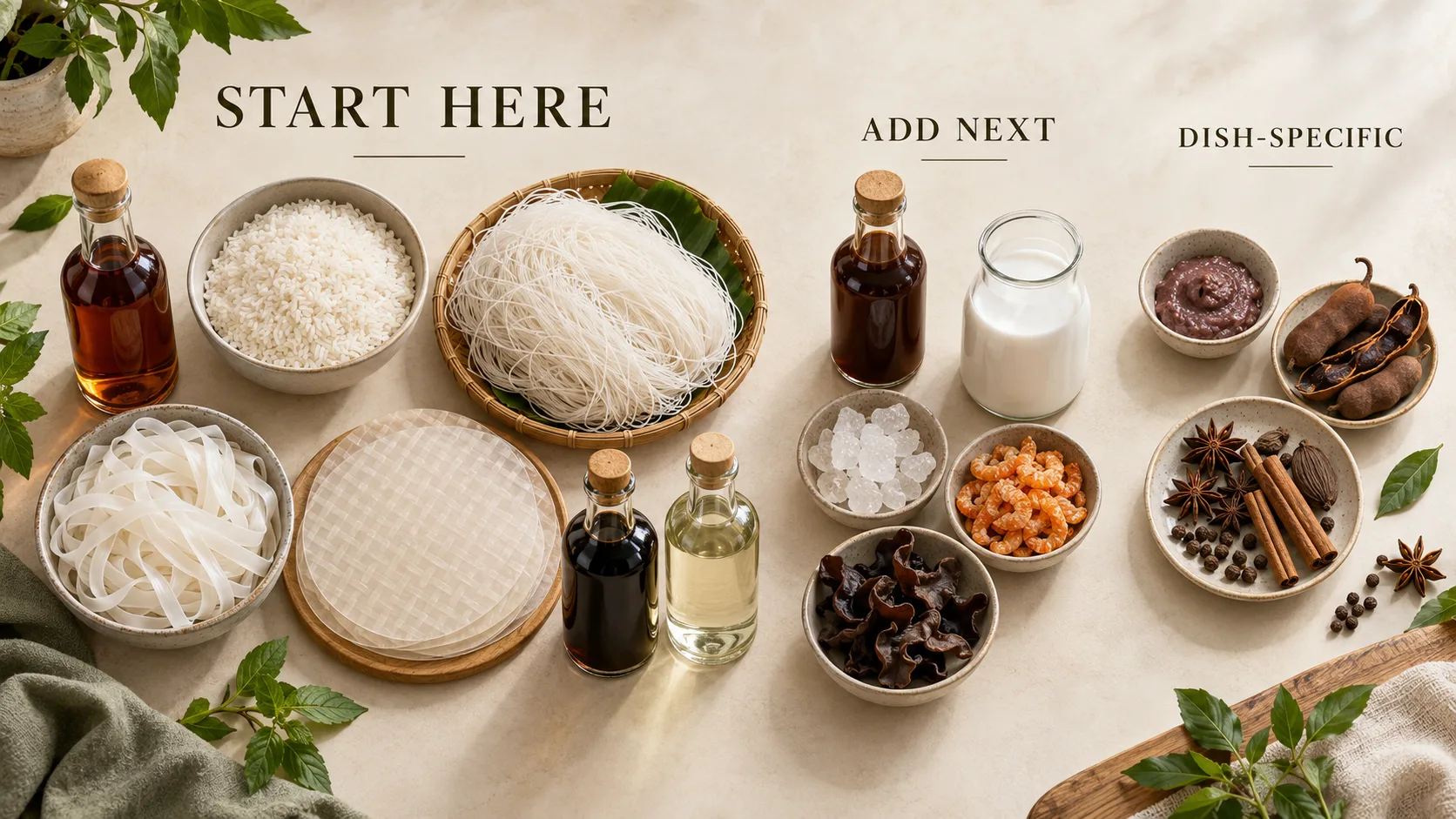
A beginner does not need all 15 Vietnamese ingredients immediately. Start with ingredients that work across several meals, then add more specialized fermented products, dried goods, and spices when a recipe actually requires them.
|
Priority |
Vietnamese Ingredients |
Why Buy Them |
|
Start Here |
Fish sauce, soy sauce, rice, bún, bánh phở, rice paper, rice vinegar |
High versatility across meals, noodles, rolls, sauces and marinades |
|
Add Next |
Oyster sauce, coconut milk, rock sugar, dried shrimp, wood ear mushrooms |
Expands the range of stir-fries, soups, fillings and richer dishes |
|
Dish-Specific |
Mắm tôm, tamarind, pho spices |
Valuable for particular dishes, but not necessary for every beginner pantry |
For an especially small starter pantry, fish sauce, rice, one rice noodle, rice paper, soy sauce, and rice vinegar are enough to begin exploring several cooking techniques. Buying by recipe is generally more useful than trying to complete a checklist in one grocery trip.
What Fresh Ingredients Complete a Vietnamese Kitchen?
Shelf-stable Vietnamese ingredients are only part of the picture. Garlic, shallots, lemongrass, lime, chilies, scallions, and fresh herbs supply much of the fragrance, brightness, and contrast associated with Vietnamese food.
Fresh herb combinations vary by dish, but common examples include mint, cilantro, Thai basil, rau răm, ngò gai, and tía tô. Vietnam Tourism likewise highlights fish sauce, chili, lime, garlic-vinegar condiments, and fresh herbs as familiar parts of Vietnamese eating and noodle dishes.
Fresh aromatics do not all need to be kept in the refrigerator indefinitely. Buy according to the dishes planned for the week, and freeze ingredients such as prepared lemongrass when appropriate to reduce waste.
How to Shop for Vietnamese Pantry Staples
The best way to shop for Vietnamese ingredients is to match the product to the dish, read the Vietnamese name, and check the ingredient list and storage instructions before comparing brands. A familiar logo or higher price does not automatically tell you whether the product is right for a particular recipe.
A few label checks prevent many beginner mistakes:
-
Confirm the product type. Nước mắm and prepared nước chấm are not automatically interchangeable.
-
Read the Vietnamese name. Bún and bánh phở are both rice noodles but have different shapes and typical uses.
-
Check the ingredient list. Seasoned vinegar, flavored sauces, and prepared condiments may behave differently from basic versions.
-
Check fresh vs. dried. This matters especially for noodles, wrappers, mushrooms, and herbs.
-
Read allergen information. Fish, shellfish, soy, and wheat may appear in commonly used sauces and seasonings.
-
Follow storage directions. Some products can remain in a dry cupboard unopened but require refrigeration once opened.
If shopping in Vietnam is still unfamiliar, this guide to shopping in Vietnam and understanding supermarkets, markets and specialty stores explains where fixed pricing is common and what to check on grocery labels.
What Can You Cook With These Vietnamese Ingredients?
A well-planned pantry is useful because the same Vietnamese ingredients can be recombined across very different meals. Fish sauce can move from a marinade to a dipping sauce, rice noodles can become a soup or cold noodle bowl, and rice paper can turn leftover herbs and protein into fresh rolls.
With the pantry above plus fresh produce and protein, home cooks can begin exploring dishes such as:
-
phở;
-
bún chả;
-
bún thịt nướng;
-
gỏi cuốn;
-
chả giò;
-
cơm tấm;
-
canh chua;
-
Vietnamese stir-fries;
-
fish or meat braises;
-
simple rice-and-vegetable family meals.
For context on how several of these staples appear in finished dishes, the guide to Vietnamese food to try, including phở, bánh mì, cơm tấm and bún chả is a useful next read.
Build Your Vietnamese Pantry One Dish at a Time
The most useful Vietnamese pantry is not the one with the most bottles; it is the one containing Vietnamese ingredients you understand and regularly use. Start with fish sauce, rice, noodles, rice paper, and a few versatile seasonings, then expand into tamarind, fermented shrimp paste, dried seafood, mushrooms, and aromatic spices as new recipes call for them.
Selected Vietnamese pantry staples are currently available at ROOTS at competitive prices, with a guarantee of authentic, genuine products and express delivery within one hour for eligible inner-city orders. Wherever you shop, check the product name, ingredient list, package condition, expiration information, allergens, and storage instructions before buying.