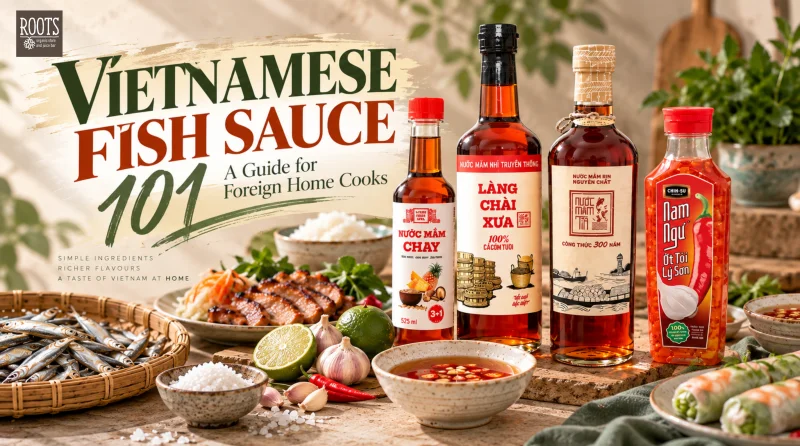
Vietnamese fish sauce, or nước mắm, is a fermented seasoning traditionally made from fish—often anchovies—and salt. For home cooks, the most important skill is not simply finding a bottle labeled “fish sauce,” but knowing whether it is traditional nước mắm, a ready-made dipping sauce, or a plant-based alternative, then choosing the right one for cooking, seasoning, or dipping.
That distinction matters when you are new to Vietnamese food. Supermarket shelves may show bottles with similar names but very different ingredients, nitrogen levels, flavors, and intended uses. This Vietnamese fish sauce guide explains what nước mắm is, how it is made, what numbers such as 30N or 40N mean, how to read a label, and how to start using fish sauce confidently in everyday cooking.
What Is Vietnamese Fish Sauce (Nước Mắm)?
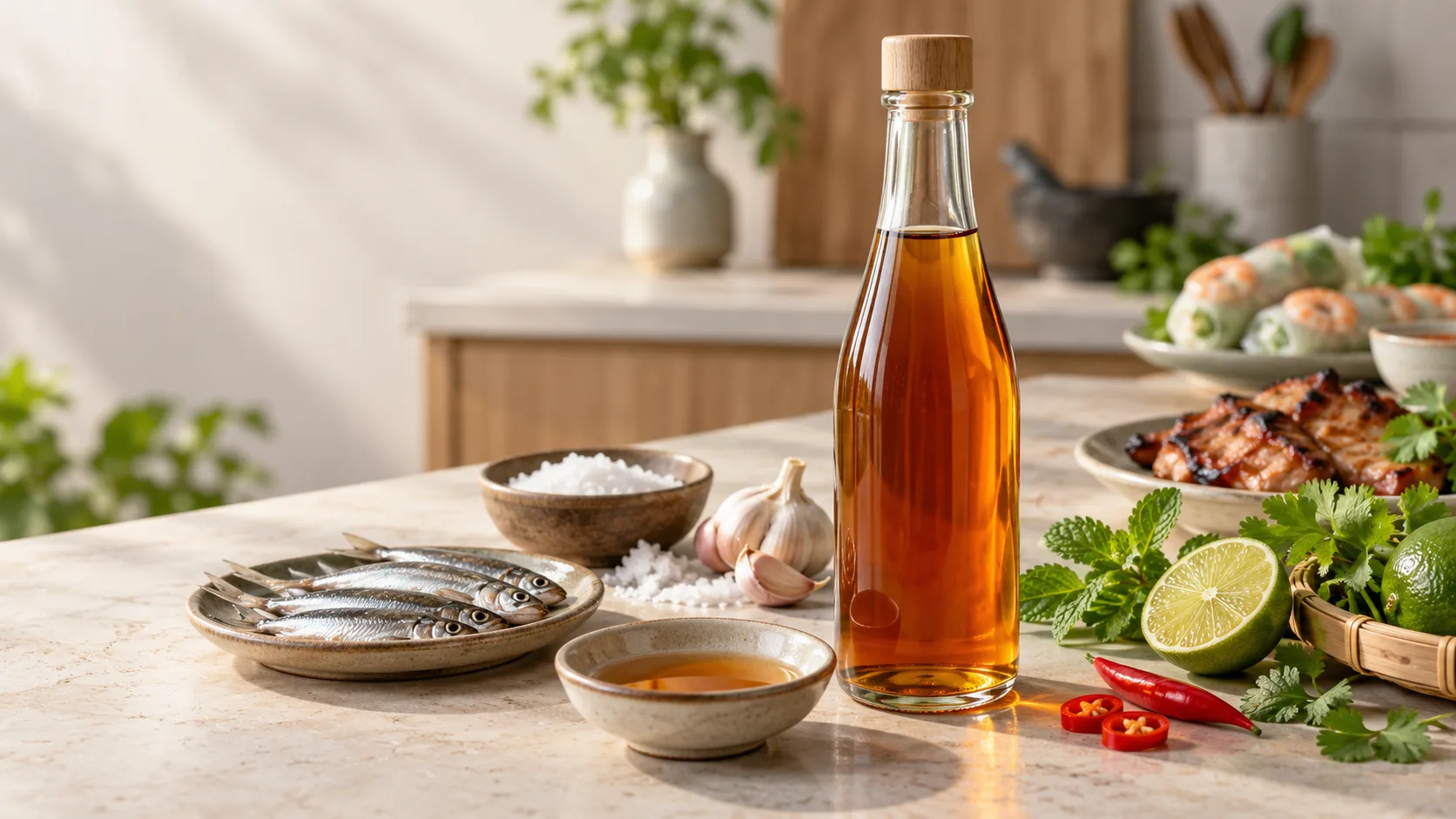
Vietnamese fish sauce is a fermented liquid seasoning known in Vietnamese as nước mắm. Traditional versions are made by fermenting fish with salt, producing a clear amber-to-brown liquid with pronounced saltiness, savory depth, and umami character.
The international Codex Standard for Fish Sauce defines fish sauce as a translucent liquid obtained through fermentation of a mixture of fish and salt. The standard distinguishes this traditional fermentation process from sauces produced through acid hydrolysis.
In Vietnam, nước mắm functions as much more than a table condiment. It can season soups, marinades, stir-fries and braised dishes; form the savory base of dipping sauces; or be used in small amounts to deepen a dish without making it taste overtly “fishy.”
Anyone exploring classic Vietnamese dishes such as phở, cơm tấm and bún chả will quickly encounter fish sauce in different forms, particularly in marinades and dipping sauces.
What does Vietnamese fish sauce taste like?
Vietnamese fish sauce is salty, deeply savory and rich in umami, with a distinctive fermented aroma. The exact flavor varies considerably by fish species, salt ratio, fermentation method, aging, concentration and brand.
Smelling fish sauce directly from the bottle can make it seem far stronger than it does in a finished dish. Once mixed into broth, meat marinades, lime juice, sugar, garlic or chili, its sharpness becomes part of a broader savory balance.
A good rule for first-time cooks is to treat fish sauce more like concentrated seasoning than a sauce that must dominate the dish: add a small amount, taste, then adjust.
Nước mắm vs nước chấm: what is the difference?
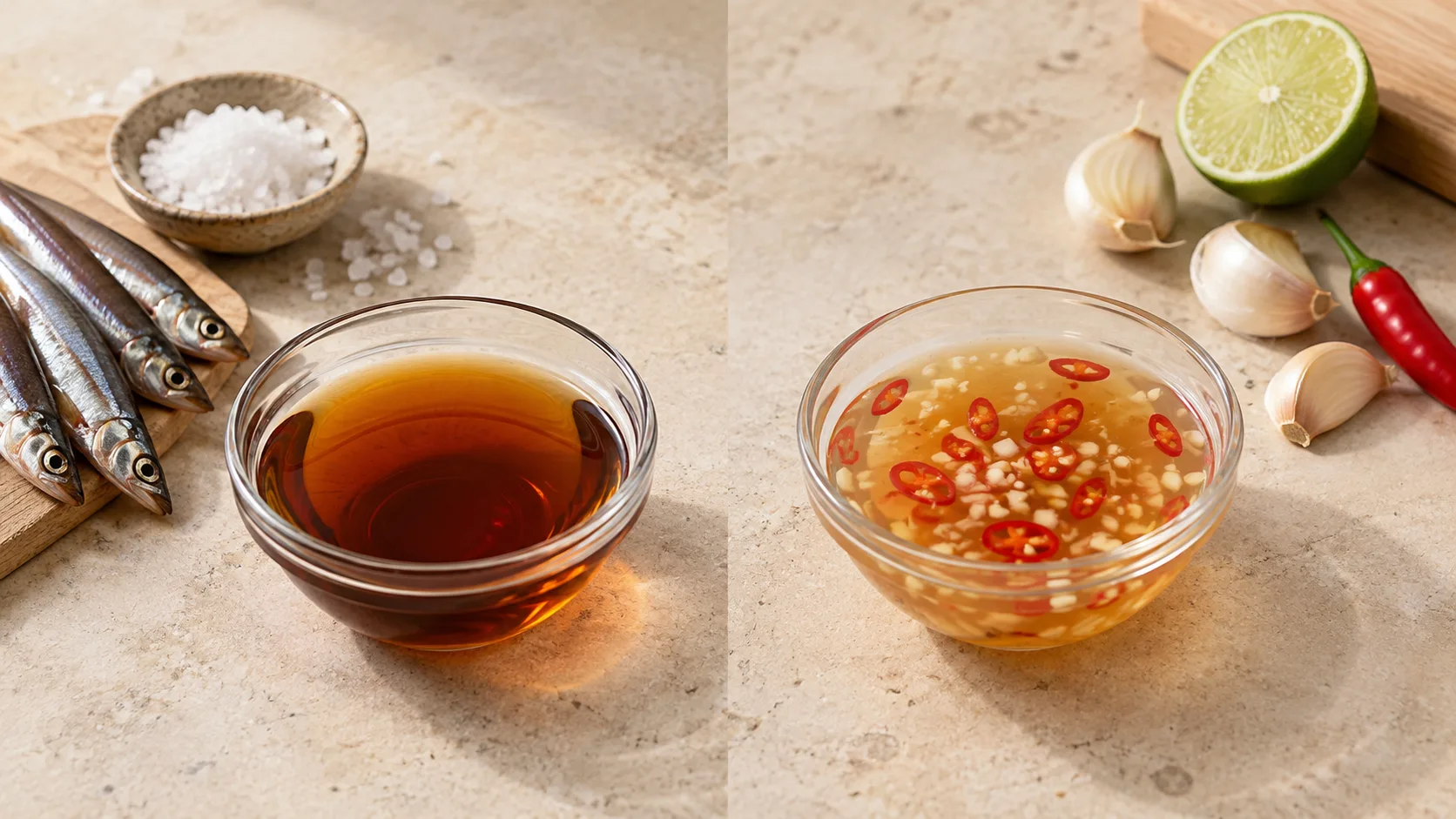
Nước mắm is fish sauce itself, while nước chấm generally refers to a prepared dipping sauce. The two terms are related but should not automatically be treated as interchangeable.
|
Feature |
Nước mắm |
Nước chấm |
|
What it is |
Fermented fish sauce |
Prepared dipping sauce |
|
Typical base |
Fish + salt |
Often fish sauce + water + sugar + acid |
|
Other ingredients |
Depends on product |
May include lime or vinegar, garlic and chili |
|
Main use |
Seasoning, cooking, sauce base |
Dipping and serving |
|
Used straight from bottle? |
Sometimes, depending on style and preference |
Usually designed to be served directly |
A commercially prepared sweet-and-sour dipping sauce, for example, may contain water, fish sauce, sugar, vinegar, garlic and chili rather than being a bottle of pure fermented fish sauce.
This distinction solves one of the most common problems foreign home cooks face: if a Vietnamese recipe asks for nước mắm, substituting a sweetened ready-made dipping sauce can change the recipe significantly.
How Is Vietnamese Fish Sauce Made?
Traditional Vietnamese fish sauce is produced by fermenting fish with salt over an extended period. During fermentation, proteins in the fish break down and contribute to the intensely savory liquid that is eventually extracted and bottled.
The Codex process definition states that fish and salt are mixed and fermented in covered containers or tanks, with fermentation generally lasting at least six months. Additional extraction may occur later using brine to recover remaining fish flavor and protein compounds.
1200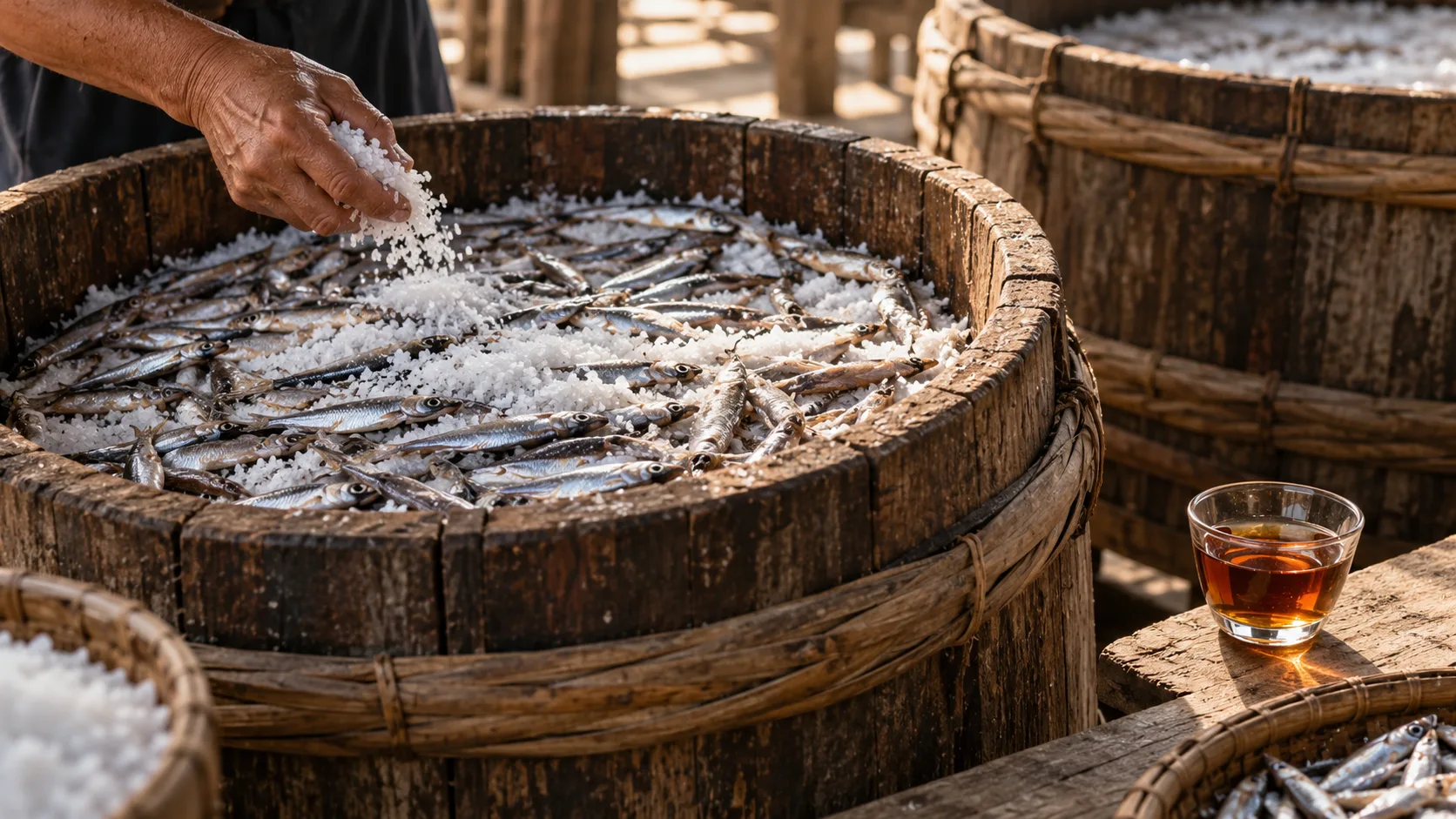
Fish and salt
Anchovies are strongly associated with Vietnamese fish sauce, although fish sauce as a broader category can be made from different fish species.
Simple traditional bottles may have an exceptionally short ingredient list: fish and salt. A short list does not automatically make one bottle right for every recipe, but it immediately tells you that you are looking at a different product from a sweetened dipping sauce or vegetarian seasoning.
Fermentation and aging
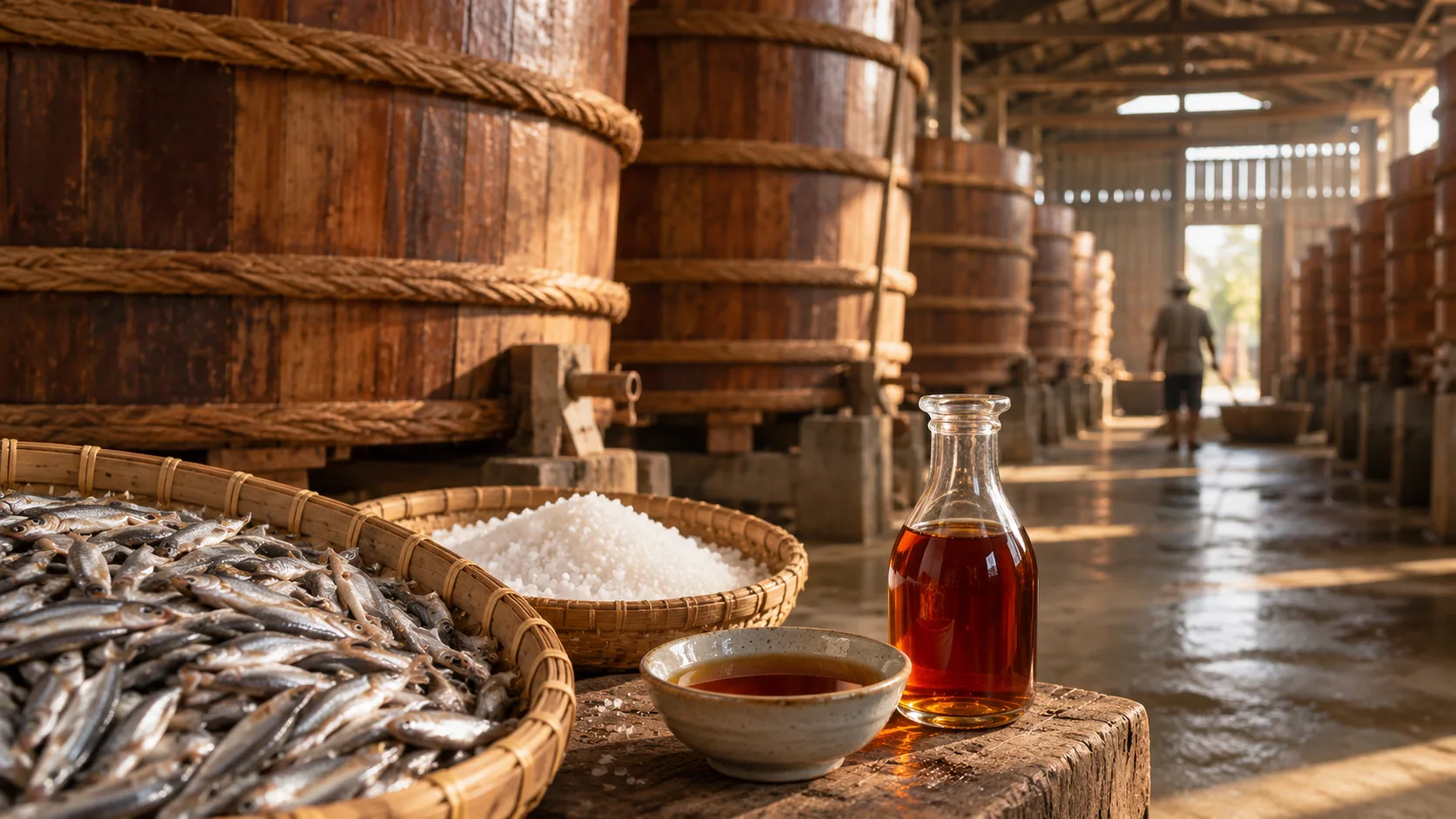
Salted fish is traditionally left to mature for months in large containers. Methods differ between regions and producers, including the materials used for fermentation vessels and the length of aging.
Vietnam's official tourism portal describes traditional production in Phú Quốc using salted anchovies matured in large wooden barrels, where producers monitor the ferment before extraction. Vietnam Tourism's overview of Vietnamese fish sauce production provides useful cultural context for this process.
What is “first press” fish sauce?
“First press” or related Vietnamese terms such as nước mắm cốt and nước mắm nhĩ are commonly used for concentrated liquid drawn from fermented fish before later extractions or dilution.
The terminology and production specifications can vary between producers, so the phrase should not replace reading the actual ingredient list, origin and label information. For shoppers, “first press” is better treated as one product characteristic rather than a universal guarantee that the bottle will be best for every dish.
How to Read a Vietnamese Fish Sauce Label
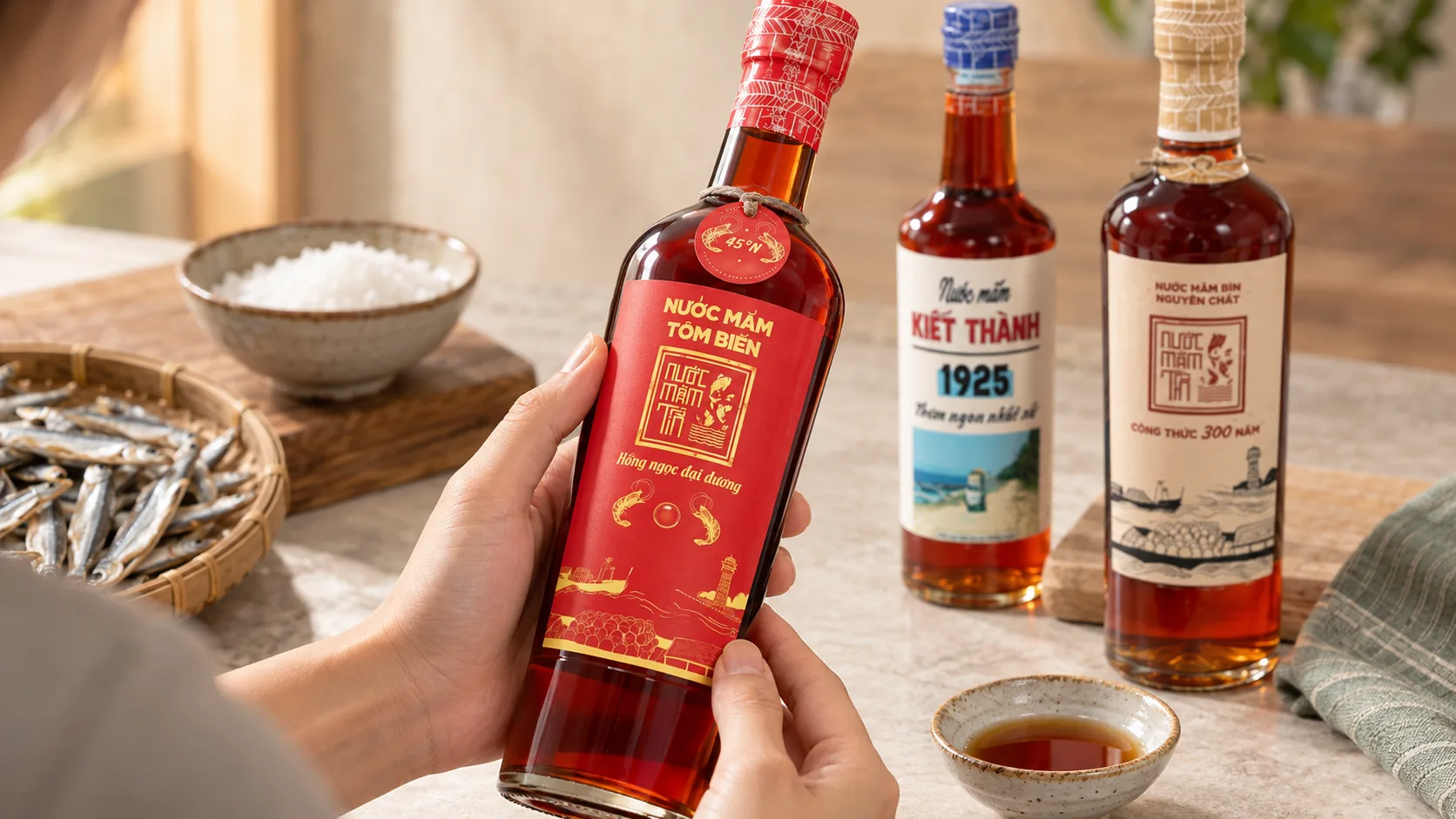
Start with three things: the ingredient list, the type of sauce, and any declared nitrogen level. These usually tell a home cook far more than packaging terms such as “premium,” “special” or “traditional” on their own.
A useful label-reading habit is to first ask: Am I buying fermented fish sauce, prepared nước chấm, or a fish-sauce alternative?
Start with the ingredient list
Traditional Vietnamese fish sauce may list primarily anchovies or another fish plus salt. Some products include additional ingredients, so checking the actual label is more reliable than assuming every bottle of nước mắm follows exactly the same formula.
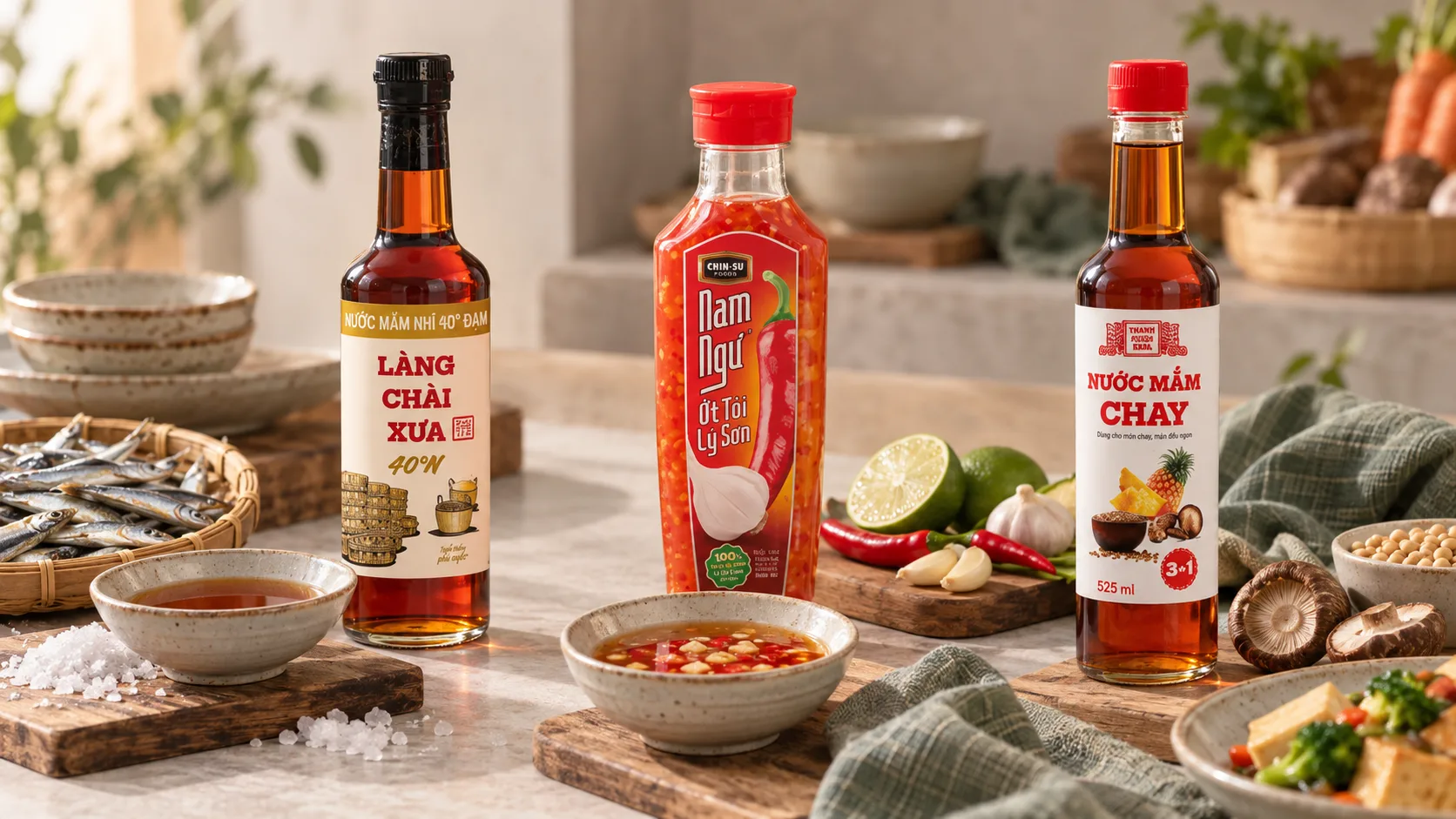
Prepared dipping sauces are different. They may combine fish sauce with water, sugar, vinegar or lime, garlic and chili, making them convenient for direct serving but less suitable as a one-to-one replacement when a recipe calls for concentrated fish sauce.
Plant-based products form a third category. One Vietnamese vegan fish-sauce alternative currently documented on the market, for example, uses pineapple concentrate, hydrolyzed soy, hydrolyzed mushroom, salt and sugar instead of fermented fish.
What does 30N, 40N or 43N mean?
The “N” figure refers to nitrogen concentration, not to saltiness. A label showing 40°N is therefore not saying that the sauce is “40% protein” or that it is necessarily saltier than a 30°N bottle.
Codex allows competent authorities to require total nitrogen to be declared in grams per liter and notes that descriptors may reflect total nitrogen level as an indicator of fish-sauce quality.
Nitrogen matters because much of it is associated with compounds created as fish proteins break down during fermentation. That makes the number useful information when comparing traditional fish sauces, but it still needs context.
Does a higher °N always mean better fish sauce?
No. A higher nitrogen level can indicate a more concentrated fish-derived product, but it does not automatically make that bottle the best choice for every cook or recipe.
A concentrated fish sauce may be attractive for dipping, finishing or recipes where the sauce itself plays a central role. For routine seasoning, marinades or dishes containing many other salty ingredients, a different concentration may be easier to control.
The practical question is therefore not simply “Which bottle has the biggest number?” but “How am I planning to use it?”
What does “Phú Quốc” tell you?
Phú Quốc is one of Vietnam's most important fish-sauce origins and is more than a marketing reference. In 2012, the European Union entered Phú Quốc into its register as a Protected Designation of Origin (PDO). EU Regulation No 928/2012 on Phú Quốc PDO documents the registration.
PDO protection applies to products meeting the relevant geographical and production requirements; seeing the words “Phú Quốc” somewhere in marketing copy should therefore not be treated as sufficient proof of PDO status. When geographical authenticity matters, inspect the complete packaging and certification information.
Which Vietnamese Fish Sauce Should You Buy?
The best Vietnamese fish sauce depends on what you plan to cook. A first-time buyer usually needs to choose between traditional fermented fish sauce, a ready-to-use dipping sauce and a plant-based alternative rather than searching for one universally “best” bottle.
Use this simple decision table:
|
What you want to do |
What to look for |
|
Cook Vietnamese dishes regularly |
Bottled fermented fish sauce |
|
Make nước chấm from scratch |
Traditional nước mắm |
|
Serve a dipping sauce immediately |
Prepared sweet, sour or chili fish sauce |
|
Cook vegetarian or vegan food |
Plant-based fish-sauce alternative |
|
Explore more concentrated traditional styles |
Simple ingredient list plus origin and °N information |
|
Buy your first bottle |
Versatile fish sauce with clear labeling and manageable flavor intensity |
A simple first-bottle checklist
Before buying Vietnamese fish sauce, check:
-
Product type: Is it actual fermented fish sauce or a prepared dipping sauce?
-
Ingredients: Fish and salt, or a longer seasoned formula?
-
Nitrogen level: If °N is shown, understand what the number represents rather than treating it as a ranking score.
-
Origin: Check where the sauce was produced and whether geographical claims are specific.
-
Intended use: Look for manufacturer guidance on cooking, seasoning, dipping and storage.
If you are shopping locally and still getting used to Vietnamese grocery labels, this broader guide to shopping for groceries in Vietnam explains how supermarkets, specialty stores and traditional markets differ.
How to Use Fish Sauce in Vietnamese Cooking
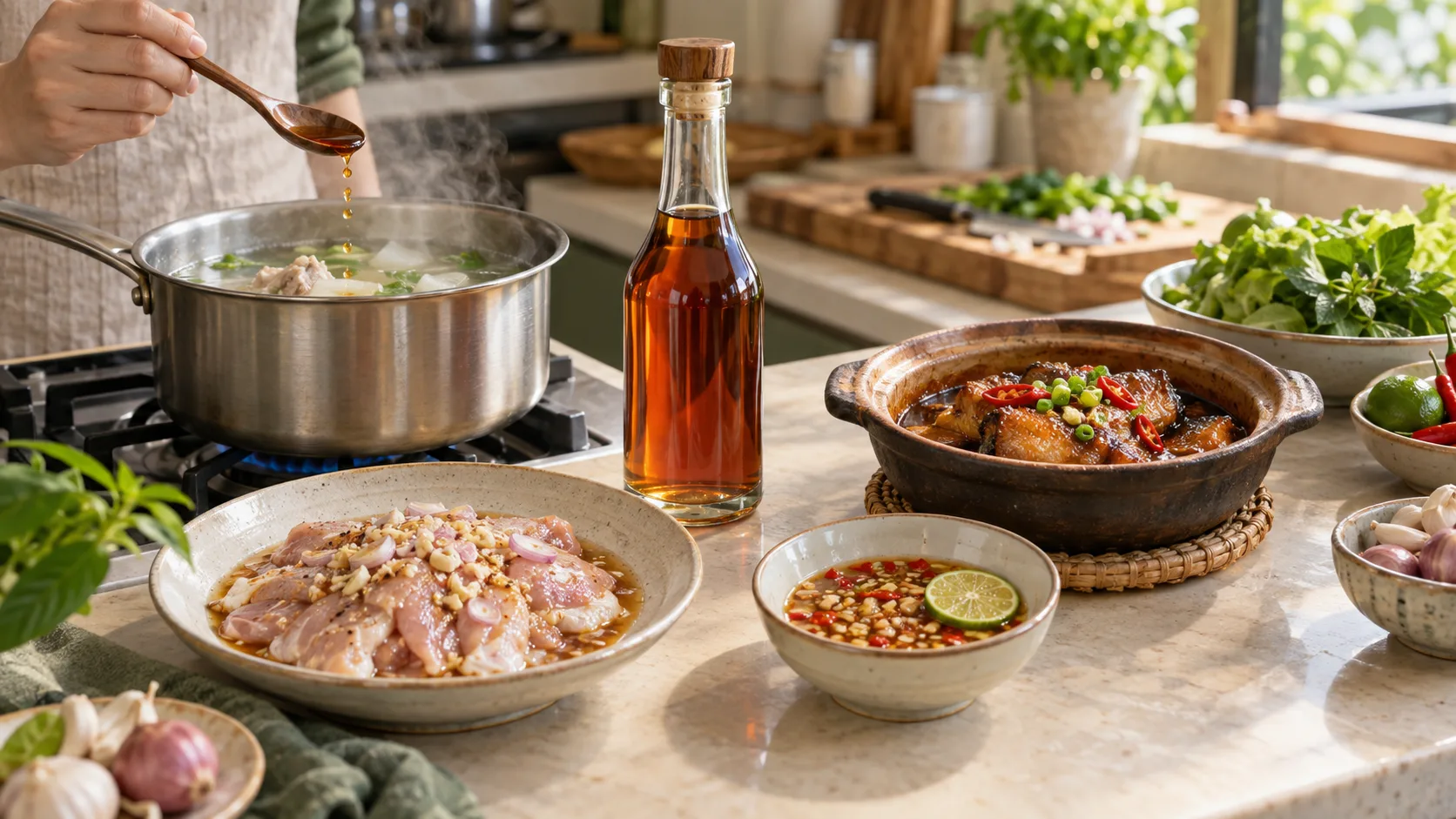
Fish sauce works best when added gradually as a seasoning rather than poured into a dish without tasting. It can add saltiness and savory depth to broth, marinades, stir-fries, braises and dipping sauces, but concentration varies enough between bottles that fixed amounts are not always interchangeable.
Start below the recipe's maximum amount if you are using an unfamiliar brand. Taste the dish before adding more.
Seasoning soups and broths
A small amount of fish sauce can reinforce the savory backbone of soups and broths. It is often most useful as one part of the seasoning rather than the only source of salt.
When adjusting a broth, add fish sauce in small increments near the later stages of cooking, especially if stock, seasoning powders or other salty ingredients are already present.
Marinades
Fish sauce works particularly well in marinades for pork, chicken, beef and seafood. Garlic, shallot, lemongrass, black pepper and sugar are common companions because they balance the salty and fermented character of the sauce.
For home cooking, mix the marinade before adding the protein and taste where food-safety considerations allow—for example, before raw meat is introduced. This makes an overly salty marinade much easier to correct.
Stir-fries and braised dishes
Fish sauce can season stir-fried vegetables, noodles, fried rice and braised meat or fish. In braises, its flavor generally becomes more integrated as it cooks with sugar, aromatics and other liquids.
Rice naturally accompanies many of these dishes. If you are deciding between fragrant ST25, jasmine and broken rice, the Vietnamese rice guide explains which grain styles suit different meals.
Making dipping sauces
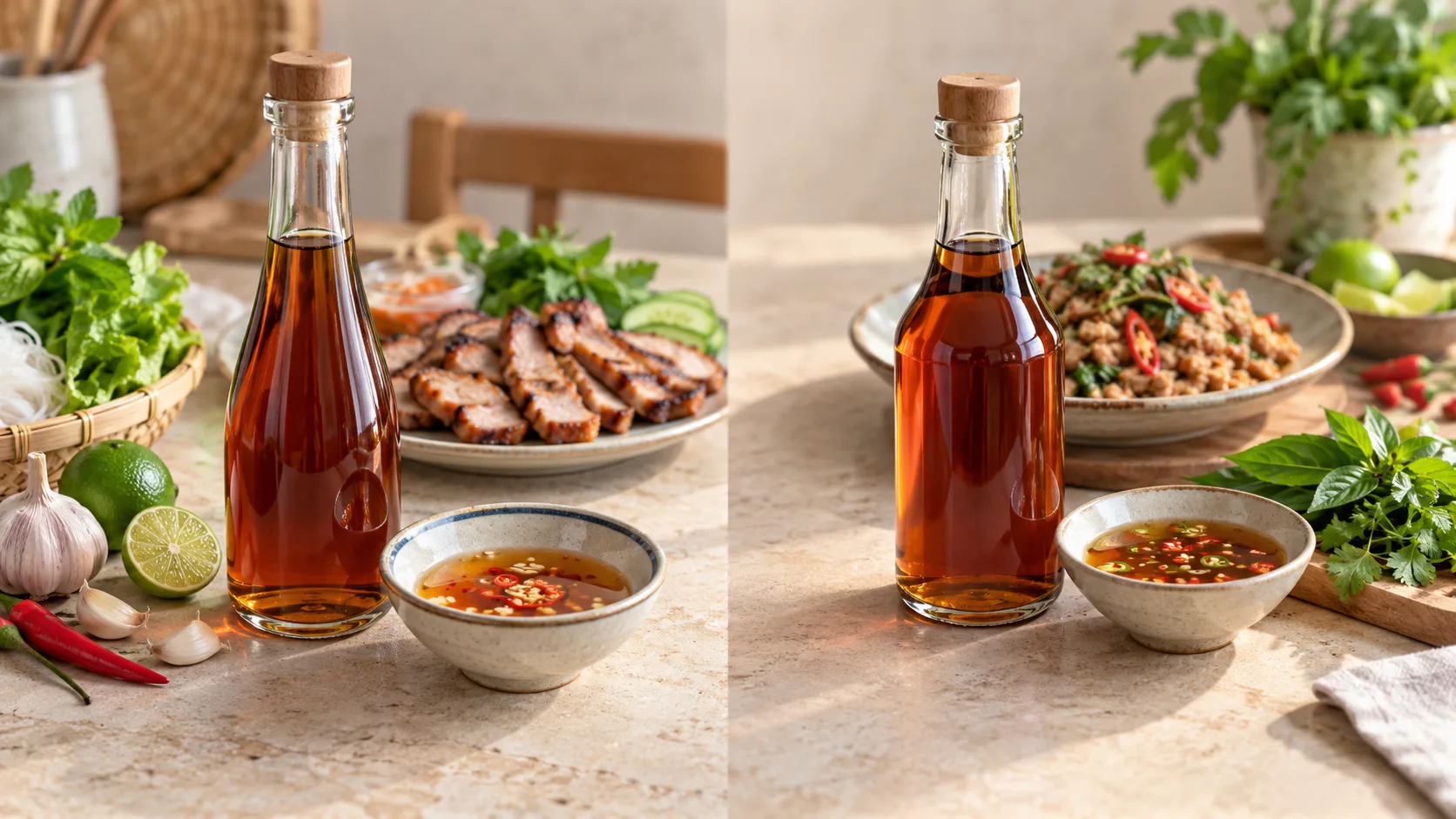
To turn fish sauce into nước chấm, it is usually diluted and balanced with other ingredients such as water, sugar, lime juice or vinegar, garlic and chili. Ratios differ widely by family, region and dish.
Bún chả, spring rolls and cơm tấm, for example, may all use fish-sauce-based dipping mixtures, but the desired sweetness, acidity and strength are not necessarily identical. Think of nước chấm as a recipe made with fish sauce rather than another name for the bottle itself.
Vietnamese Fish Sauce vs Thai Fish Sauce
Vietnamese nước mắm and Thai nam pla belong to the same broad family of fermented fish sauces, but flavor can differ by producer, fish, fermentation and formulation. In many recipes they can substitute for each other, although the final saltiness and aroma may need adjustment.
|
Feature |
Vietnamese Fish Sauce |
Thai Fish Sauce |
|
Common name |
Nước mắm |
Nam pla |
|
Cuisine |
Vietnamese |
Thai |
|
Core role |
Seasoning and dipping-sauce base |
Seasoning and condiment |
|
Typical production |
Fermented fish + salt |
Fermented fish + salt |
|
Flavor |
Varies widely by brand and concentration |
Varies widely by brand and concentration |
|
Can they substitute? |
Often, with tasting and adjustment |
Often, with tasting and adjustment |
Culinary comparisons frequently describe Thai and Vietnamese sauces as broadly interchangeable in everyday cooking while emphasizing that brand-to-brand differences can be larger than the national label alone suggests. This comparison of Thai and Vietnamese fish sauce reaches a similar practical conclusion.
For a Vietnamese recipe, using Vietnamese fish sauce is the easiest starting point because it gives you a flavor profile closer to what the recipe developer likely intended. If Thai fish sauce is what you already have, use it rather than abandoning the recipe—just season gradually.
Common Fish Sauce Mistakes First-Time Cooks Make
Most beginner mistakes come from treating every bottle labeled “fish sauce” as interchangeable. Reading the product type and tasting gradually prevents more problems than memorizing a supposedly perfect brand or nitrogen level.
Buying nước chấm when the recipe calls for nước mắm
Prepared nước chấm can already contain sugar, acid, garlic and chili. Using it instead of concentrated fish sauce changes both seasoning strength and the sweet-sour balance of the recipe.
Treating °N as a saltiness score
Nitrogen concentration and salt concentration are not the same measurement. A 40N bottle should not automatically be interpreted as “saltier than 30N.”
Assuming the highest °N is automatically the best
Higher concentration can be valuable, but “best” depends on intended use, taste preference and budget. A powerful finishing fish sauce is not necessarily the most forgiving bottle for someone cooking with it for the first time.
Adding too much before tasting
Different bottles vary substantially. Add fish sauce gradually, particularly when the recipe also contains soy sauce, stock powder, salted broth or other sodium-rich ingredients.
Expecting vegan fish sauce to taste identical
Plant-based fish-sauce alternatives are designed to provide savory seasoning without fish, but their ingredient base and flavor development differ from fermented anchovy sauce. Use them as functional substitutes rather than expecting exact sensory equivalence.
How to Store Fish Sauce After Opening
There is no single storage rule that fits every product sold as fish sauce. Traditional fermented fish sauce may have different storage instructions from sweetened prepared dipping sauce, so the manufacturer's label should be the first reference.
Some traditional Vietnamese products instruct users to keep the bottle tightly closed in a cool, dry place away from direct sunlight. Prepared sweet-and-sour sauces may instead require refrigeration after opening.
Even manufacturers differ slightly in their recommendations. Red Boat, for example, says refrigeration after opening is best for optimum freshness while also stating that its fish sauce is not harmed by room-temperature storage. Red Boat's fish sauce storage guidance reinforces why bottle-specific instructions matter.
Keep the cap clean and tightly closed, avoid storing the bottle beside a hot stove or in direct sunlight, and check the label whenever you switch brands or product types.
Choosing Your First Bottle of Vietnamese Fish Sauce
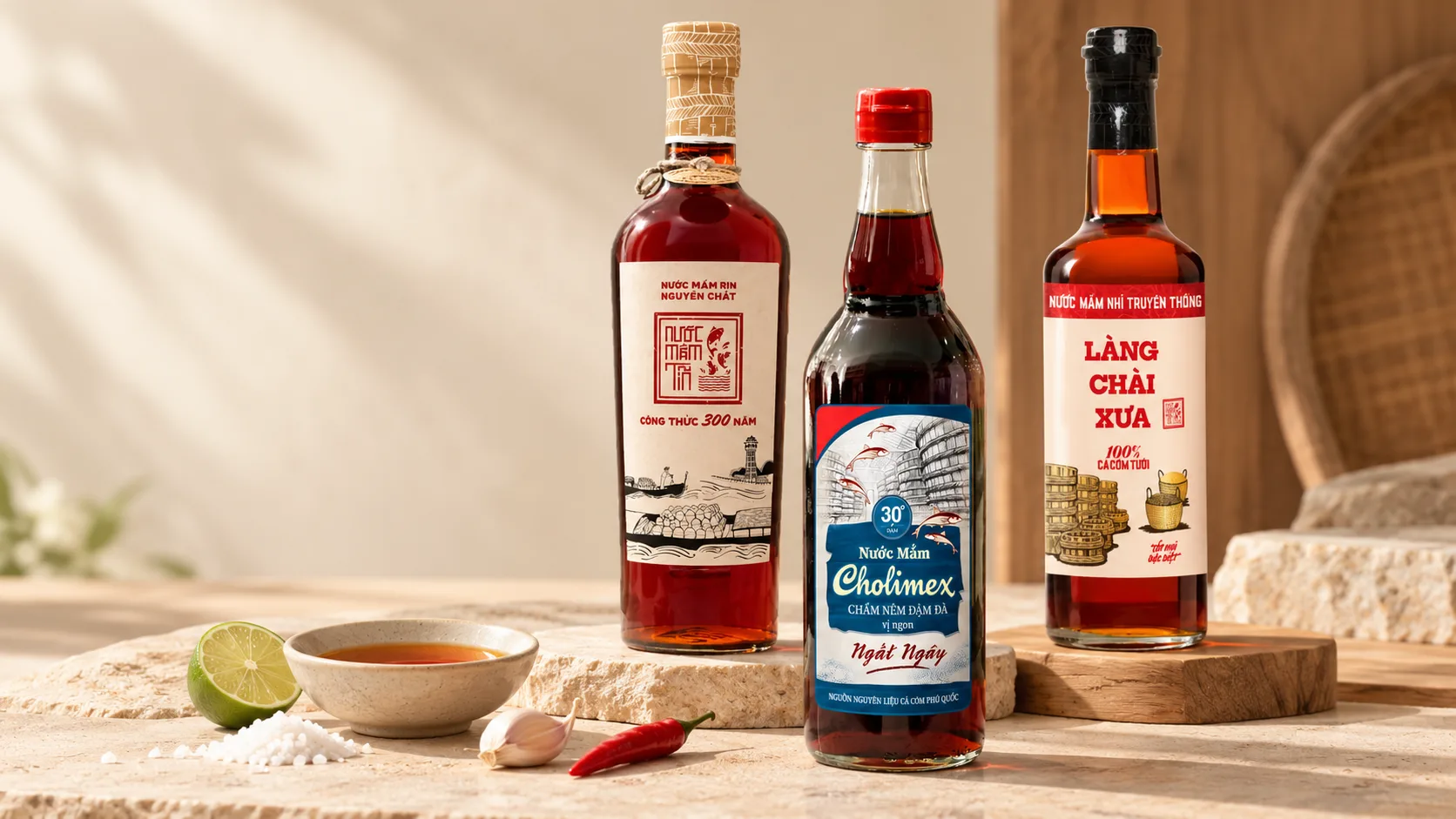
For a first bottle, prioritize clarity over prestige: know whether you are buying traditional nước mắm, prepared nước chấm or a plant-based alternative, then check ingredients, origin, °N information and storage instructions. Once you understand those basics, choosing Vietnamese fish sauce becomes much less intimidating.
A simple traditional fish sauce is usually the most versatile place to start if the goal is cooking Vietnamese food at home. More concentrated bottles, ready-made dipping sauces and vegetarian alternatives can then be added according to the dishes you actually make.
Selected Vietnamese fish sauces and related seasonings are currently available through ROOTS at competitive listed prices, with a genuine-product guarantee and express delivery within one hour for eligible inner-city Ho Chi Minh City orders. Wherever you buy, check the current ingredient list, package condition, storage directions and product type rather than choosing on branding alone.