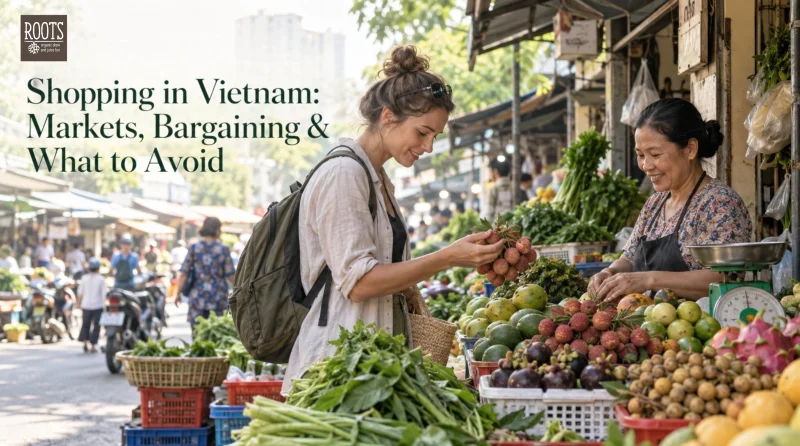
Shopping in Vietnam is easiest when you match the place to the purchase: bargain politely at traditional markets and unpriced stalls, but expect fixed prices at supermarkets, malls and specialty stores. Carry some Vietnamese đồng (VND), use cards where accepted, check whether your foreign payment app supports local QR networks, and confirm prices, weights and food labels before paying.
For first-time visitors and new expats, the challenge is rarely finding somewhere to shop. It is knowing the unwritten rules. A wet market, convenience store, supermarket and tourist market can operate very differently, even when they are only a few streets apart.
This practical Vietnam shopping guide explains where to shop, when bargaining makes sense, how to understand local prices and payments, and what mistakes foreigners can avoid.
Where Should Foreigners Shop in Vietnam?
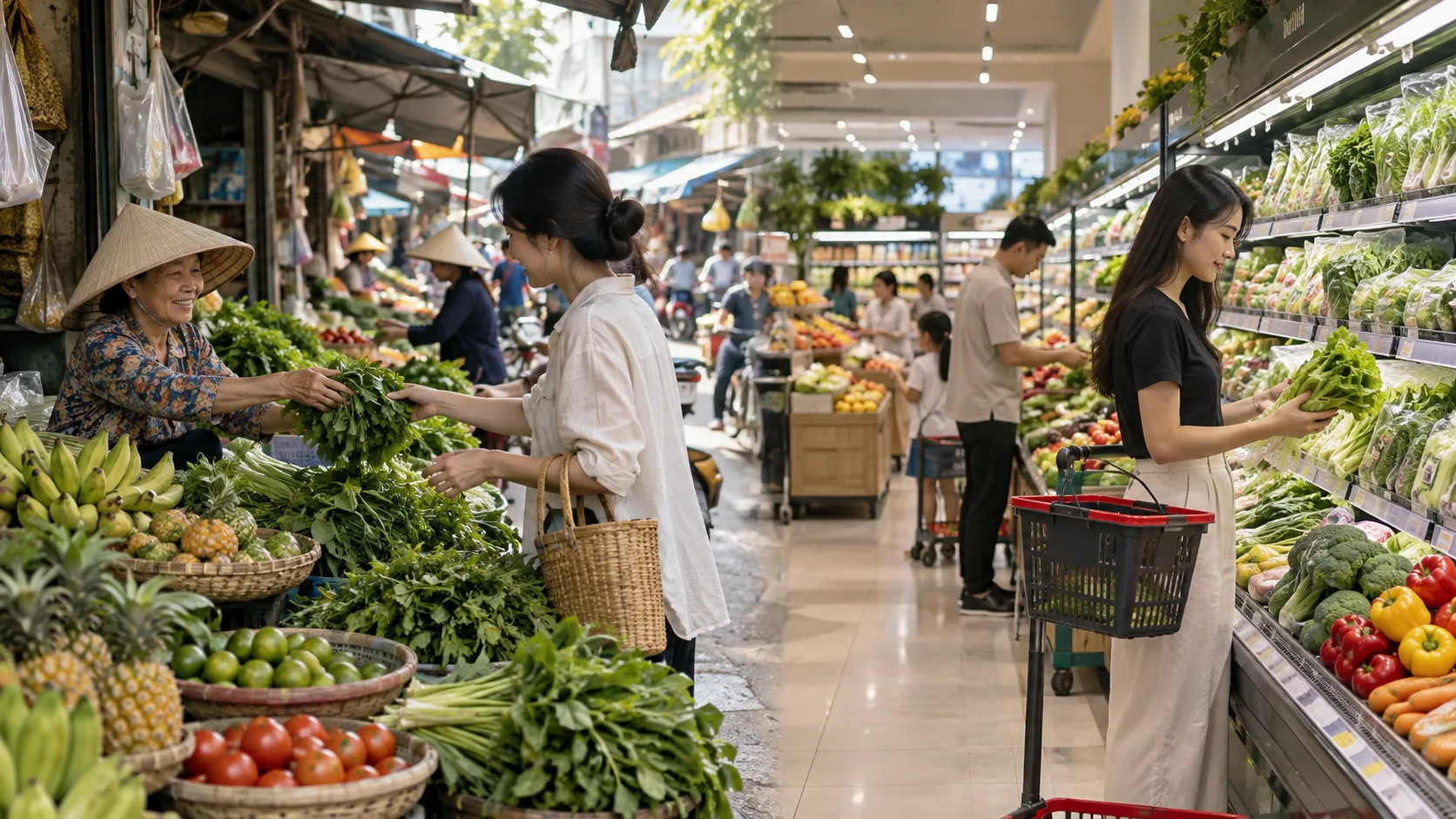
There is no single best place for shopping in Vietnam. Traditional markets are useful for local produce and an immersive shopping experience, supermarkets make everyday grocery shopping more predictable, while specialty stores are often more convenient when you need imported or harder-to-find products.
The best option depends on what you are buying, how comfortable you are communicating with vendors, and whether you prefer negotiable or clearly displayed prices.
|
Shopping Place |
Best For |
Price System |
Bargaining? |
Typical Payment |
Easy for Newcomers? |
|
Traditional market |
Produce, local ingredients, household goods |
May be unlisted or variable |
Sometimes |
Cash, sometimes QR |
Medium |
|
Wet market |
Fresh vegetables, meat, seafood |
Often based on weight |
Sometimes |
Cash, sometimes QR |
Medium |
|
Supermarket |
Weekly groceries and household essentials |
Fixed |
No |
Cash, card, sometimes QR |
High |
|
Convenience store |
Drinks, snacks, quick essentials |
Fixed |
No |
Cash, card, sometimes QR |
High |
|
Specialty/import store |
Imported food, dietary products, niche brands |
Fixed |
No |
Cash, card, sometimes QR |
High |
|
Shopping mall |
Fashion and branded goods |
Fixed |
Usually no |
Cash and card |
High |
|
Delivery app |
Food and everyday shopping |
Listed in the app |
No |
App-dependent |
High |
Traditional Markets and Wet Markets
Traditional markets are among the most interesting places to shop in Vietnam because they bring fresh produce, meat, seafood, dry goods and household products together in a compact space. Prices may not always be displayed, particularly at independent stalls, so asking before ordering or accepting an item is important.
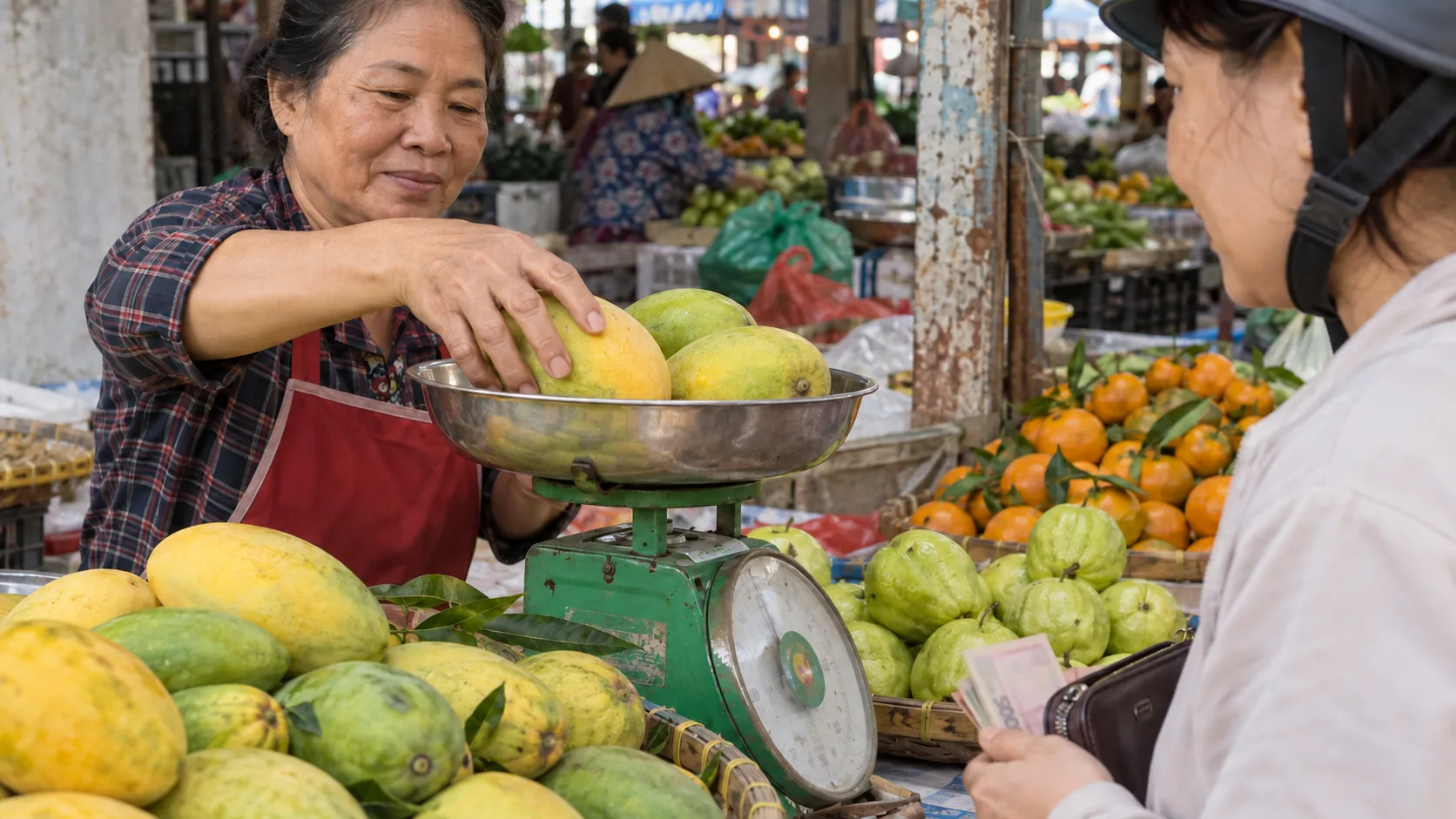
Wet markets are particularly useful for fresh ingredients. Shopping becomes easier when you know whether a quoted price is for one piece, 100 grams, half a kilogram or one kilogram.
Markets also vary significantly. A neighborhood morning market serving local residents is not necessarily priced or operated like a major tourist-oriented market in the center of Ho Chi Minh City or Hanoi.
If your goal is souvenirs rather than everyday groceries, a separate guide to what to buy in Vietnam can help with regional products, gifts and packing considerations.
Supermarkets and Convenience Stores
Supermarkets are generally the easiest starting point for foreigners who have just arrived in Vietnam. Prices are displayed, products can be compared before purchase, and checkout procedures are similar to those in many other countries.
Convenience stores are useful for drinks, snacks, toiletries and last-minute essentials. They are convenient rather than necessarily the most economical choice for a full weekly grocery basket.
In both formats, the displayed price is normally the price you pay. Bargaining at a supermarket checkout or branded convenience store is not part of normal shopping etiquette.
Specialty and Imported Grocery Stores
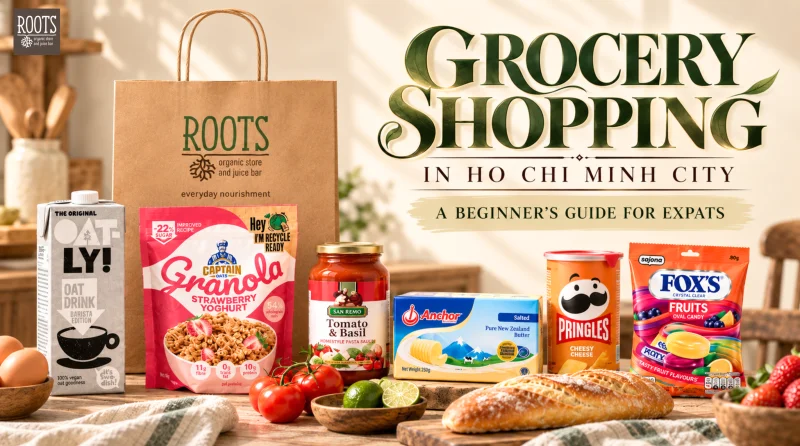
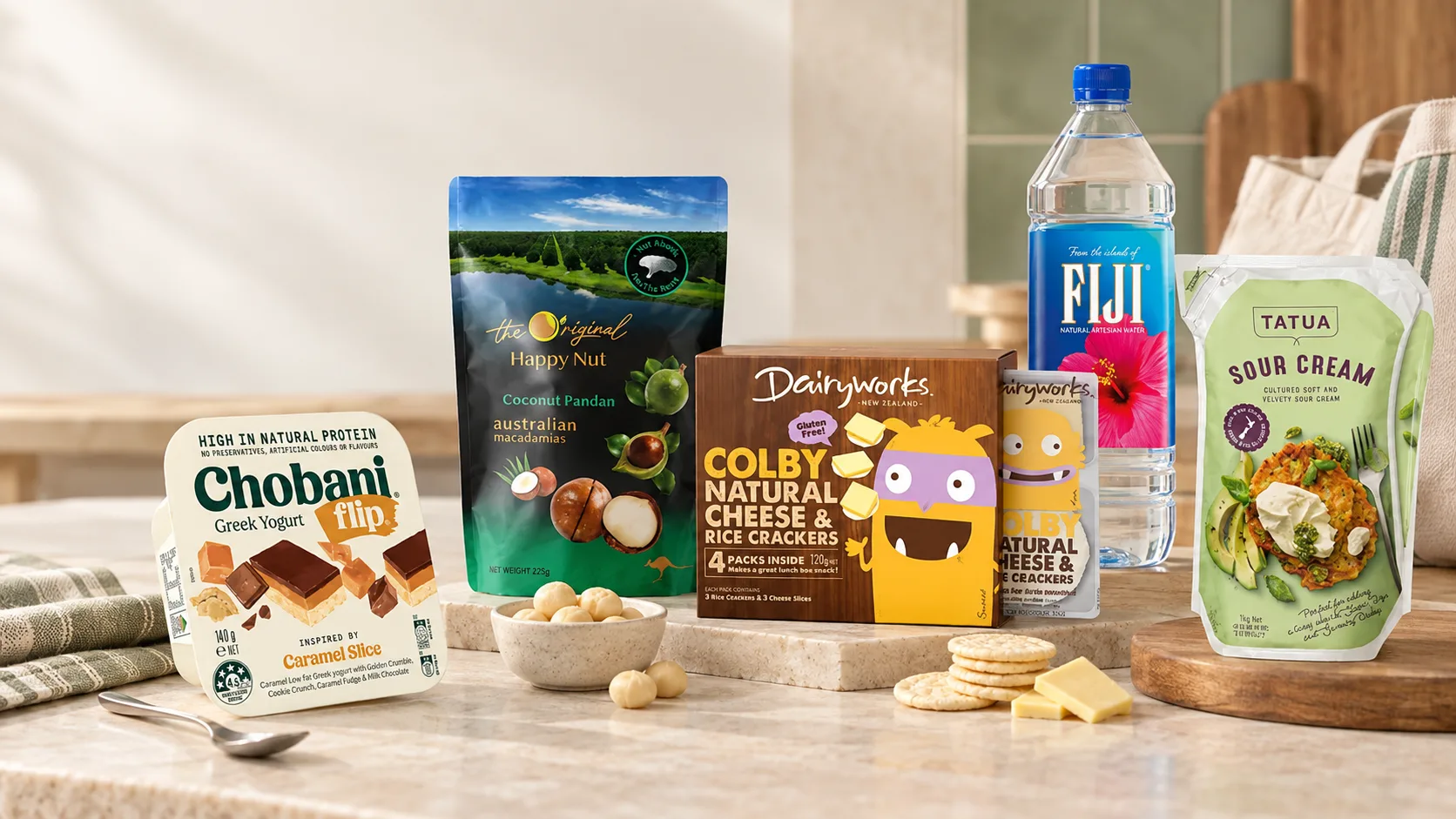
Specialty grocery stores make sense when you need imported dairy, cheese, cereals, sauces, dietary products or brands that may not be stocked in mainstream supermarkets. Fixed pricing and clearer product labeling can also reduce some of the uncertainty that new residents encounter at informal markets.
Foreign residents in Ho Chi Minh City who regularly buy international food can compare options in this guide to imported supermarkets in Ho Chi Minh City.
Shopping Malls and Boutiques
Shopping malls are best for branded fashion, cosmetics, electronics and formal retail. Prices are generally fixed, although stores may run promotions, loyalty offers or seasonal sales.
Independent boutiques can vary. A clearly tagged item in a formal shop should normally be treated as fixed-price unless the seller indicates otherwise.
Delivery Apps and Online Shopping
Delivery apps can be convenient when you already know what you want. Prices, quantities and delivery charges are visible before checkout, which removes the need for face-to-face price negotiation.
The main trade-off is that you cannot personally inspect fresh produce or packaging before the order arrives. Check the item, quantity and condition promptly after delivery if the platform provides a process for reporting problems.
Do You Bargain in Vietnam? The Simple Rule
Yes, bargaining is common in some parts of shopping in Vietnam, but it is not expected everywhere. Negotiation is most appropriate at informal markets, tourist-oriented stalls and some independent shops without fixed displayed prices; supermarkets, convenience stores, malls and branded retailers generally use fixed pricing.
The key is to judge the retail setting rather than assume that every purchase in Vietnam should involve haggling. Vietnam Tourism similarly advises shoppers in casual markets to compare several vendors and use gentle negotiation rather than treating the first asking price as universal.
|
Shopping Situation |
Bargain? |
Practical Rule |
|
Tourist market with no displayed price |
Often reasonable |
Ask the price and compare nearby sellers |
|
Independent souvenir stall |
Often reasonable |
Negotiate politely if the price is flexible |
|
Neighborhood produce stall |
Depends |
Ask the price first; do not assume a large discount is expected |
|
Supermarket |
No |
Pay the displayed price |
|
Convenience store |
No |
Pay the displayed price |
|
Branded store or mall |
Usually no |
Look for official promotions instead |
|
Item with a clear fixed-price label |
Usually no |
Treat the label as the selling price |
A simple rule is useful: if there is a formal checkout and clearly displayed price, bargaining is generally unnecessary. If there is no listed price at an independent market stall, asking whether the seller can offer a better price may be reasonable.
This distinction also prevents a common cultural mistake. Bargaining is a normal commercial interaction in certain settings, but aggressive negotiation over every inexpensive item is not required to “shop like a local.”
How to Bargain in Vietnam Without Being Rude
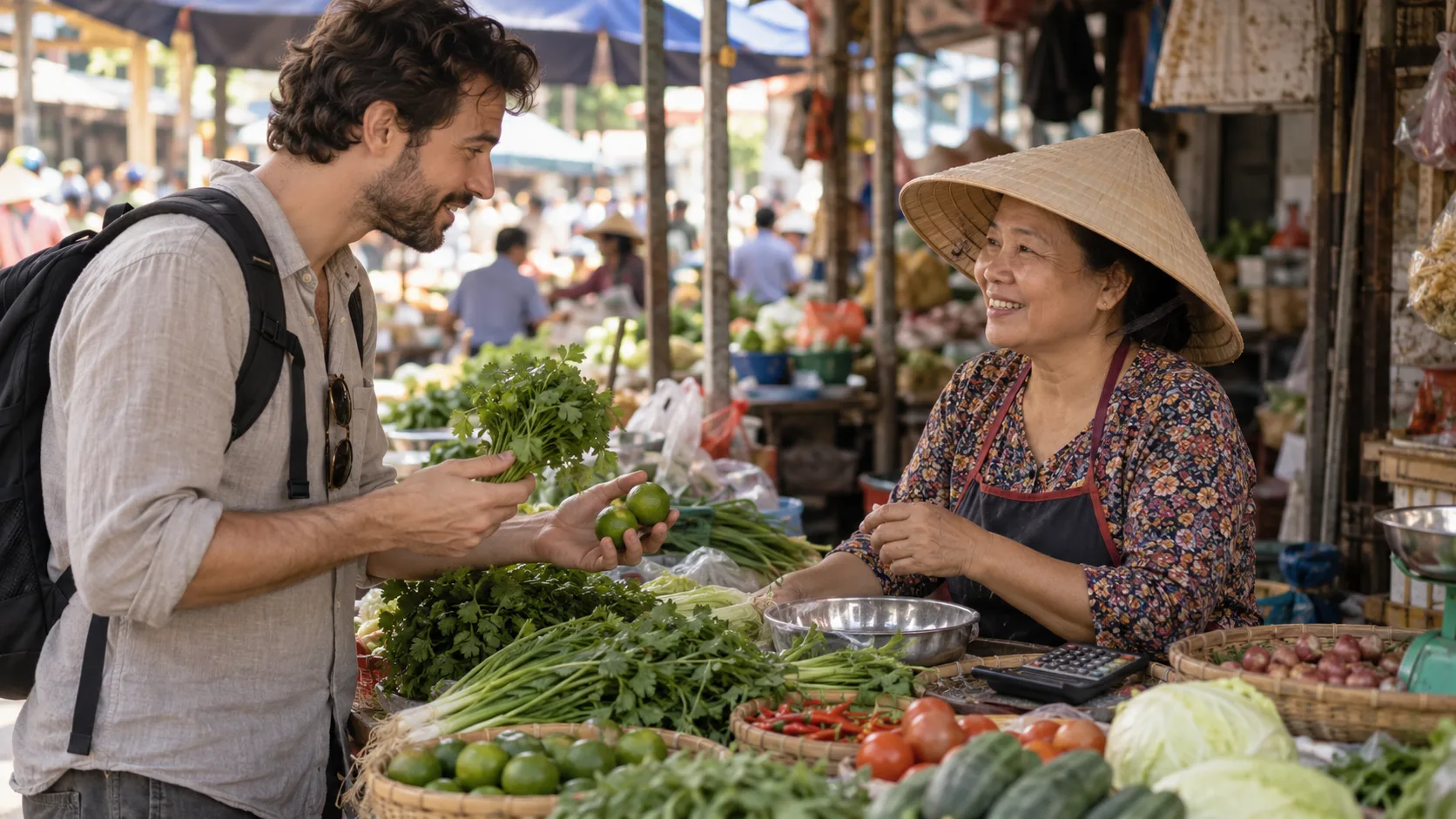
The best way to bargain in Vietnam is to understand the approximate price first, make a reasonable counteroffer and keep the conversation friendly. Bargaining works better as a short negotiation between buyer and seller than as an attempt to force the lowest possible price.
There is also no reliable universal rule that says foreigners should automatically offer exactly half of the first price. The appropriate discount depends on the market, product, location and initial asking price.
Check Several Prices First
Browse a few stalls before buying when similar products are available nearby. Comparing prices gives you a realistic range and reduces the risk of negotiating from an uninformed starting point.
This approach is also recommended in Vietnam Tourism's guidance on shopping and payments, which suggests checking with several vendors before settling on a price.
Make a Reasonable Counteroffer
Ask the price first rather than immediately naming your own number. If the setting allows bargaining, respond with an amount you would genuinely be willing to pay.
Useful phrases include:
“Bớt một chút được không?” — Can you lower the price a little?
“Giá tốt nhất là bao nhiêu?” — What is your best price?
A smile and calm tone usually work better than showing frustration.
Consider Buying More Than One Item
If you genuinely want several items from the same seller, asking for a better combined price can be easier than aggressively negotiating each item separately.
For example, asking for a small discount on three souvenirs may make more sense than spending several minutes negotiating a minor amount on one inexpensive item.
Know When to Walk Away
You are not required to complete the purchase simply because you asked the price. If the seller and buyer cannot agree, decline politely and continue looking.
A useful phrase is:
“Cảm ơn, để tôi xem thêm.” — Thank you, I’ll look around a little more.
Walking away should be a genuine decision, not an aggressive tactic.
How to Read Prices, Weights and Vietnamese Dong
Vietnam uses the Vietnamese đồng, written as VND or ₫, and prices often contain more zeros than newcomers are accustomed to seeing. Learning to read shorthand such as “20k” and confirming whether a food price refers to one item or a unit of weight can prevent many shopping mistakes.
According to Vietnam Tourism's currency guide, VND is the country's official currency and current banknotes include denominations up to 500,000 VND.
What Do 20k, 100k and 500k Mean?
In informal writing and conversation, k commonly means one thousand:
-
20k = 20,000 VND
-
50k = 50,000 VND
-
100k = 100,000 VND
-
500k = 500,000 VND
This shorthand appears frequently in messages, menus, online listings and casual price discussions.
Do not rely on color alone when handling cash. Vietnam Tourism specifically warns visitors to check the denomination carefully because the 20,000 VND and 500,000 VND notes can appear similar at a quick glance.
Per Item, Per Pack or Per Kilogram?
For grocery shopping in Vietnam, the number itself is only part of the price. You also need to know the unit.
Fruit might be priced by kilogram, while a coconut could be priced per fruit and packaged snacks per bag or box. Meat and seafood may also be quoted according to weight.
Before agreeing to a purchase, ask:
“Một ký bao nhiêu?” — How much per kilogram?
For weighed goods, look at the scale where possible and confirm the total before paying.
Cash, Card or QR? How Should Foreigners Pay in Vietnam?
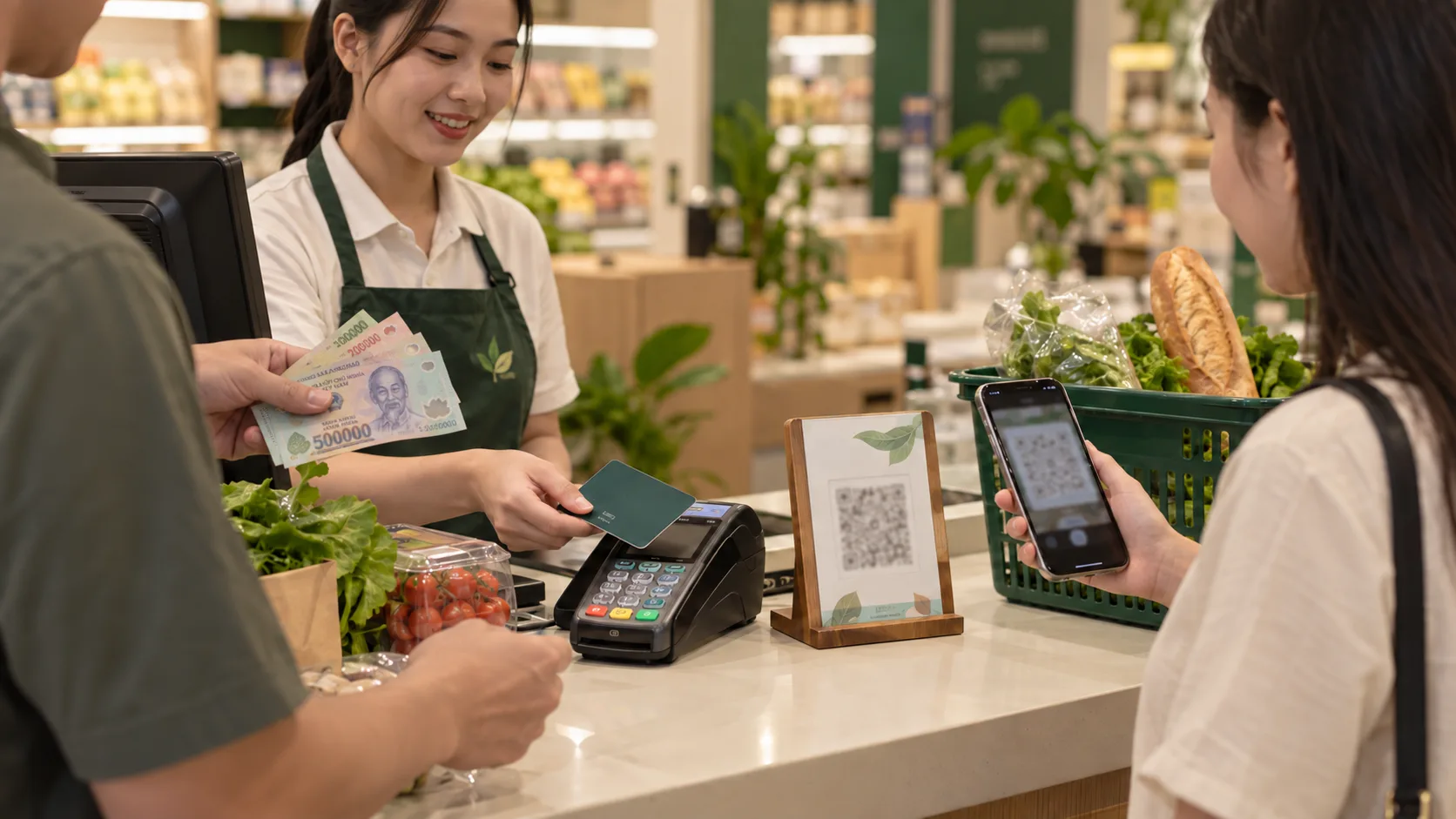
Foreign visitors should keep more than one payment option available in Vietnam. Cash remains useful for small vendors and markets, international cards are widely usable at many formal businesses, and QR payments are common but may require a compatible banking or payment app.
A QR code displayed at a Vietnamese shop does not automatically mean every foreign banking app can pay it.
|
Payment Method |
Markets |
Supermarkets |
Malls |
What Foreigners Should Know |
|
VND cash |
Very useful |
Accepted |
Accepted |
Best backup for small purchases |
|
International card |
Limited at small stalls |
Common |
Common |
Check foreign transaction fees |
|
Domestic QR |
Common at many businesses |
Often available |
Often available |
Usually designed for compatible local payment networks |
|
Cross-border QR |
Selected merchants/networks |
Selected merchants |
Selected merchants |
Depends on participating foreign app and network |
When Cash Is Still Useful
Cash is particularly useful at small market stalls, street vendors and locations where card terminals are unavailable. Carrying smaller denominations also makes everyday purchases easier.
Vietnam Tourism notes that cash continues to be used for smaller purchases, while many hotels, restaurants, boutiques and grocery stores accept international debit and credit cards.
Where International Cards Usually Work
Supermarkets, established retailers, malls, hotels and many restaurants are more likely to accept international cards than small market stalls.
Your bank or card provider may apply currency conversion or foreign transaction fees. Check those charges separately rather than assuming the merchant's listed VND price is the final amount that will appear on your statement.
Can Foreigners Use QR Payments in Vietnam?
Some foreign visitors can use cross-border QR payments in Vietnam, but compatibility depends on the country, payment network and participating app. A standard Vietnamese QR code should therefore not be treated as universally compatible with overseas banking apps.
Vietnam's National Payment Corporation, NAPAS, operates VietQRGlobal for cross-border QR payments. In July 2026, for example, NAPAS and partners launched a Vietnam–Singapore cross-border QR payment service that allows users of participating Singapore payment apps to pay at VietQRGlobal acceptance points in Vietnam.
NAPAS has also been expanding the VietQRGlobal acceptance network for international visitors. The practical lesson is simple: check whether your specific app and country are supported before relying on QR as your only payment method.
Grocery Shopping in Vietnam: What Foreigners Should Know
Grocery shopping in Vietnam becomes much easier when you separate fresh-market skills from packaged-food skills. For produce, focus on price per unit, ripeness and physical condition; for packaged or imported food, focus on the label, date, origin, storage requirements and packaging condition.
Newcomers do not need to choose exclusively between a wet market and a supermarket. Many residents use different stores for different needs.
Buying Fresh Fruit and Produce
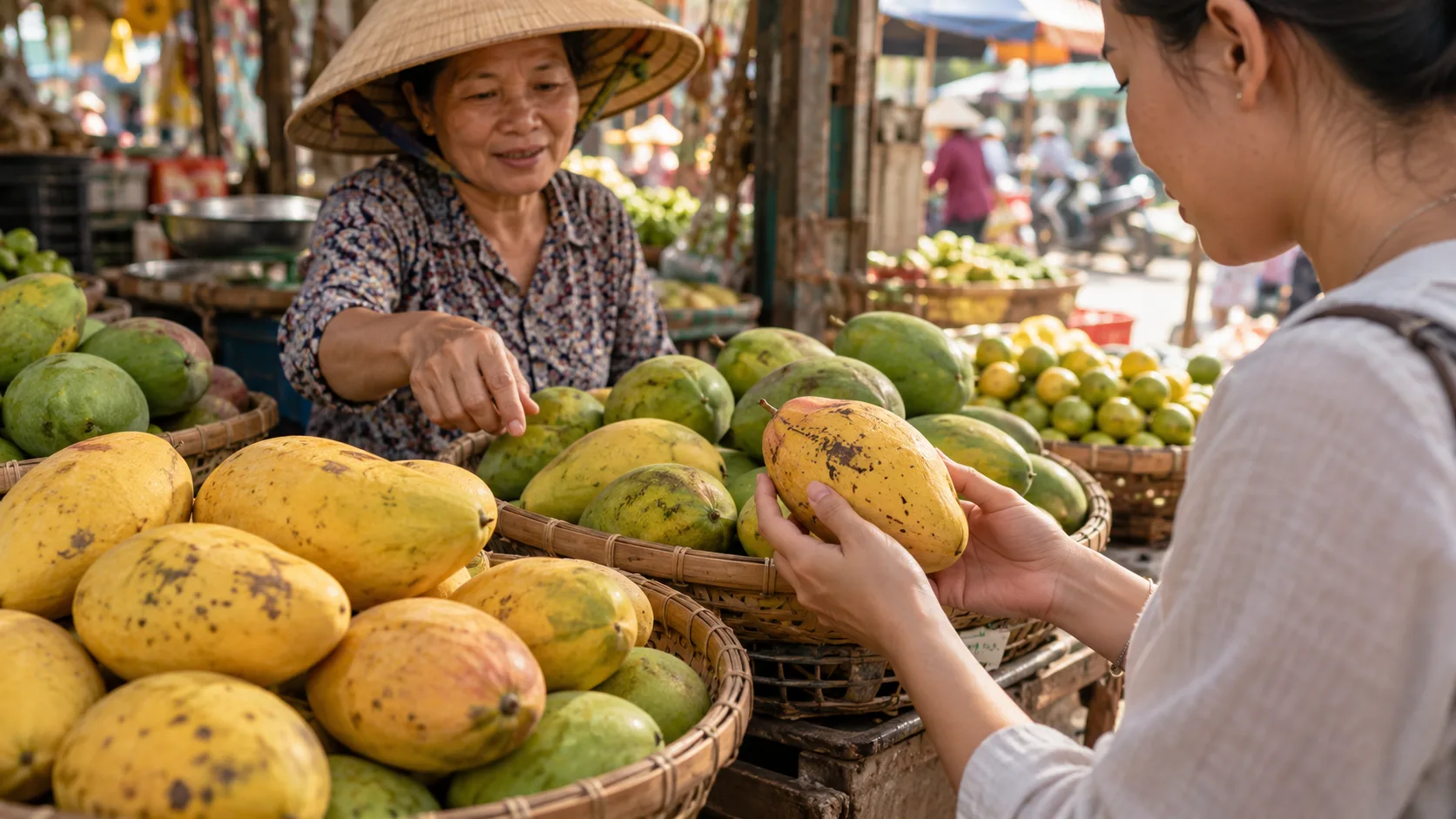
Vietnam has a wide range of tropical and seasonal produce, but visual appearance alone does not tell you whether fruit is ready to eat. Mangoes and avocados, for example, may be purchased at different stages of ripeness depending on when you plan to use them.
Ask the seller when you are unsure:
“Cái này ăn được chưa?” — Is this ready to eat yet?
If you want produce for later, explain that as well rather than choosing only the softest fruit available.
For examples of local harvest periods and practical selection tips, see this Vietnamese seasonal fruit guide.
Avoid produce with obvious mold, extensive bruising, leaking liquid or severe physical damage. With unfamiliar fruit varieties, asking the seller about ripeness can be more useful than applying rules learned from another variety.
Buying Packaged and Imported Food
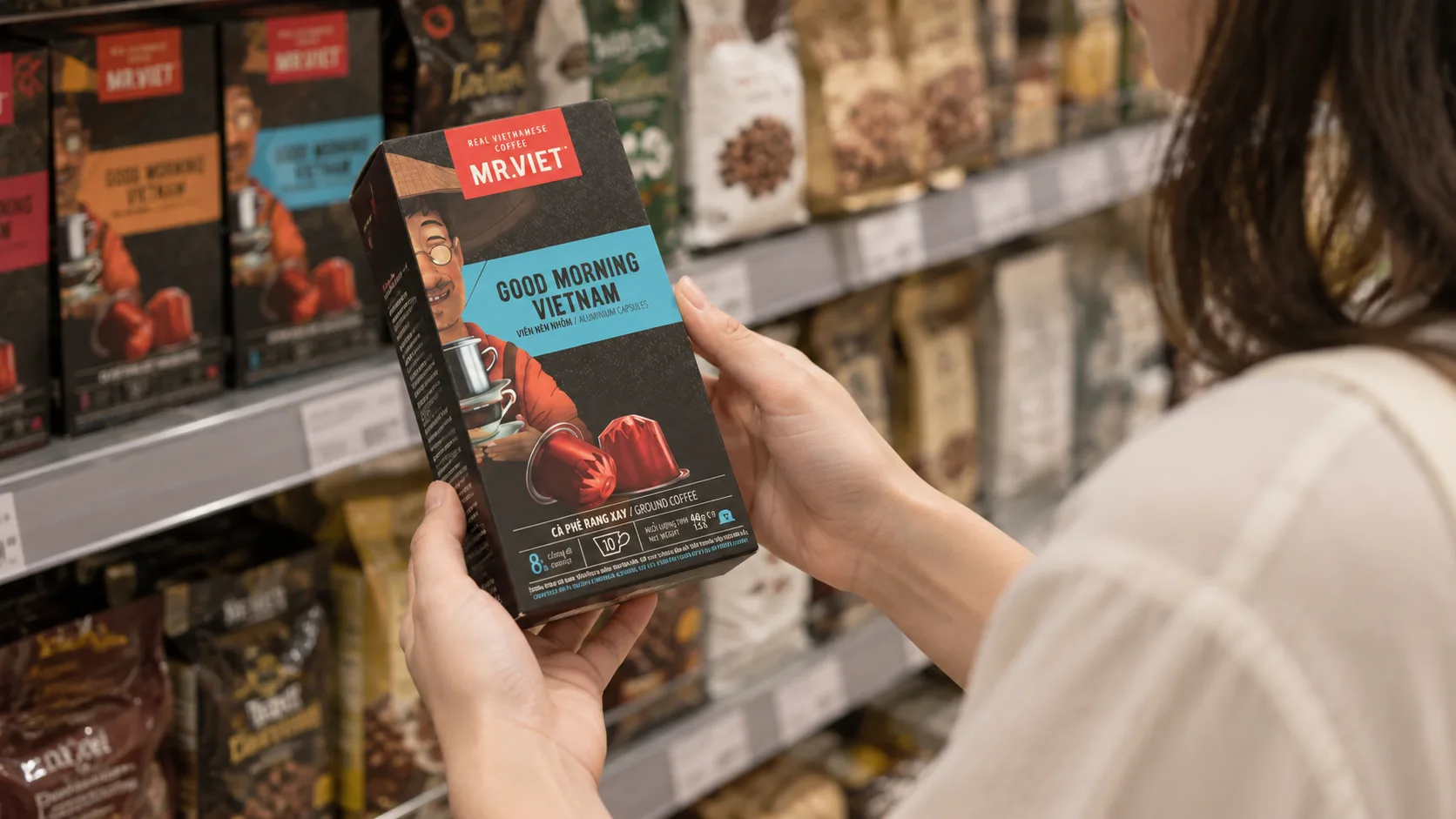
Packaged foods provide more information than an open market stall, but only if you read the label. Check the product name, quantity, country of origin, expiry or best-before date, storage instructions and allergen information that is relevant to you.
For refrigerated and frozen products, consider storage conditions as well as the expiry date. A product that requires cold storage should be handled accordingly during transport home.
Imported packaging may contain both original manufacturer information and locally required supplementary information. When comparing products, use the available label information rather than relying only on front-of-pack marketing claims.
Understanding Organic Certifications
If you specifically want organic products, learn to distinguish a recognized certification from generic words or green packaging. Certifications such as USDA Organic, the EU organic logo and JAS relate to different regulatory systems and should be interpreted according to their actual standards.
This guide to international organic certifications explains the major certification systems in more detail.
Common Shopping Mistakes to Avoid in Vietnam
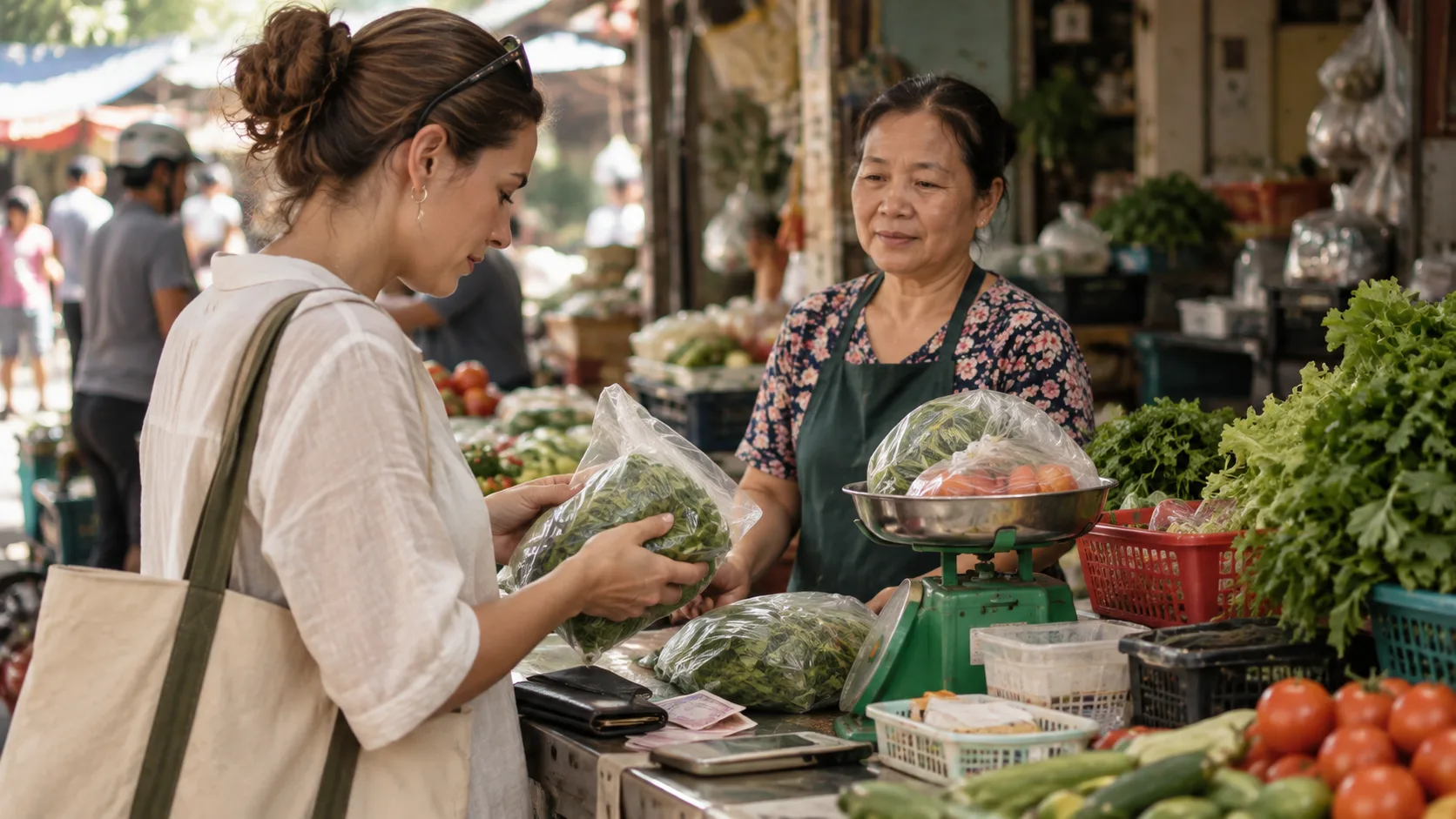
Most problems with shopping in Vietnam come from assumptions rather than complicated rules. The most useful habit is to confirm the price, unit and payment method before completing the purchase.
Bargaining Everywhere
Vietnam is not one giant negotiable marketplace. Bargaining at an informal market can be normal, while attempting the same thing at a supermarket checkout will usually be inappropriate.
Judge the store format first.
Buying Before Confirming the Price
Ask the price before accepting a service, opening a package or having an item prepared when the price is not displayed.
For weighed goods, confirm both the price per unit and the final total.
Forgetting to Ask “Per What?”
A sign showing “80,000” is not useful if you do not know whether it means one item, one kilogram or one package.
This is particularly important with fruit, seafood, meat and other goods sold by weight.
Assuming Every QR Code Works With a Foreign App
QR payments are highly visible in Vietnam, but the visible code does not tell you whether your overseas app supports the underlying network.
Carry a backup payment method until you know your app works.
Handing Over a Large Note Without Checking It
Look at the denomination before paying and check your change before leaving.
This is good practice anywhere, but it is especially useful while you are still becoming familiar with VND banknotes.
Buying Fruit for the Wrong Day
The ripest fruit is not necessarily the best choice if you plan to eat it several days later.
Tell the vendor when you intend to eat mangoes, avocados or other ripening fruit and ask for an appropriate stage of maturity.
Ignoring Package and Storage Conditions
An attractive imported package is not enough information. Check the date, seal, label and storage instructions, particularly for dairy, meat, frozen food and other temperature-sensitive groceries.
Treating Tourist-Market Prices as a National Benchmark
Prices can vary substantially between a tourist market, local neighborhood market, shopping mall and supermarket.
Compare like with like before deciding that an item is “cheap” or “expensive” in Vietnam.
Useful Vietnamese Shopping Phrases for Foreigners
A small number of Vietnamese phrases can make shopping in Vietnam noticeably easier. You do not need fluent Vietnamese; being able to ask about price, quantity and payment already solves many everyday situations.
|
Situation |
Vietnamese |
English |
|
Asking the price |
Cái này bao nhiêu tiền? |
How much is this? |
|
Asking per kilogram |
Một ký bao nhiêu? |
How much per kilogram? |
|
Asking for a small discount |
Bớt một chút được không? |
Can you lower the price a little? |
|
Asking for the best price |
Giá tốt nhất là bao nhiêu? |
What is your best price? |
|
Buying an item |
Tôi lấy cái này. |
I'll take this. |
|
Just browsing |
Cảm ơn, tôi chỉ xem thôi. |
Thanks, I'm just looking. |
|
Asking about card payment |
Có thanh toán bằng thẻ không? |
Can I pay by card? |
|
Asking about ripeness |
Cái này ăn được chưa? |
Is this ready to eat? |
|
Asking for a bag |
Có túi không? |
Do you have a bag? |
|
Saying thank you |
Cảm ơn. |
Thank you. |
Even when the conversation continues in English, opening with a simple Vietnamese phrase can make the interaction smoother.
Quick Shopping Checklist for Vietnam
Before paying for something in Vietnam, check seven things: the price, pricing unit, item condition, payment method, final total, change or receipt, and food label when relevant. This short routine works for everything from buying fruit at a market to doing a weekly supermarket shop.
-
Confirm the price. Do not assume an unlisted price.
-
Confirm the unit. Is it per item, pack, 100 grams or kilogram?
-
Inspect the item. Check fresh food, packaging and seals.
-
Confirm payment. Do not assume card or foreign QR compatibility.
-
Check the final total. Especially for weighed goods.
-
Check your change or receipt. Take a moment before leaving.
-
Read food labels. Look at the date, origin, allergens and storage conditions when relevant.
These habits are more useful than trying to memorize a single bargaining percentage or assuming one shopping rule applies across the country.
Shop With the Right Strategy, Not One Rule
Shopping in Vietnam becomes straightforward once you stop looking for one rule that applies everywhere. Markets reward observation and polite communication, while supermarkets and formal retailers offer clearer pricing; cash remains useful, cards simplify many larger purchases, and QR payments depend on compatibility.
For shoppers in Ho Chi Minh City who prefer fixed-price grocery shopping, selected recommended products are currently available at ROOTS at competitive prices, backed by a genuine-product guarantee and express delivery within one hour for customers in the inner city. Wherever you choose to shop, check the price, label, product condition and payment details before completing your purchase.