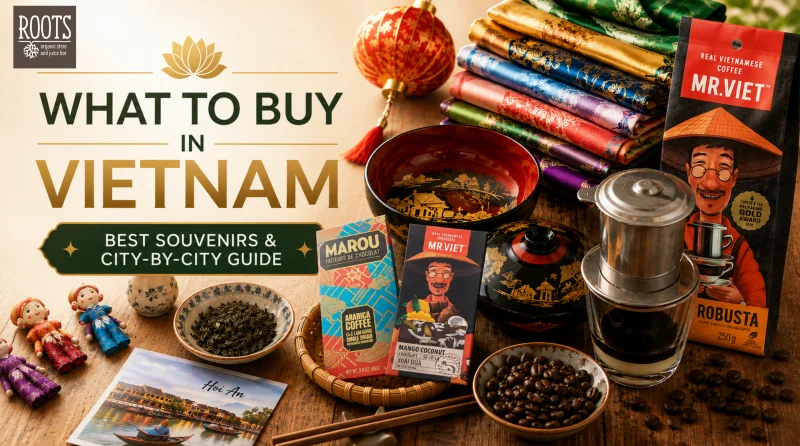
What to Buy in Vietnam: Best Souvenirs & City-by-City Shopping Guide
The best things to buy in Vietnam include Vietnamese coffee and a traditional phin filter, silk products, áo dài, non la (conical hats), lacquerware, bamboo handicrafts, Vietnamese chocolate, and regional specialties. The best souvenir depends on where you travel: Hanoi is known for silk, ceramics, lacquerware and traditional crafts, Hoi An for tailored clothing and lanterns, Da Lat for coffee and dried produce, and Phu Quoc for pepper and other island specialties.
Vietnam is an easy country to shop for souvenirs, but choosing the right item can be surprisingly difficult. Markets often sell similar-looking products at very different prices, while some souvenirs are much easier to pack and take through customs than others.
This guide explains what to buy in Vietnam, where to buy it, how much you can expect to pay, and what to consider before putting it in your suitcase. Prices are indicative rather than fixed because they vary by material, craftsmanship, location, shop type and season.
Top 5 Best Souvenirs to Buy in Vietnam
Vietnam's best souvenirs combine local culture, practical value and relatively easy packing. For most travelers, Vietnamese coffee, silk products, non la, lacquerware and locally made chocolate are among the easiest choices to recommend.
|
Souvenir |
Estimated price* |
Best for |
Easy to pack? |
|
Vietnamese coffee + phin filter |
From about US$5 |
Coffee lovers |
★★★★★ |
|
Silk products |
From about US$10/m for basic silk fabric |
Fashion & textile lovers |
★★★★☆ |
|
Non la |
Usually low-cost |
Cultural keepsake |
★★★☆☆ |
|
Lacquerware & bamboo crafts |
Varies widely |
Home décor & gifts |
★★★★☆ |
|
Vietnamese chocolate |
Varies by brand/size |
Food gifts |
★★★★★ |
*Prices are indicative references, not national fixed prices. Vietnam Tourism, for example, lists coffee with a single-cup phin from around US5, silkfromaroundUS10 per metre, and lanterns from around US$4.
Vietnamese Coffee & the Phin Filter
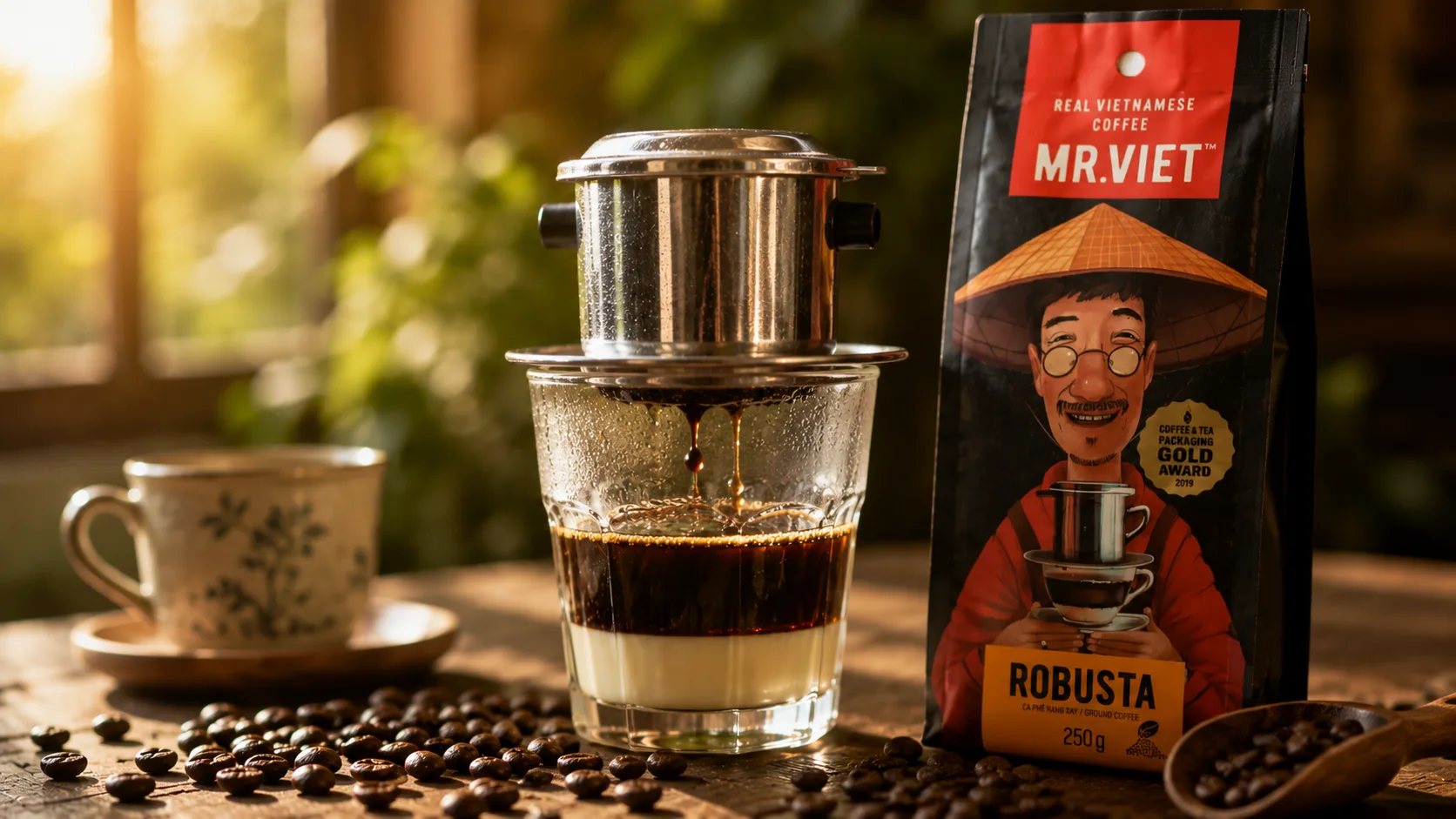 Vietnamese coffee is one of the most practical souvenirs to bring home, especially if you enjoy strong, full-bodied coffee. Vietnam is particularly associated with Robusta, while Arabica is also grown in highland areas such as Da Lat.
A simple souvenir combination is a bag of Vietnamese coffee beans or ground coffee plus a phin filter. The phin is the small metal drip filter traditionally used to make Vietnamese coffee and takes up very little luggage space.
For a stronger, more traditional Vietnamese coffee experience, look for Robusta or blends containing a high proportion of Robusta. Travelers who prefer brighter acidity and more delicate aromas may want to explore Arabica from Vietnam's highland coffee regions.
Vietnam Tourism recommends Da Lat and Buon Ma Thuot as places to look for Vietnamese coffee, and lists a basic coffee-and-phin combination from around US$5 as a souvenir reference.
Packing tip: Coffee is compact, relatively durable and does not require special handling like liquids. Check the package for roast date, origin and ingredient information before buying.
Traditional Silk Products & Áo Dài
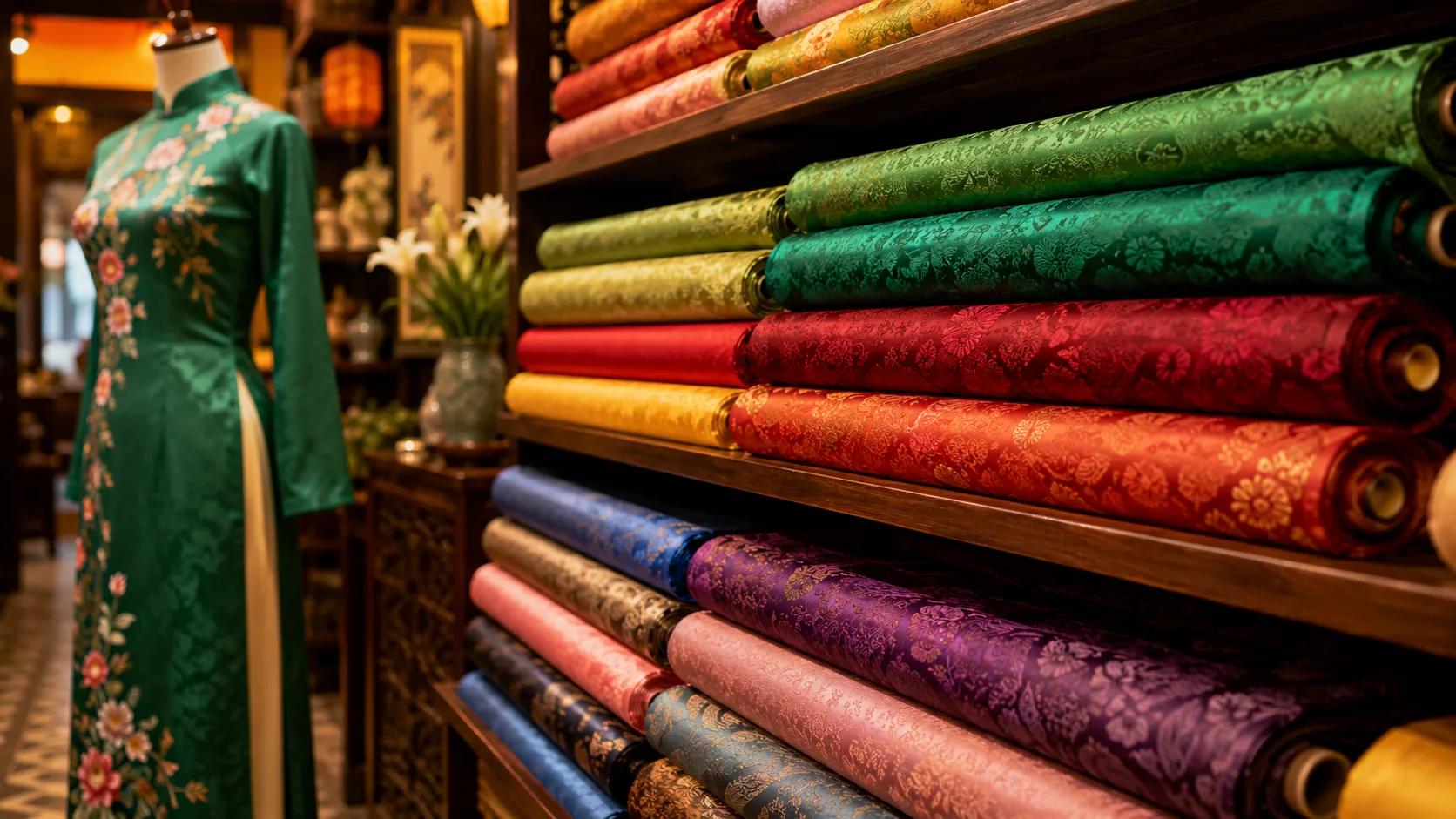
Vietnamese silk is another classic souvenir, particularly for travelers interested in textiles, clothing and traditional craftsmanship. Silk products can range from scarves and accessories to fabric sold by the metre and custom-made áo dài.
Hanoi's Hang Gai Street has a long association with silk shopping, while Van Phuc village near Hanoi is one of Vietnam's best-known silk-producing areas. Hoi An is also a popular place to buy silk and have clothing tailored to individual measurements.
The áo dài is one of Vietnam's most recognizable traditional garments. A ready-made áo dài can be a relatively easy souvenir, while a custom-made version is better suited to travelers who have enough time for measurements and fittings.
When buying silk, do not rely on a single home test such as burning a thread. Instead, check the material label, ask about the fiber composition, compare texture and price, and choose a reputable seller when authenticity matters.
Non La: The Iconic Vietnamese Conical Hat
The non la, or Vietnamese conical hat, is perhaps the most immediately recognizable Vietnamese souvenir. It is lightweight, inexpensive and strongly associated with everyday life and traditional Vietnamese imagery.
The main disadvantage is its shape. A traditional non la can take up more suitcase space than its weight suggests, so travelers with limited luggage should consider buying a smaller decorative version or packing it carefully around softer items.
For a simple cultural keepsake, however, the non la is difficult to beat for price and visual identity.
Lacquerware & Bamboo Handicrafts
Vietnam has a long tradition of lacquerware and bamboo craftsmanship. These products range from small trays and chopsticks to decorative boxes, bowls, baskets and contemporary home accessories.
Vietnam Tourism describes Vietnamese lacquerware as a craft with roots in the country's modern fine-art tradition, while bamboo remains a widely used material for both traditional and contemporary products.
For air travel, choose smaller lacquerware pieces rather than large decorative objects. A compact tray, box or pair of chopsticks can provide the visual character of Vietnamese craftsmanship without consuming much luggage space.
Vietnamese Chocolate & Local Food Gifts
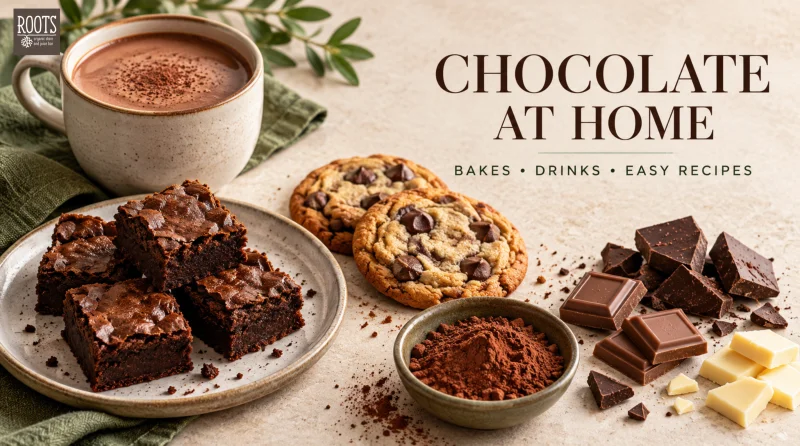
Vietnamese chocolate is a good alternative for travelers who want a modern food souvenir rather than a traditional handicraft. Local chocolate makers use Vietnamese cacao from different growing regions, giving chocolate a distinctly regional identity.
Chocolate, packaged coffee, tea, spices and dried fruit are also easier to pack than fresh food. Always check the product's ingredients, expiry date and packaging condition before purchasing.
For packaged Vietnamese food products that are already sold through established retailers, checking the label and keeping the original packaging intact can make the journey home easier.
City-by-City Guide: What to Buy in Every Major Tourist City
The best souvenir to buy in Vietnam often depends on the city where you are shopping. Buying regionally can save luggage space and gives the souvenir a stronger connection to the place where you found it.
What to Buy in Hanoi: Silk, Ceramics, O Mai & Traditional Crafts
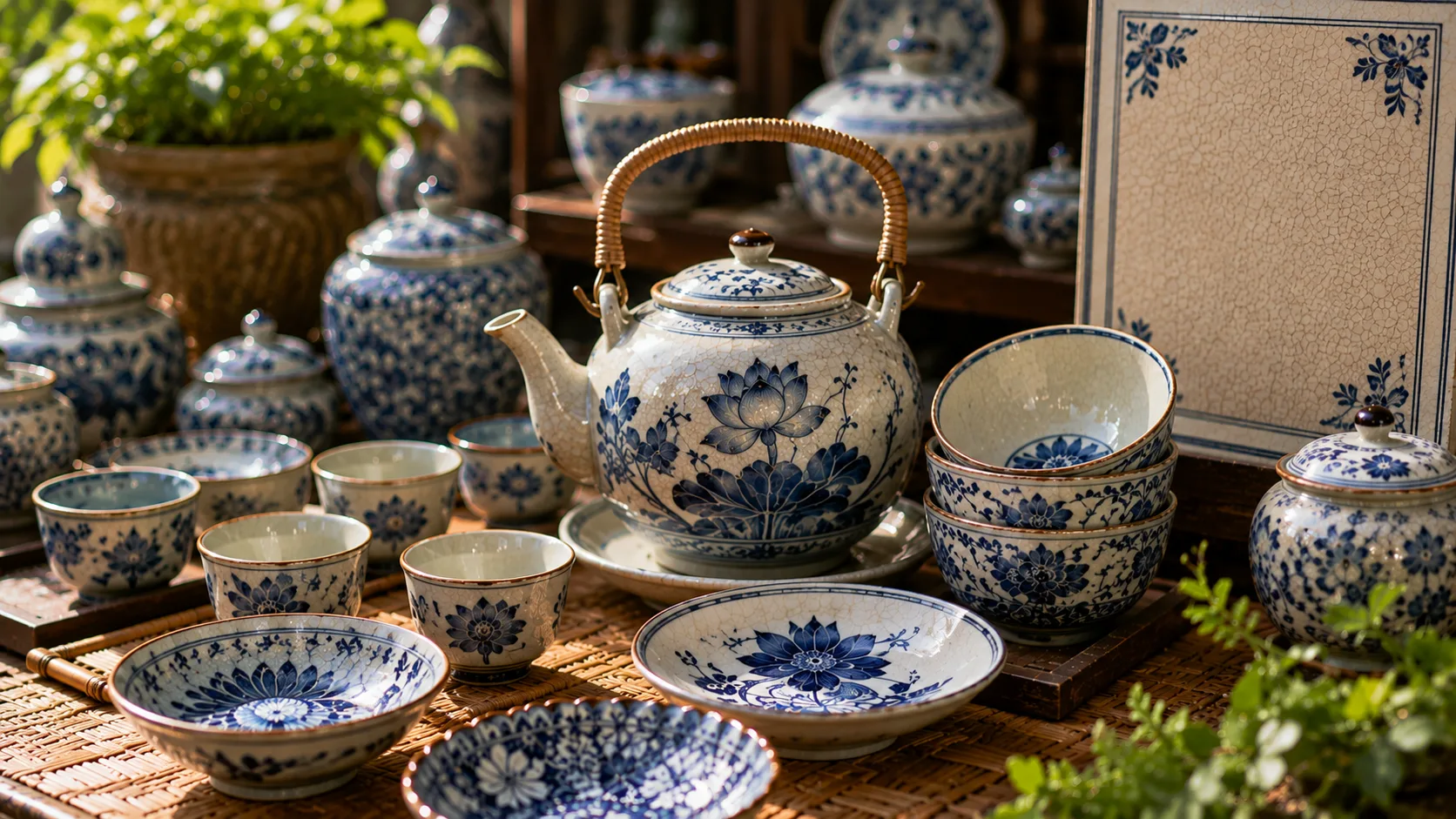
Hanoi is a strong choice for traditional Vietnamese crafts, silk products, lacquerware and regional foods such as o mai, a traditional preserved or candied fruit snack. Travelers interested in ceramics can also visit Bat Trang, the famous pottery village associated with Hanoi.
The Old Quarter is particularly useful for browsing because it brings together textiles, coffee, crafts, food products and other souvenirs in a relatively compact area. Vietnam Tourism specifically highlights silk, coffee, crafts and specialty foods among the shopping options in Hanoi.
Best Hanoi souvenirs: silk, áo dài, lacquerware, ceramics, o mai, traditional prints and small handicrafts.
Best for: travelers looking for traditional Northern Vietnamese culture and craft products.
What to Buy in Ho Chi Minh City: Coffee, Tailoring & Market Finds
Ho Chi Minh City is one of Vietnam's most convenient shopping destinations because traditional markets, modern retailers, cafés, boutiques and specialty stores coexist across the city.
Vietnamese coffee is an especially practical purchase here, while travelers interested in clothing can explore tailoring services and contemporary Vietnamese fashion.
Ben Thanh Market is one of the city's most recognizable shopping landmarks, but travelers should compare prices between several stalls before buying. Markets are useful for variety, while established specialty stores can be preferable when authenticity, packaging and consistent pricing matter.
Best Ho Chi Minh City souvenirs: coffee, phin filters, chocolate, spices, clothing, lacquerware and small handicrafts.
Best for: travelers who want the widest mix of traditional and modern Vietnamese products.
What to Buy in Hoi An: Tailored Clothes, Silk & Lanterns
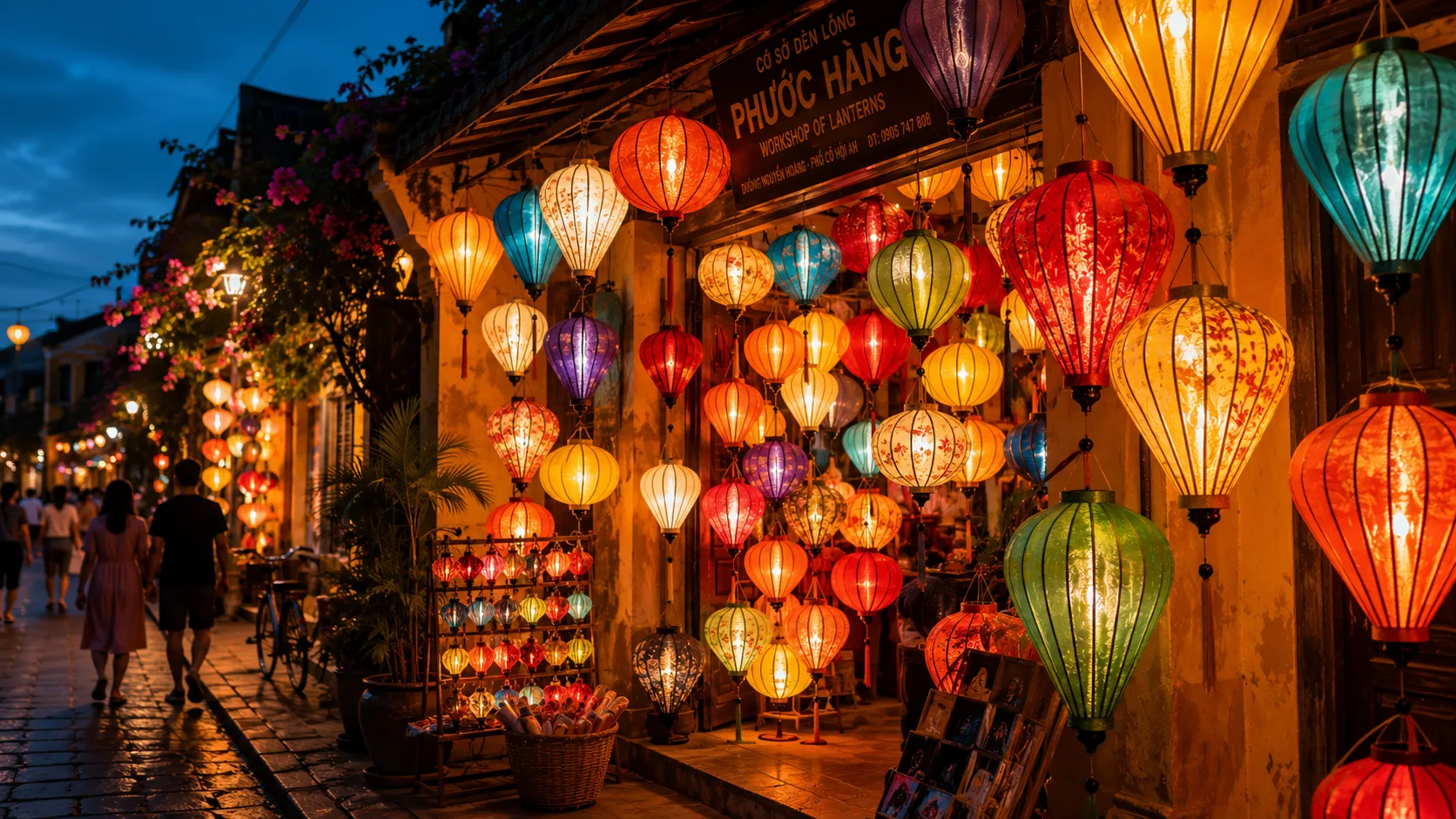
Hoi An is one of the best places in Vietnam to buy tailored clothing. The city is particularly well known for its tailoring shops, where travelers can order shirts, trousers, dresses, jackets and áo dài according to individual measurements.
Silk is another popular purchase, and Hoi An's colorful lanterns make distinctive souvenirs because many designs can be folded or packed relatively easily. Vietnam Tourism notes that paper, silk and bamboo lanterns are widely available around Hoi An Ancient Town, with basic examples historically listed from around US$4.
Best Hoi An souvenirs: tailored clothing, silk, lanterns, leather goods and small handicrafts.
Best for: travelers who want something personalized rather than mass-produced.
Shopping tip: If you are ordering tailored clothing, allow time for at least one fitting and final adjustment instead of scheduling the purchase immediately before departure.
What to Buy in Da Nang: Stone Carvings, Local Food & Compact Gifts
Da Nang is a useful shopping stop for travelers exploring Central Vietnam. The nearby Non Nuoc stone-carving tradition is particularly associated with marble and stone craftsmanship, although large sculptures are difficult to transport internationally.
For most travelers, smaller stone objects, decorative pieces, packaged foods and regional specialties are more practical than large carvings.
Best Da Nang souvenirs: small stone crafts, regional food products, dried specialties and Central Vietnamese handicrafts.
Best for: travelers who want a souvenir connected to Central Vietnam without carrying a large object.
What to Buy in Hue: Me Xung, Tea & Royal-Inspired Crafts
Hue is the place to look for souvenirs connected to Vietnam's imperial heritage. Me xung, a sesame-and-peanut confection, is one of the city's recognizable food gifts, while tea and traditional handicrafts are also suitable choices.
Small decorative objects inspired by Hue's royal heritage can be easier to pack than large replicas or fragile ceramics.
Best Hue souvenirs: me xung, tea, traditional handicrafts and small cultural keepsakes.
Best for: travelers interested in Vietnam's history and imperial culture.
What to Buy in Da Lat: Arabica Coffee, Artichoke Tea & Dried Fruit
Da Lat is one of the best destinations for agricultural souvenirs. The city's cool highland climate is associated with coffee, tea, flowers and a wide range of preserved and dried produce.
For coffee lovers, Vietnamese Arabica from the highlands is worth exploring alongside the stronger Robusta styles found elsewhere in Vietnam. Vietnam Tourism specifically recommends Da Lat and Buon Ma Thuot for Vietnamese coffee.
Dried strawberries, dried fruit, artichoke tea and other packaged specialties are also easy to carry compared with fresh produce.
Best Da Lat souvenirs: Arabica coffee, artichoke tea, dried fruit, jam and packaged agricultural products.
Best for: food lovers and travelers who want edible souvenirs with a strong regional connection.
What to Buy in Nha Trang: Pearls & Coastal Specialties
Nha Trang is particularly associated with coastal products and pearl jewelry. If buying pearls, prioritize established sellers that provide clear information about the pearl type, origin and product documentation.
Travelers should be especially cautious with expensive jewelry purchased from informal market stalls. A low price alone is not evidence of authenticity.
Best Nha Trang souvenirs: pearl jewelry, seafood-based packaged products and coastal handicrafts.
Best for: travelers looking for a higher-value gift.
What to Buy in Phu Quoc: Pepper, Local Products & Island Specialties
Phu Quoc is famous for its pepper-growing tradition, making Phu Quoc pepper one of the most practical souvenirs from the island.
Pepper is lightweight, easy to pack and useful after the trip, making it a better luggage choice than many fragile decorative products.
Best Phu Quoc souvenirs: pepper, packaged local specialties, seafood products that meet your airline and destination-country rules, and small handicrafts.
Best for: food lovers and travelers who want an edible souvenir associated with the island.
Vietnam Shopping Guide: How to Haggle & Avoid Tourist Traps
Shopping in Vietnam ranges from fixed-price specialty stores to traditional markets where bargaining is common. The safest approach is to compare several sellers, understand the approximate value of the item and agree on the price before accepting the product.
The Golden Rules of Bargaining in Vietnam
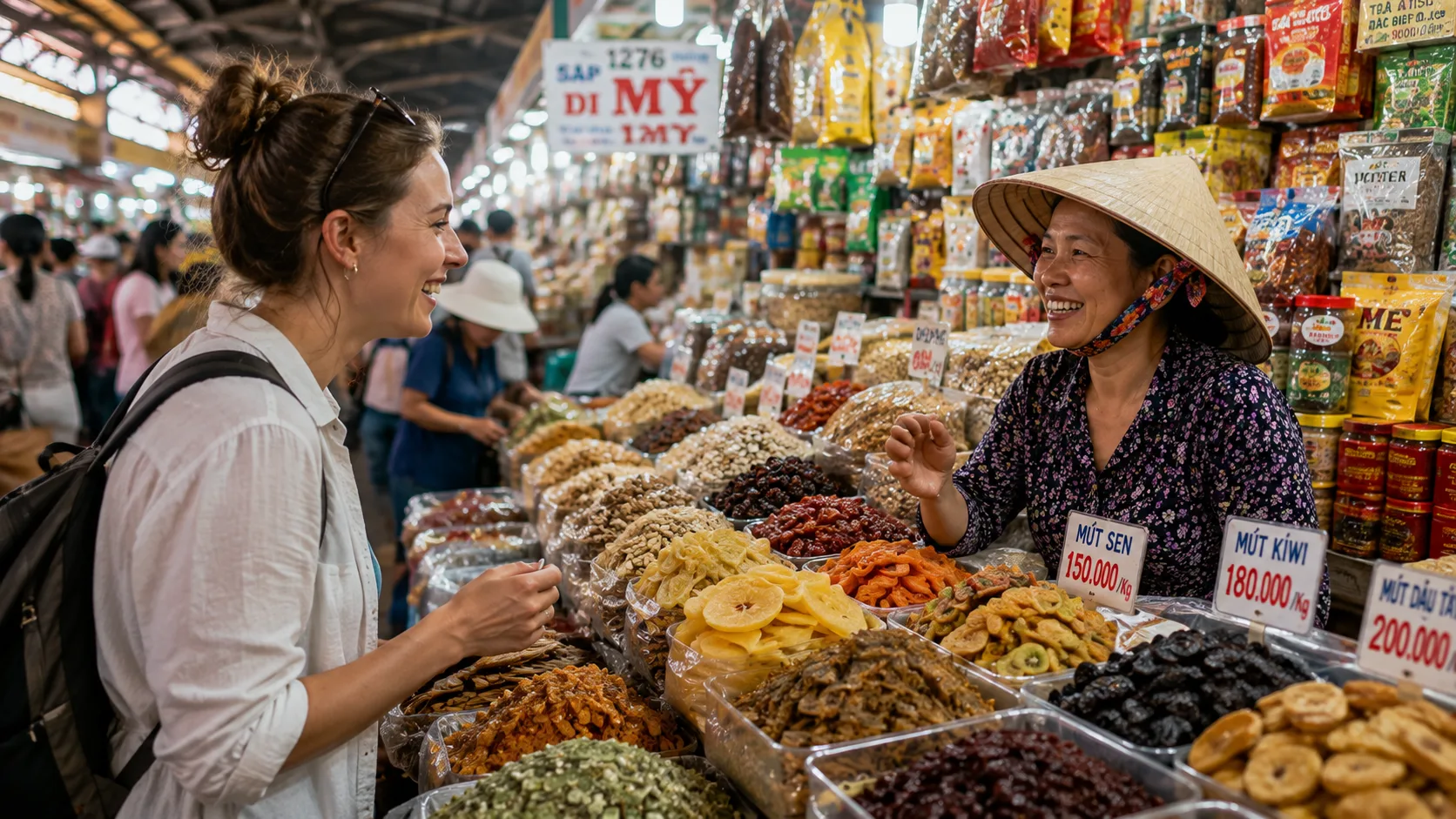
Bargaining is common in many traditional markets, but it is not appropriate everywhere. Fixed-price stores, supermarkets, established boutiques and many specialty retailers generally expect the displayed price to be the final price.
For markets where bargaining is expected:
-
Check several stalls first. Similar products can have very different asking prices.
-
Ask for the price clearly before buying.
-
Make a reasonable counteroffer. There is no universal rule that every item should start at exactly 50% of the asking price.
-
Keep the interaction friendly. Bargaining works better as a conversation than a confrontation.
-
Walk away if the price does not work for you.
-
Check the product before paying. Look for cracks, stains, missing parts or damaged packaging.
-
For expensive products, prioritize documentation and authenticity over bargaining for the lowest possible price.
A useful rule is simple: if you cannot determine whether the price is fair, compare before you negotiate.
How to Spot Fake Silk vs. Real Vietnamese Silk
There is no single quick home test that can reliably authenticate silk in every situation. Burning a fiber or relying only on touch can be misleading, particularly with blended fabrics.
Instead, check the fiber-content label, ask whether the fabric is pure silk or a blend, compare the texture and weight with similar products, and buy from sellers that can explain the material and production origin.
For expensive silk products, documentation and seller reputation are more useful than relying on a single informal test.
What NOT to Buy in Vietnam: Customs & Packing Warnings
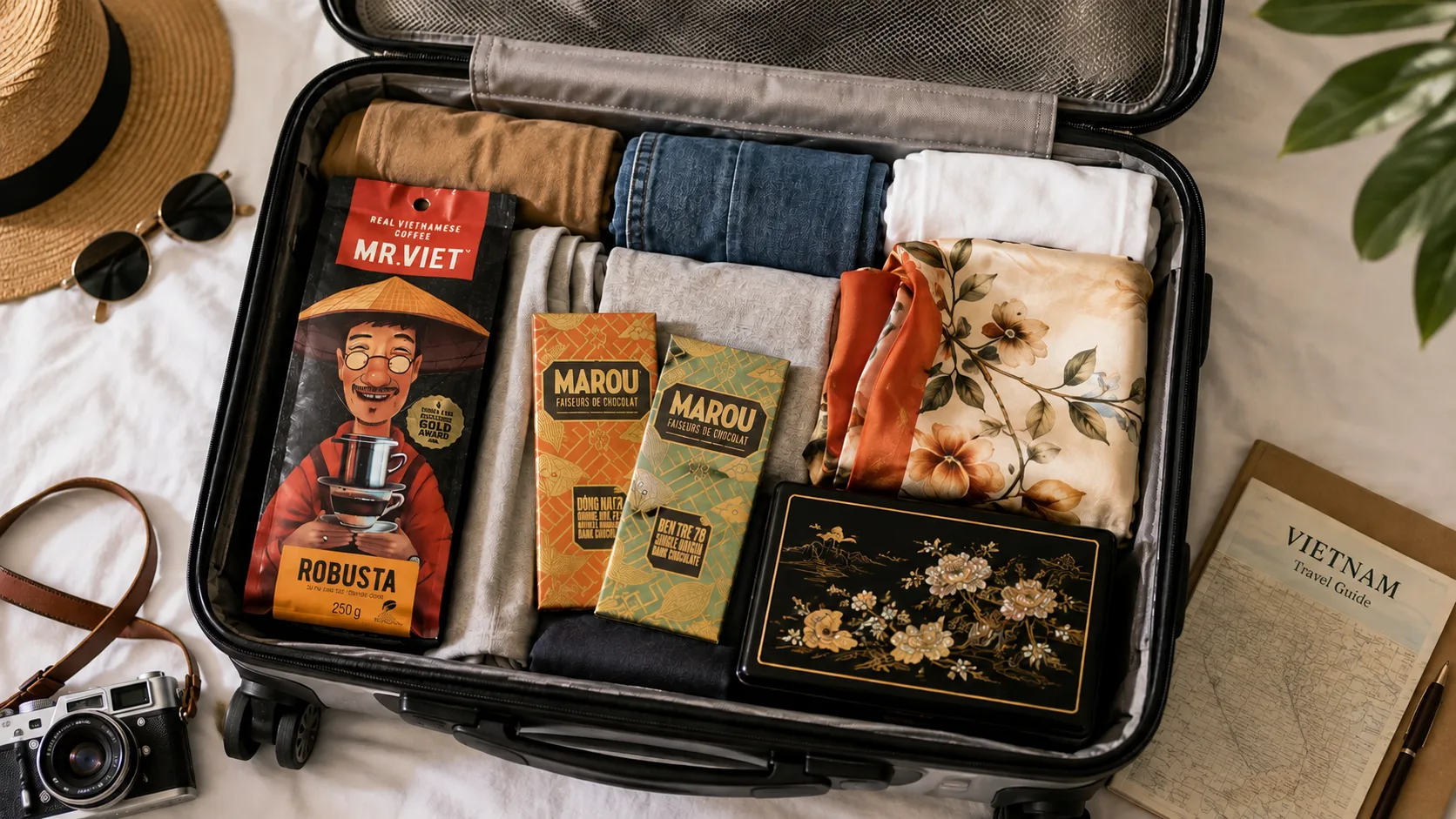
The most important thing to remember is that airline baggage rules and destination-country customs rules are different. A product may be legal to buy in Vietnam but still be restricted in your carry-on, checked baggage or destination country.
Fresh food, liquids, antiques and large fragile objects deserve extra attention before purchase.
Fish Sauce, Durian & Other Strong-Smelling Foods
Fish sauce and durian are not automatically prohibited from air travel, but they can be subject to specific airline restrictions.
For example, Vietnam Airlines recommends that passengers do not carry strong-smelling items such as fish sauce and durian in hand baggage. Its current policy allows certain odorous products in checked baggage under packaging and quantity conditions, including up to 3 litres or 3 kg of fish sauce/other odorous liquids and up to 5 kg of durian or other odorous items on applicable flights. Other airlines may have different rules.
International flights also have separate liquid restrictions. Vietnam Airlines currently states that international carry-on liquids generally must be in containers of no more than 100 ml, with a total limit of 1 litre, subject to stated exceptions.
Practical advice: if you want to bring fish sauce home, buy a professionally packaged product, check your airline's latest rules and check the import rules of your destination country before departure.
Fresh Fruit & Agricultural Products
Fresh fruit, meat, seeds, plants and other agricultural products can be subject to destination-country biosecurity rules.
Even when an item can be transported on the aircraft, it may not be permitted through customs after arrival. Packaged, commercially sealed food is generally easier to manage than fresh produce, but travelers should still check the rules of their destination country.
Antiques & Cultural Objects
Avoid purchasing antiques or culturally significant objects when the seller cannot provide convincing information about their origin and legality.
A cheap “antique” from a market may be a modern reproduction, while genuine historical objects can involve export restrictions or documentation requirements.
For valuable cultural objects, use an established seller and ask about export documentation before paying.
Fragile Ceramics & Large Stone Objects
Ceramics and stone carvings can be beautiful souvenirs, but they are poor choices for travelers with limited luggage space.
If you buy them, choose smaller pieces and ask the seller for professional protective packaging. Keep fragile items away from heavy luggage and consider whether the additional checked-baggage risk is worthwhile.
Final Tips: Buy Less, Choose Better
The best Vietnam souvenirs are not necessarily the most expensive ones. A small bag of regional coffee, a phin filter from a local shop, a silk scarf from Hanoi, a lantern from Hoi An or a packet of Phu Quoc pepper can carry a stronger connection to your trip than a large generic souvenir.
If you are traveling through several Vietnamese cities, avoid buying everything in your first destination. Save city-specific purchases for the places where they have the strongest connection: silk and traditional crafts in Hanoi, tailored clothing in Hoi An, highland coffee and dried produce in Da Lat, and pepper in Phu Quoc.
For packaged Vietnamese food and coffee, travelers can also compare established retail options such as ROOTS when the relevant products are available, with current promotions, authentic products and 1-hour express delivery in central Ho Chi Minh City. Wherever you shop, check the label, packaging, origin and expiry date before buying.
The simplest shopping strategy is buy regional, pack light and check the rules before you fly.



.webp?v=12951789384894)

