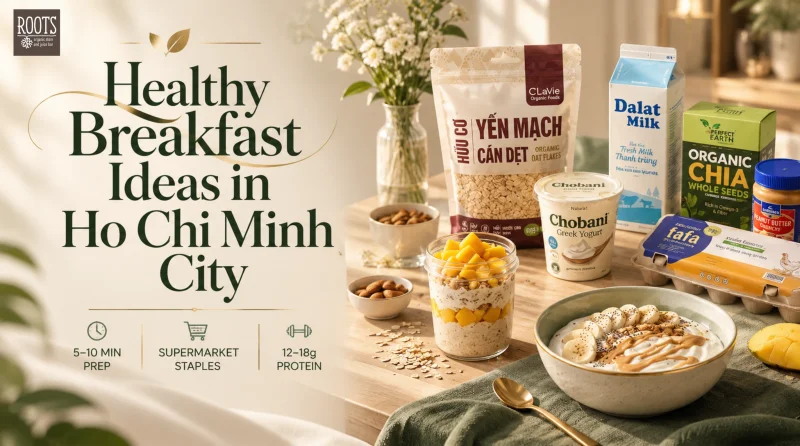
Ordering delivery or sitting down at a brunch café in Thao Dien or District 1 every morning quickly drains both your time and your food budget, while shopping at local supermarkets often leads to buying yogurt or cereal packed with hidden refined sugar. Knowing a few essential Vietnamese label terms and keeping core organic staples in your kitchen lets you assemble a balanced, high-protein breakfast in 5 to 10 minutes right in your apartment. The nutritional figures below are general estimates based on standard ingredient databases for everyday meal planning, not individualized clinical dietary prescriptions.
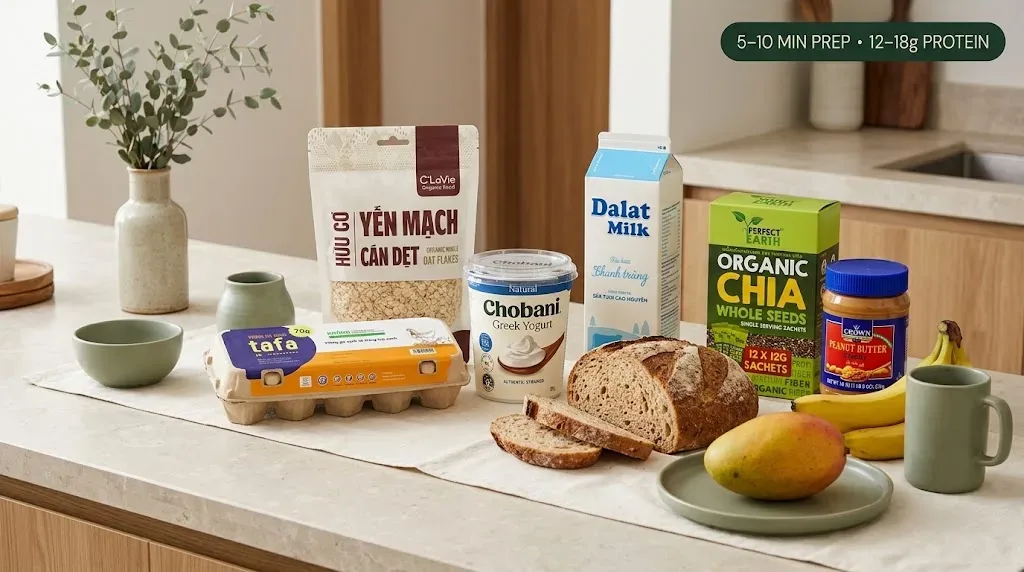
Healthy breakfast staples at ROOTS Ho Chi Minh City including rolled oats, Greek yogurt, free-range eggs, chia seeds, and peanut butter for 5-10 minute meals.
Where Can Expats Buy Healthy Breakfast Staples in Ho Chi Minh City (And How Do You Read Vietnamese Labels)?
Expats can source certified organic breakfast staples—including rolled oats, free-range eggs, unsweetened yogurt, chia seeds, and 100% natural peanut butter—in a single trip via the curated selection at ROOTS Organic Store in Ho Chi Minh City. When checking Vietnamese packaging, look directly on the front label for "Không đường" (unsweetened) and avoid products marked "Có đường" (sweetened) or "Ít đường" (low sugar, which still contains added refined sugar).
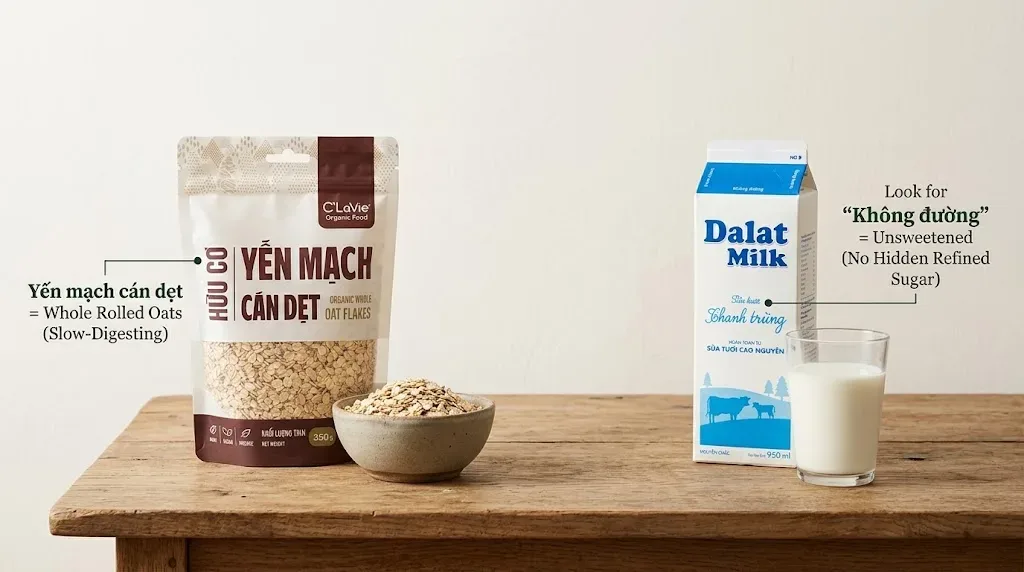
Shopping for morning groceries in Vietnam requires paying close attention to two local packaging details: sweetener labels and grain processing. Most dairy and soy or oat milks on local shelves default to sweetened versions unless the front panel explicitly states "Không đường". Similarly, many oat packages sold in convenience stores are finely ground 3-in-1 instant packets mixed with creamer and sugar; for slow-digesting complex carbohydrates, look for "Yến mạch cán dẹt" (whole rolled oats). According to USDA FoodData Central nutritional profiles, 40 g of dry rolled oats provides roughly 5 g of protein and 4 g of dietary fiber, while two cooked large eggs (100 g) supply 12 to 13 g of complete protein.
|
Staple Item |
Vietnamese Label Term |
Single Meal Amount |
Available at ROOTS |
|
Rolled Oats |
Yến mạch cán dẹt |
40 g dry (1/12 of 500 g bag) |
Organic Rolled Oats (400 g – 500 g) |
|
Plain Yogurt |
Sữa chua không đường |
100 g – 200 g (1 – 2 cups) |
Unsweetened Organic / Greek Yogurt |
|
Fresh Eggs |
Trứng gà hữu cơ / thả vườn |
2 eggs (from 6 or 10 pack) |
Certified Organic Free-Range Eggs |
|
Peanut Butter |
Bơ đậu phộng tự nhiên |
15 g – 30 g (1 – 2 tbsp) |
100% Natural Roasted Peanut Butter |
|
Chia Seeds |
Hạt chia hữu cơ |
15 g dry (1.5 tbsp) |
Organic Black & White Chia Seeds |
|
Whole-Wheat Bread |
Bánh mì nguyên cám / men tự nhiên |
1 – 2 slices (40 g – 80 g) |
Fresh Whole-Wheat / Sourdough Loaf |
|
Unsweetened Milk |
Sữa không đường |
120 ml – 180 ml |
Organic Dairy / Oat or Soy Milk |
|
Tropical Fruit |
Chuối, xoài, thanh long |
80 g – 100 g diced |
Seasonal Organic Local Fruits |
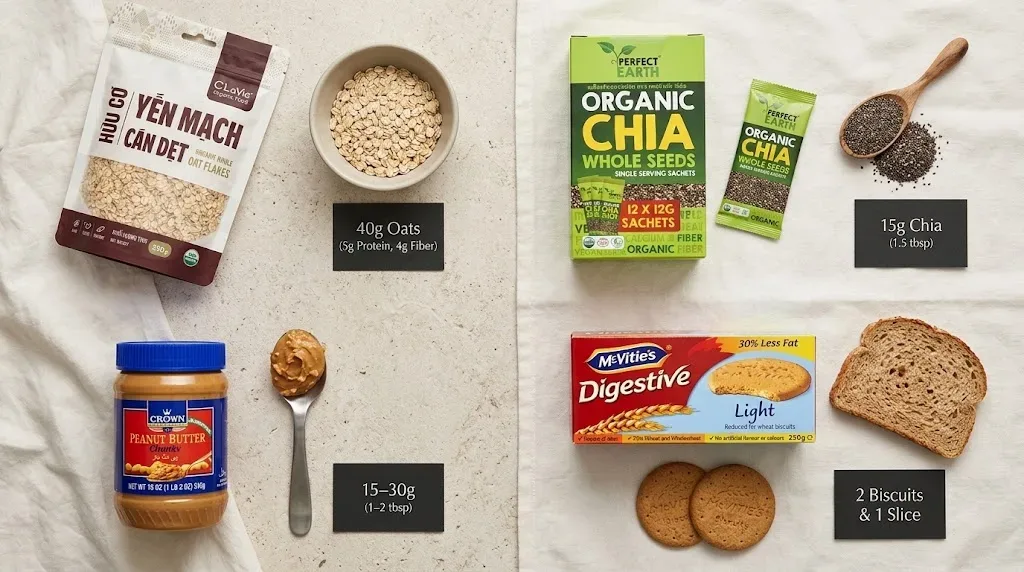
Note on local pack sizes in Vietnam: Yogurt is most commonly sold in 4-packs of 100 g plastic or glass cups rather than large 500 g tubs, so an adult high-protein breakfast typically uses 1.5 to 2 cups (150 g – 200 g) paired with seeds and fruit. Fresh whole-wheat bread, chia seeds, and seasonal local fruits can be ordered together from our curated organic breakfast staples without needing to visit multiple specialty shops across the city.
Which High-Protein Breakfasts Take Under 10 Minutes in a Small HCMC Apartment Kitchen?
Two cooked eggs with whole-wheat toast, overnight rolled oats soaked with chia seeds and milk, or an unsweetened yogurt bowl topped with natural peanut butter each provide 12 to 18 g of protein and take 5 to 10 minutes using only a refrigerator or a single induction burner.
Most serviced apartments and studios in Ho Chi Minh City come equipped with a compact refrigerator and a single induction hob rather than a full oven. The three meal combinations below are scaled to local Vietnamese packaging sizes and replace pricey imported berries with nutrient-dense tropical fruits and seeds available at ROOTS.
1. Tropical Overnight Oats with Chia Seeds (5-Minute Night-Before Prep)
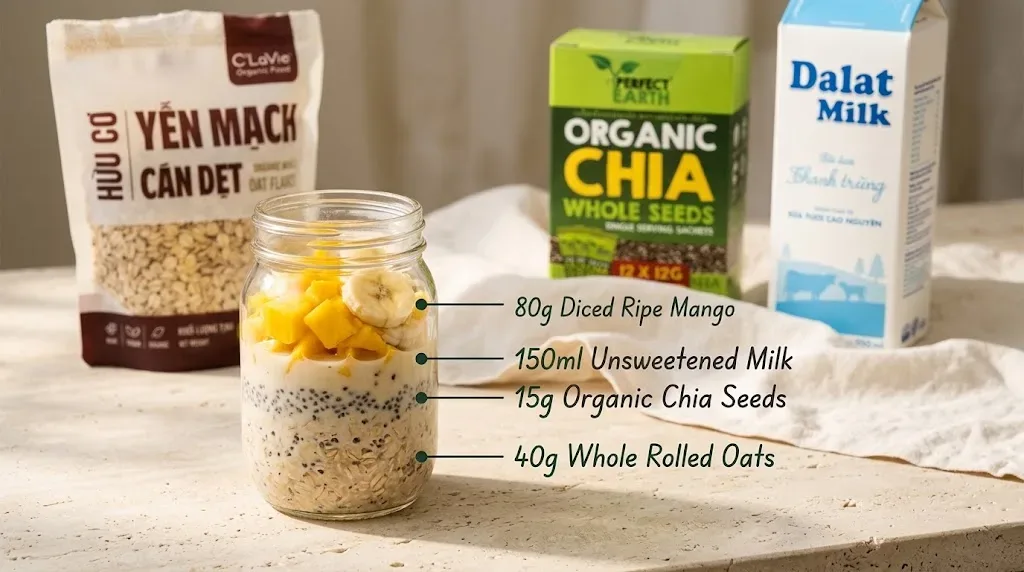
Combine 40 g of dry rolled oats (one-twelfth of a standard 500 g bag), 15 g of organic chia seeds (about 1.5 tablespoons, adding 2.5 g of protein and 5 g of fiber), and 150 ml of unsweetened milk in a glass jar before bed. Stir well, seal the lid, and chill overnight so the soluble beta-glucan fiber in whole rolled oats absorbs the liquid and thickens naturally without cooking.
To keep your morning jar creamy rather than pasty, always select thick whole-grain rolled oats instead of chopped instant oat packets, which break down into a watery porridge after soaking for 8 hours. In the morning, top the chilled oats with 80 g of diced ripe mango or banana. If you want to prep multiple jars for the workweek with cacao, matcha, or yogurt adjustments, explore our kitchen guide on overnight oats ratios and flavor variations (written in Vietnamese with clear visual ingredient tables and browser translation support).
2. 10-Minute Savory Skillet Eggs with Whole-Wheat Toast
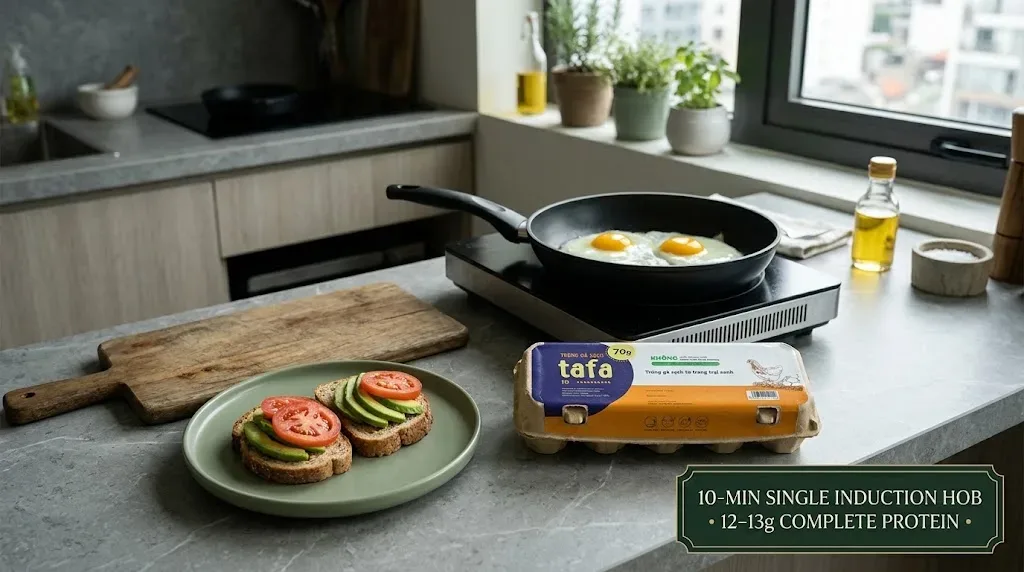
Heating a non-stick skillet on a single induction burner lets you prepare two organic free-range eggs in under 10 minutes, delivering 12 to 13 g of complete protein alongside choline and vitamin D. Pair the eggs with one or two slices of pan-toasted whole-wheat or sourdough bread and sliced tomato or avocado for steady morning energy.
Because high ambient temperatures in Vietnam accelerate spoilage, follow FDA egg refrigeration and safe cooking guidelines by storing fresh eggs inside the main refrigerator compartment at 4°C or below immediately after delivery and cooking until both the whites and yolks are firm. If you want to switch up your morning skillet routine between soft-scrambled curds, steamed eggs, and pan-poached styles, check our step-by-step guide to 5 high-protein 10-minute egg breakfasts (available in Vietnamese with exact timing breakdowns).
3. Unsweetened Yogurt Parfait & Natural Peanut Butter Banana Toast (5-Minute No-Cook)
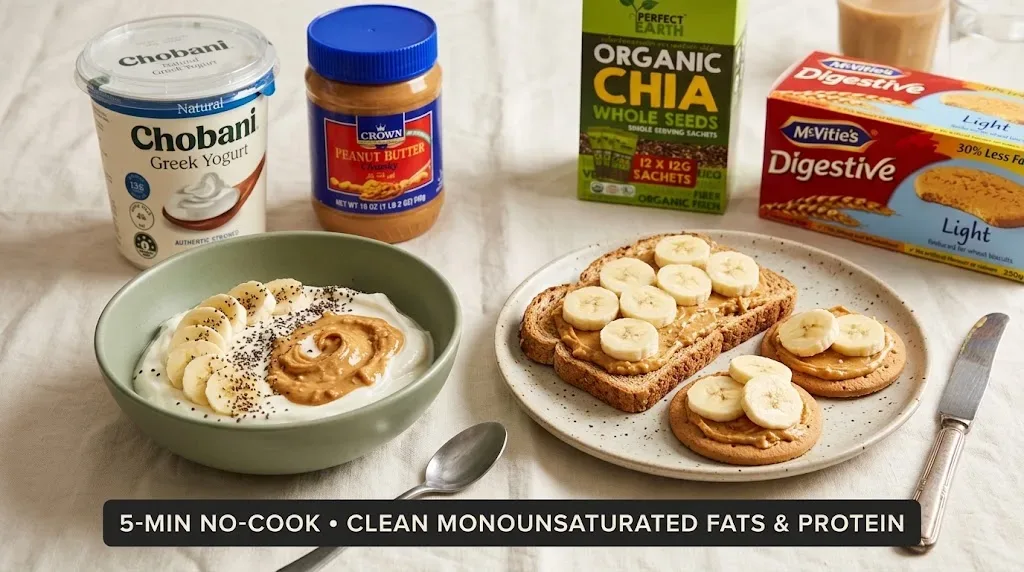
On mornings when you do not want to turn on the stove, spoon two 100 g cups of unsweetened yogurt into a bowl and top with 15 g of chia seeds, one sliced banana, and 15 g (1 tablespoon) of 100% natural peanut butter. Alternatively, spread 30 g (2 tablespoons) of natural peanut butter across two toasted slices of whole-wheat bread and layer sliced banana on top.
When choosing nut butter at the store, check the ingredient list to confirm it contains 100% dry-roasted peanuts (with or without a pinch of sea salt) rather than hydrogenated palm oil and icing sugar, ensuring your bowl or toast provides clean monounsaturated fats that keep you full until lunch.
How Should You Store Oats, Seeds, and Bread in Ho Chi Minh City’s Tropical Humidity?
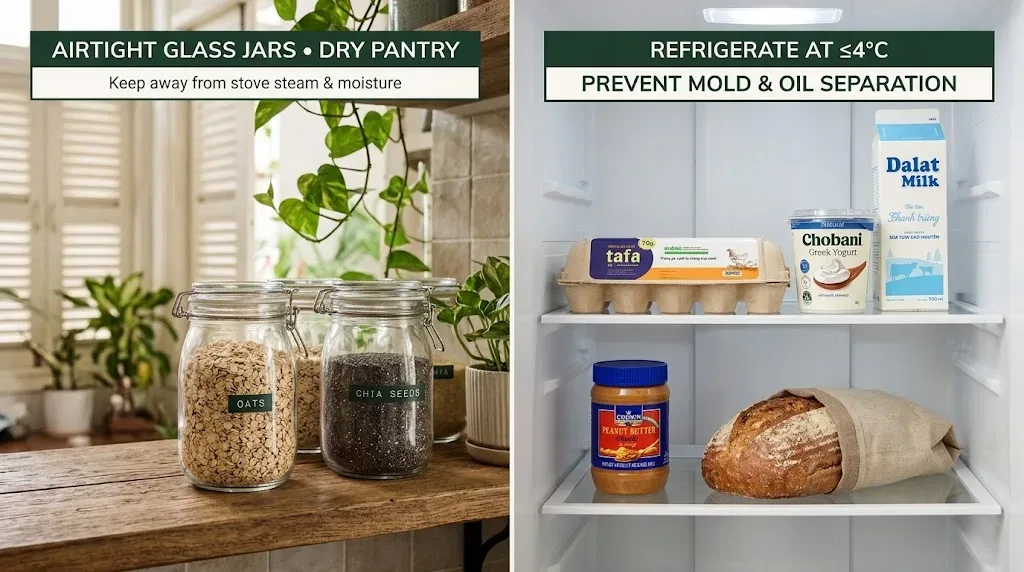
Transfer opened rolled oats and chia seeds immediately into airtight glass jars away from stove steam, and keep 100% natural peanut butter and preservative-free whole-wheat bread inside the refrigerator at 4°C or below to prevent mold and oil rancidity.
|
Common Issue |
Local Cause in HCMC |
Quick Fix & Prevention |
|
Overnight oats turn mushy and overly sweet |
Used 3-in-1 instant oats with added sugar |
Switch to whole rolled oats at 40 g oats to 150 ml milk |
|
Yogurt or milk tastes like dessert |
Picked cartons marked "Có đường" or "Ít đường" |
Verify the phrase "Không đường" on the front panel |
|
Chia seeds and oats smell stale or musty |
Left in folded bags at >30°C room humidity |
Decant into airtight glass jars or chill in the fridge |
|
Whole-wheat bread molds within 3 days |
Artisanal organic loaves lack synthetic preservatives |
Refrigerate for up to 5 days or freeze individual slices |
|
Oil pools on top of peanut butter |
Natural peanut oil separates without palm oil stabilizers |
Stir thoroughly from the bottom once, then refrigerate |
Organic whole grains, seeds, and freshly baked sourdough or whole-wheat loaves do not contain synthetic mold inhibitors like calcium propionate or artificial emulsifiers. When daytime indoor temperatures in Ho Chi Minh City climb above 30°C with relative humidity exceeding 75%, unsaturated fats in chia seeds and natural peanut butter oxidize rapidly, while ambient moisture triggers mold spores on fresh bread crusts. Consulting USDA FoodKeeper storage timelines for pantry grains and bakery goods and moving opened dry staples into cooled, low-humidity refrigerator shelves extends their freshness and protects your kitchen from tropical pantry pests.
Conclusion
Building a consistent, healthy morning routine in Ho Chi Minh City comes down to three practical habits: rotating one night-before cold jar (like tropical overnight oats) with one 10-minute skillet egg or yogurt meal during the workweek, scanning front labels for "Không đường" to eliminate hidden sugars, and sealing opened grains, bread, and nut butters inside the refrigerator at 4°C or below. Review the staple quantities in the comparison table above to put together your weekly breakfast grocery list and enjoy clean, energizing mornings at home.
References
-
FoodData Central Nutritional Database – U.S. Department of Agriculture (USDA)
-
The Nutrition Source: Oats – Harvard T.H. Chan School of Public Health
-
What You Need to Know About Egg Safety – U.S. Food and Drug Administration (FDA)
-
FoodKeeper Food Storage Guidelines – U.S. Department of Agriculture (USDA)