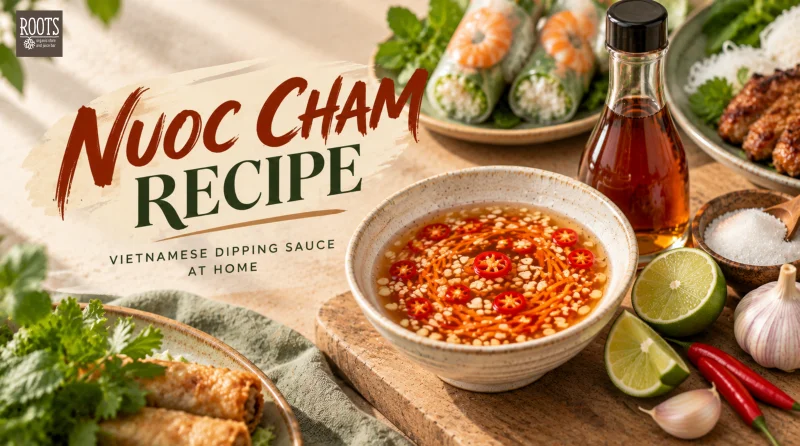
Nuoc cham is a Vietnamese dipping sauce; in English-language recipes, the term usually refers to a fish-sauce-based blend of fish sauce, water, sugar, lime, garlic and chili. A good nuoc cham recipe gives you a reliable starting ratio, but the final balance should be adjusted to the fish sauce, citrus and dish you are using.
That flexibility matters because fish sauces vary noticeably in saltiness and intensity, while fresh limes can be sweeter or more acidic from one batch to another. Instead of chasing one “perfect” ratio, this guide shows you how to build nuoc cham step by step, fix a sauce that tastes too salty or sweet, and adjust it for spring rolls, bun cha, com tam, banh xeo and other Vietnamese dishes.
What Is Nuoc Cham?
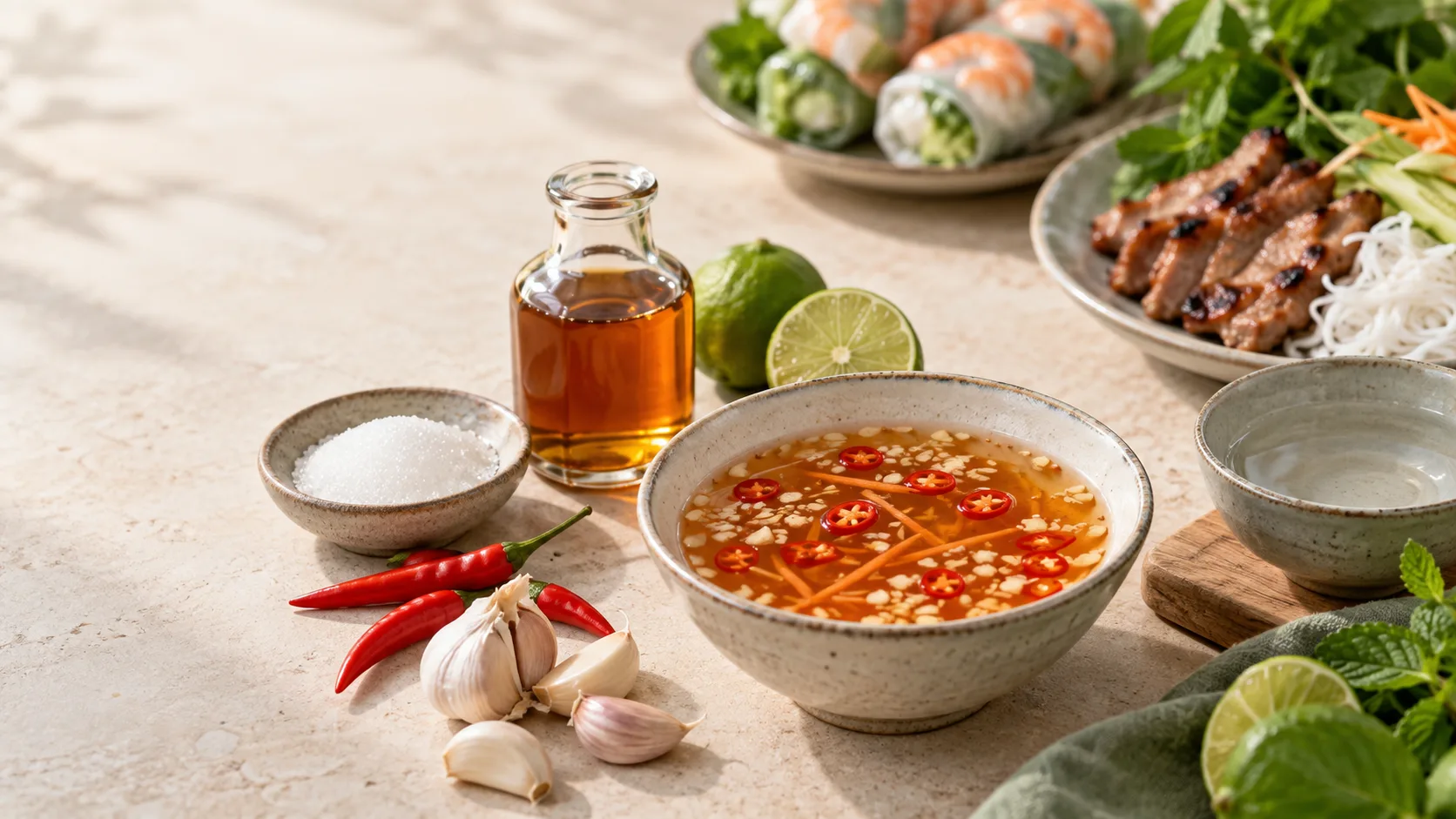
Nuoc cham literally means “dipping sauce” in Vietnamese, so it can describe more than one type of sauce. In English-language cooking, however, “nuoc cham” usually refers to the sweet, salty, sour and sometimes spicy dipping sauce made from fish sauce, water, sugar, citrus or vinegar, garlic and chili.
That distinction is useful because nuoc cham and bottled fish sauce are not interchangeable. Vietnam Tourism describes fish sauce as a fundamental Vietnamese seasoning that can be used for cooking, seasoning or mixed into dipping sauces.
Nuoc Cham vs Nuoc Mam: What's the Difference?
Nuoc mam, or nước mắm, is fermented fish sauce itself. Nuoc cham is a finished dipping sauce, and fish sauce is often one of its main ingredients.
|
Feature |
Nuoc Mam |
Nuoc Cham |
|
What it is |
Fermented fish sauce |
Prepared dipping sauce |
|
Typical role |
Seasoning, cooking or dipping |
Dipping and drizzling |
|
Usually diluted |
No |
Yes |
|
Sugar and acidity |
Usually not added |
Commonly added |
|
Garlic and chili |
Optional when serving |
Common additions |
|
Role in this recipe |
Base ingredient |
Finished sauce |
If you are new to the ingredient itself, the Vietnamese fish sauce guide explains traditional fish sauce, ready-made dipping sauces, nitrogen levels and plant-based alternatives in more detail.
Easy Nuoc Cham Recipe: Ingredients and Starting Ratio
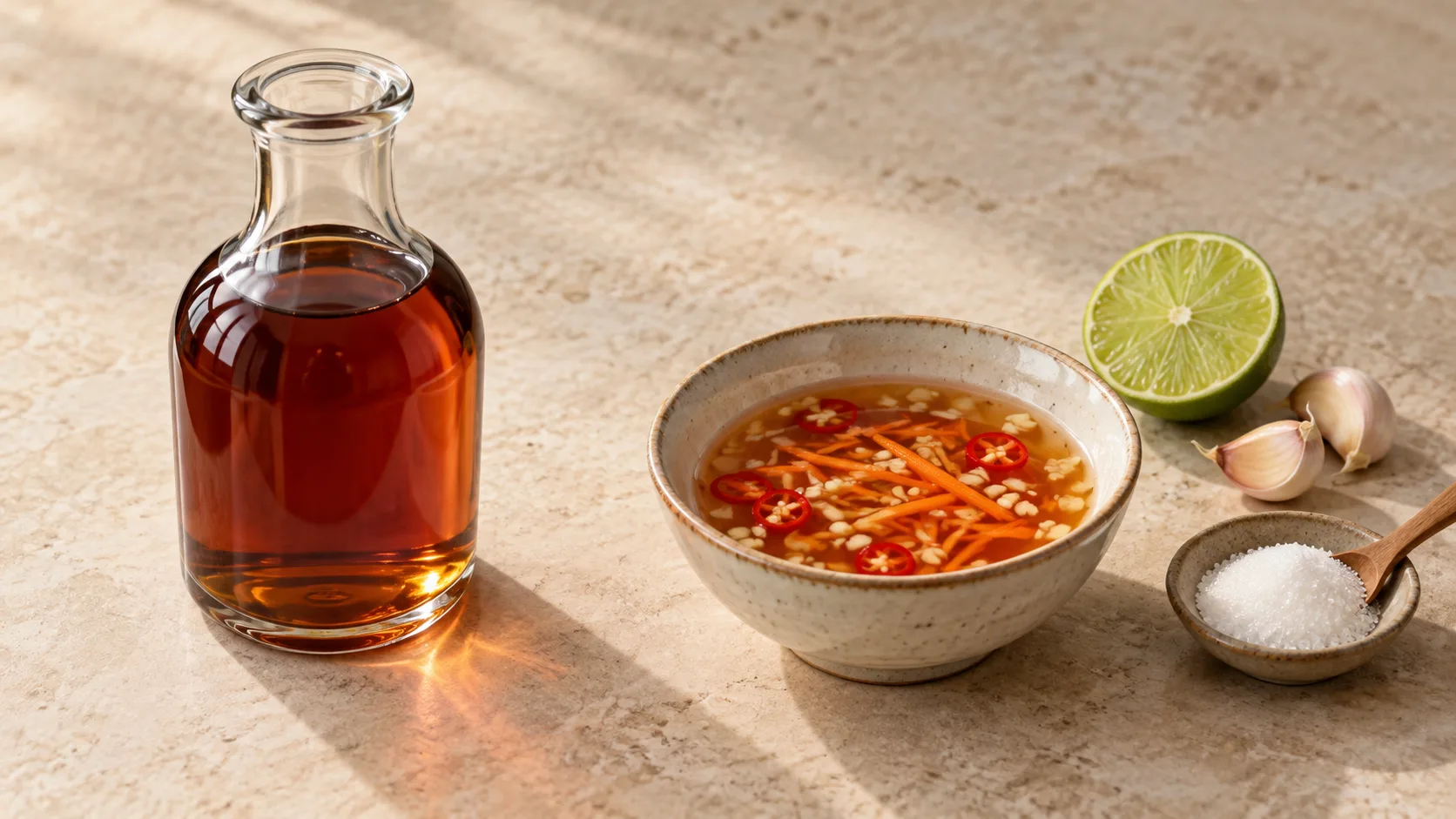
A beginner-friendly nuoc cham recipe starts with water, sugar, fish sauce and fresh lime before adding garlic and chili. The measurements below create a balanced starting point rather than a universal rule, so taste the sauce before making the final adjustment.
For roughly 2/3 cup of dipping sauce, use:
|
Ingredient |
Starting Amount |
Purpose |
|
Warm water |
6 tbsp / 90 ml |
Dilutes the fish sauce |
|
Sugar |
2 tbsp |
Balances salt and acidity |
|
Fish sauce |
2 tbsp / 30 ml |
Adds saltiness and umami |
|
Fresh lime juice |
1½–2 tbsp |
Adds acidity and freshness |
|
Garlic |
1 small clove, finely minced |
Adds aroma |
|
Bird's eye or Thai chili |
1, thinly sliced |
Adds heat |
|
Shredded carrot |
Optional |
Texture and presentation |
What Is the Best Nuoc Cham Ratio?
A useful starting ratio by spoon measure is approximately 3 parts water : 1 part sugar : 1 part fish sauce : ¾–1 part lime juice. It is better to treat this as a framework than as a fixed formula.
Different fish sauce brands can produce very different results at the same ratio. A stronger fish sauce may need more water, while a particularly tart lime may require slightly more sugar.
This is why experienced Vietnamese cooks often adjust by taste rather than measuring every batch identically. A similar taste-first approach appears in Andrea Nguyen's basic Vietnamese dipping sauce method, which builds the sweet-sour base before adding fish sauce.
How to Make Nuoc Cham Step by Step
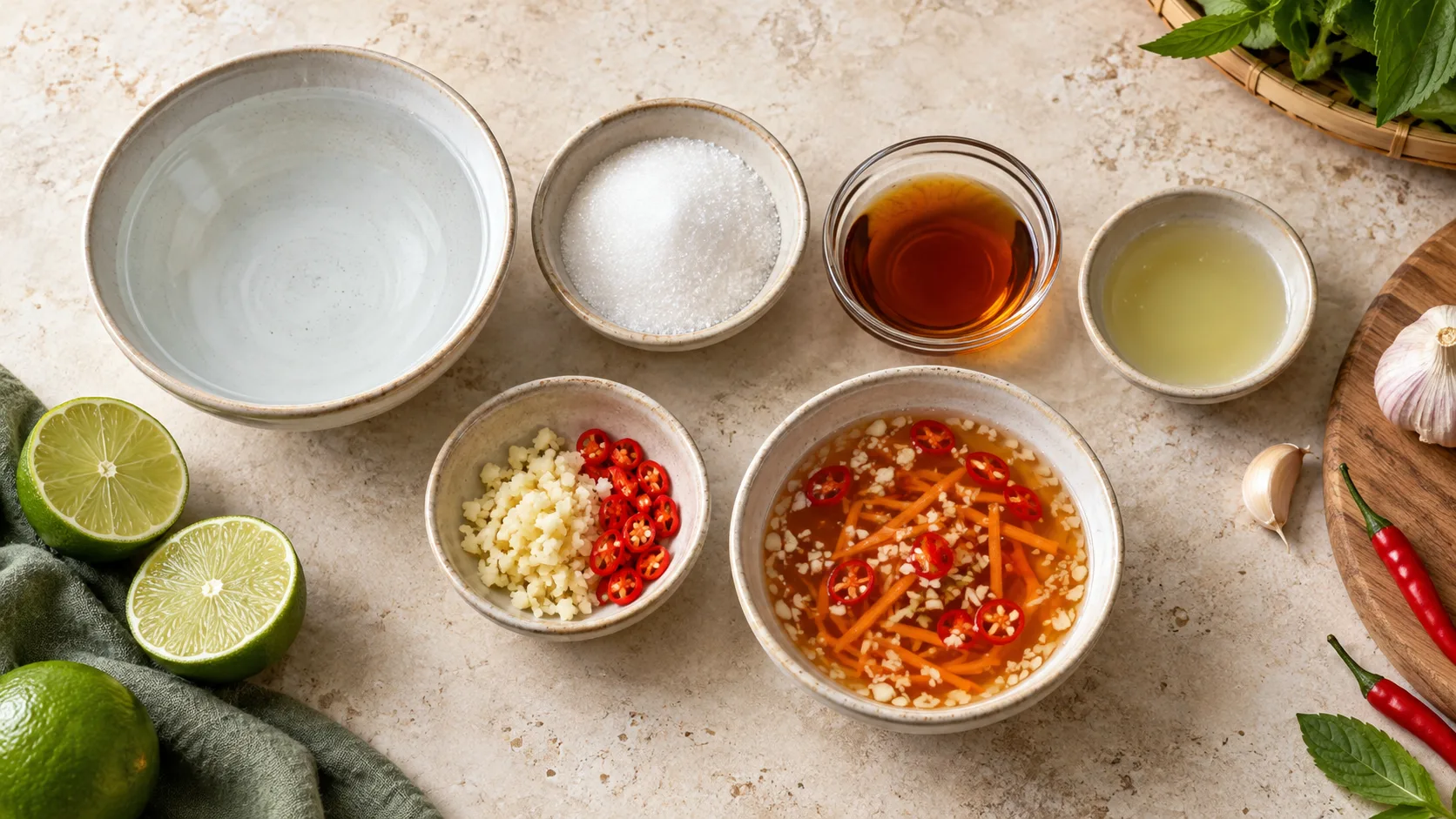
To make nuoc cham, dissolve the sugar first, balance the water with lime, then introduce fish sauce gradually before finishing with garlic and chili. This order makes the sauce easier to correct because you can evaluate sweetness, acidity and saltiness separately.
Step 1: Dissolve the Sugar in Warm Water
Combine 6 tablespoons of warm water with 2 tablespoons of sugar. Stir until the sugar is fully dissolved.
Warm rather than boiling water is enough. The goal is simply to dissolve the sugar so it does not settle at the bottom of the bowl.
Step 2: Build the Sweet-Sour Base
Add 1½ tablespoons of fresh lime juice and taste.
At this stage, the mixture should resemble a light sweet-and-sour lime drink. If it tastes aggressively sour, add a little more sugar; if it feels syrupy, add a small squeeze of lime or a little more water.
Step 3: Add Fish Sauce Gradually
Add 2 tablespoons of fish sauce, starting with slightly less if the bottle tastes particularly concentrated.
Stir and taste again. A finished Vietnamese dipping sauce should taste savory and clearly seasoned, but it should not have the harsh saltiness of undiluted fish sauce.
Step 4: Add Garlic and Chili
Stir in the finely minced garlic and sliced chili.
Adding these aromatics near the end keeps their flavors fresh. Chili can be reduced, increased or omitted without changing the basic sweet-sour-salty structure of the sauce.
Step 5: Taste Once More Before Serving
Taste the nuoc cham with the food you actually plan to serve rather than judging it only from a spoon.
A sauce that seems slightly assertive on its own can taste balanced with plain rice noodles, vegetables or rice. Conversely, a mild sauce may disappear beside strongly grilled or fried foods.
How to Fix Nuoc Cham That Doesn't Taste Right
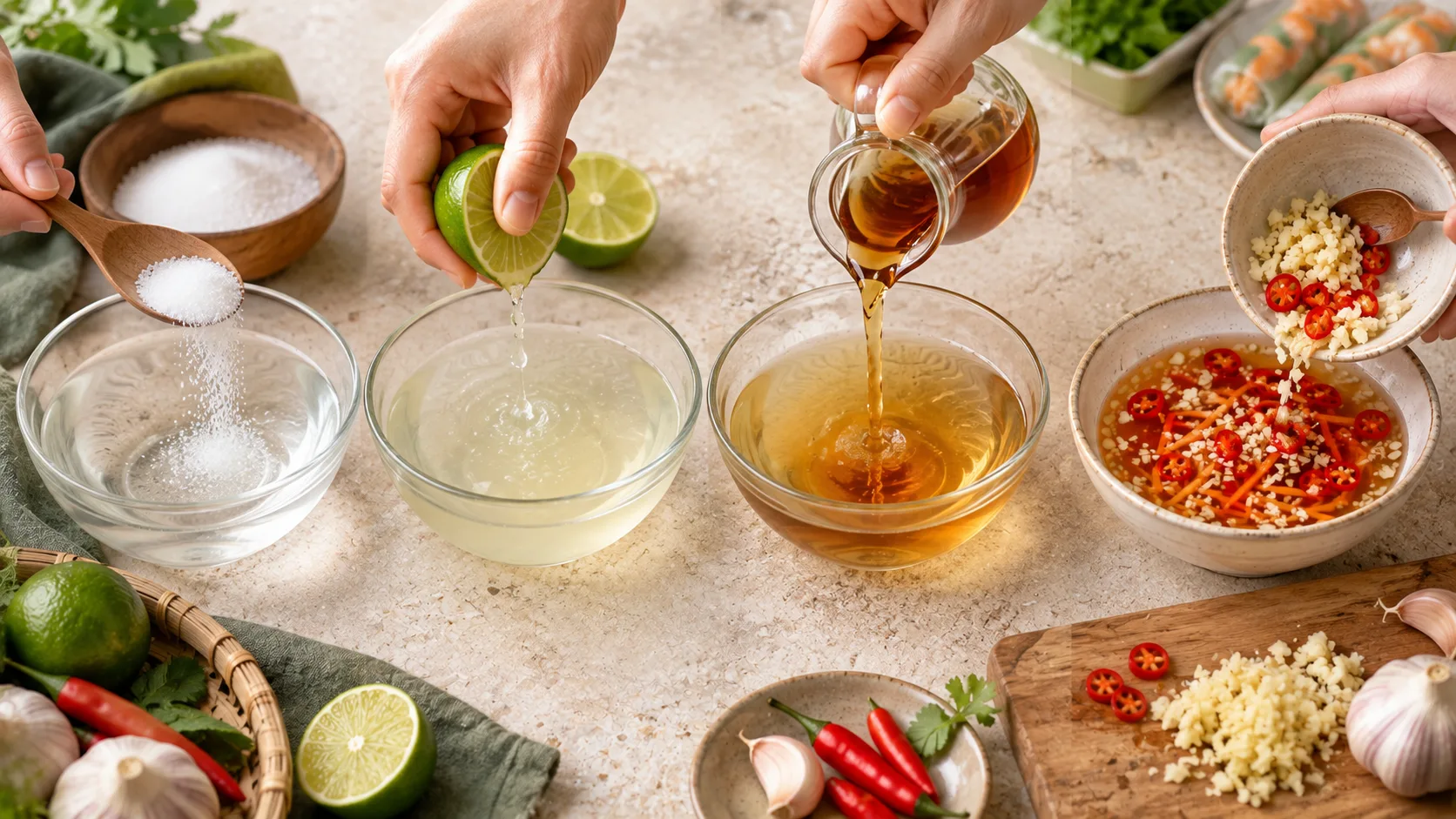
Most nuoc cham problems can be corrected without starting again. Adjust one element at a time, stir thoroughly and taste before making another change.
Use this quick troubleshooting table when your nuoc cham recipe is close but not quite balanced:
|
Problem |
What to Add First |
Why |
|
Too salty |
Water |
Reduces concentration without adding sweetness |
|
Too fishy or harsh |
Water, then lime or sugar if needed |
Softens the fish sauce before rebalancing |
|
Too sour |
Sugar |
Directly balances acidity |
|
Too sweet |
Lime juice |
Restores acidity and freshness |
|
Too weak or watery |
Fish sauce in small amounts |
Restores saltiness and umami |
|
Too spicy |
More of the un-spiced base |
Dilutes chili without making the sauce excessively sweet |
|
Tastes flat |
Small amount of lime or fish sauce |
Often needs either acidity or savory depth |
Too Salty or Too Fishy
Add water one teaspoon or tablespoon at a time, depending on the size of the batch.
Avoid trying to fix excessive saltiness only with sugar. That can turn an overly salty sauce into one that is both salty and overly sweet.
Too Sour
Add a small amount of sugar and dissolve it fully before tasting again.
Fresh citrus varies naturally, so the exact amount of sugar needed may change even when you use the same recipe.
Too Sweet
Fresh lime is usually the cleanest correction. Add it gradually so the sauce does not swing from too sweet to too sour.
Too Weak or Watery
Add fish sauce in small increments rather than pouring in another full tablespoon.
Once the sauce becomes too salty, correcting it requires increasing the total volume with more water, sugar and acidity.
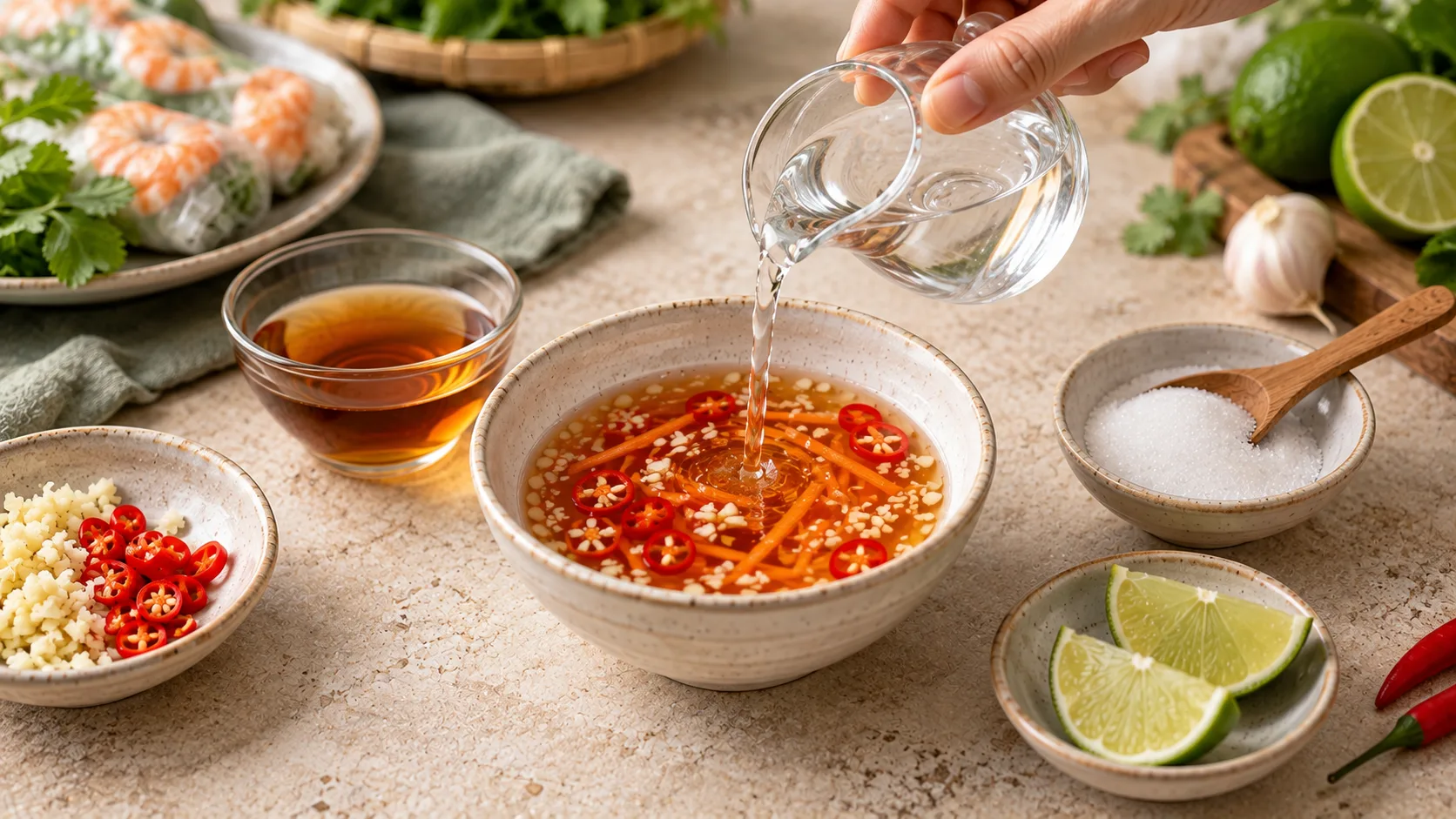
Lime Juice vs Vinegar for Nuoc Cham
Both fresh lime juice and vinegar can work in a Vietnamese dipping sauce recipe, but they give different results. Lime tastes brighter and more aromatic, while vinegar provides more predictable acidity and can be practical when preparing larger batches.
|
Feature |
Fresh Lime Juice |
Vinegar |
|
Flavor |
Fresh, citrusy and aromatic |
Clean, direct acidity |
|
Consistency |
Varies between fruits |
More predictable |
|
Best for |
Freshly made nuoc cham |
Batch preparation |
|
Aroma |
More noticeable |
More neutral |
|
Typical result |
Brighter sauce |
Consistent sweet-sour balance |
Fresh lime is a good default for a small homemade batch. Rice vinegar or another mild vinegar can be useful when consistency matters more than fresh citrus aroma.
Some Vietnamese dishes also have their own established sauce styles. Vietnam Tourism, for example, describes Hanoi bun cha with a diluted sweet-and-sour fish-sauce mixture that includes vinegar.
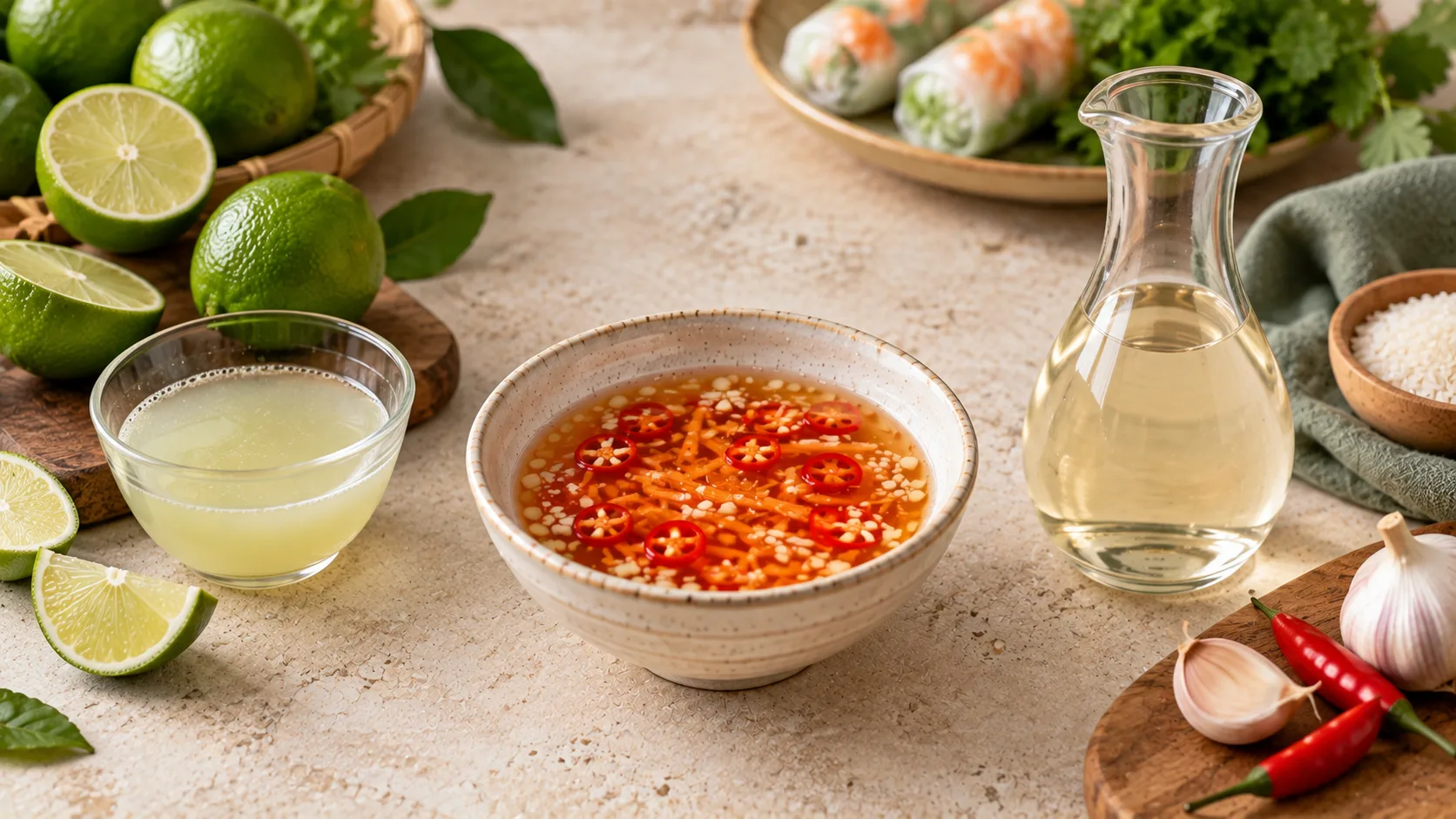
How to Adjust Nuoc Cham for Different Vietnamese Dishes
The same basic nuoc cham can be adjusted to suit different foods. Fried dishes often benefit from brighter acidity, while rice and noodle dishes may need enough sweetness and seasoning for the sauce to spread through a larger portion of food.
|
Dish |
Suggested Direction |
|
Fresh spring rolls |
Light, balanced and moderately bright |
|
Cha gio / fried spring rolls |
Slightly sharper to cut through fried richness |
|
Banh xeo |
Bright and slightly diluted for repeated dipping |
|
Com tam |
Often slightly sweeter and suitable for drizzling |
|
Bun cha |
More diluted and broth-like |
|
Bun thit nuong |
Balanced but flavorful enough to season noodles and herbs |
Spring Rolls and Cha Gio
For fresh rolls, the base nuoc cham recipe works well without much modification.
For fried cha gio, a little extra lime can help balance the richness of the fried wrapper and filling.
Bun Cha
Bun cha uses a more diluted fish-sauce-based dipping mixture that functions almost like a light broth around grilled pork. Pickled carrot, green papaya or other vegetables may also be added depending on the recipe.
For more context on the dish itself, see this guide to bun cha and other iconic Vietnamese foods.
Com Tam
Com tam sauce is commonly poured over grilled pork and broken rice, so many versions lean a little sweeter while remaining salty and acidic enough to season the entire plate.
The characteristic rice base is made from fractured grains rather than a separate rice species; this Vietnamese rice guide explains broken rice alongside ST25, jasmine and other common varieties.
Banh Xeo
Banh xeo benefits from a bright, relatively light dipping sauce because each bite already contains crisp batter, herbs and often rich fillings.
If the sauce feels heavy after several bites, add a little water and lime rather than more sugar.
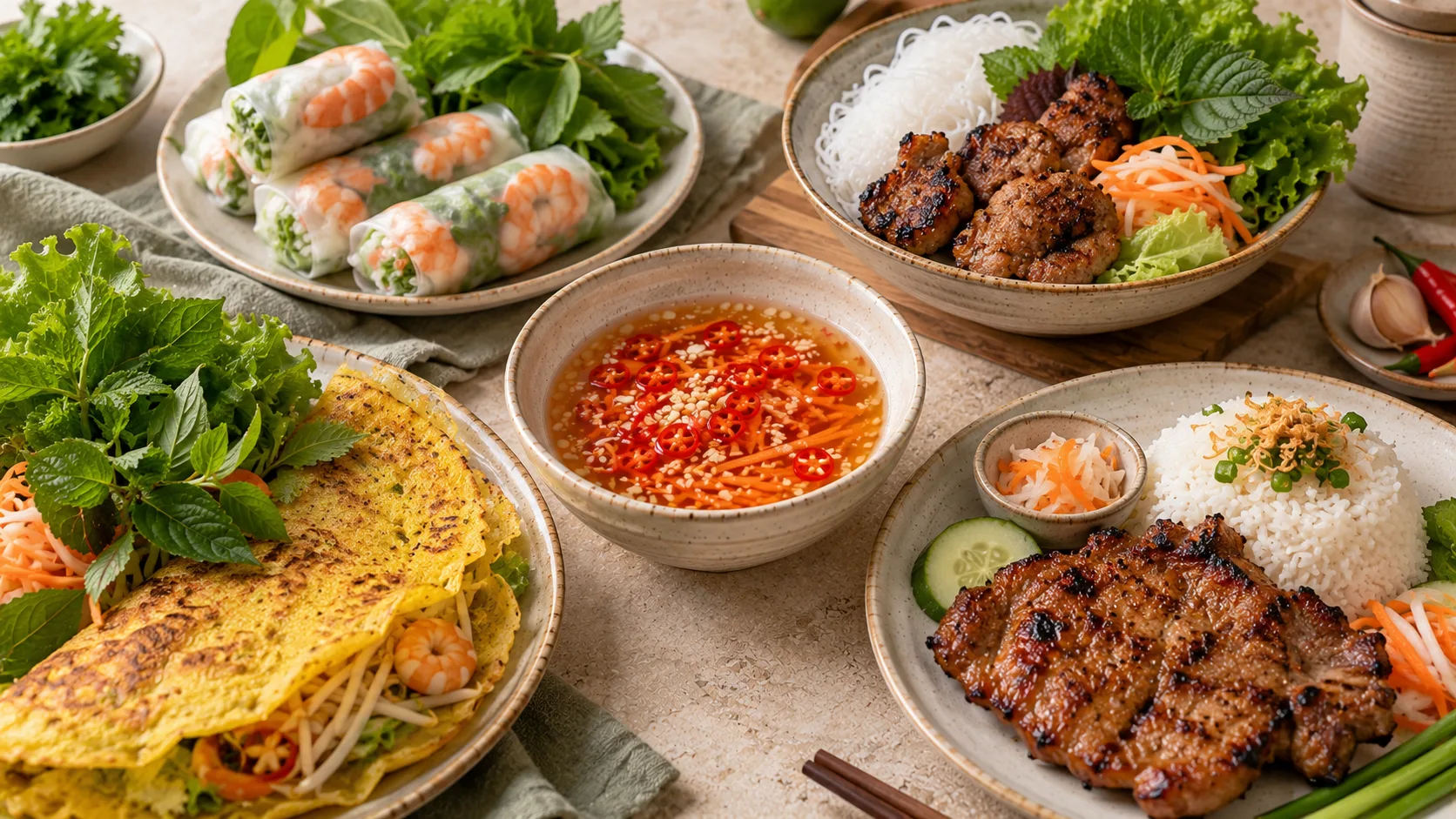
Ingredient Substitutions and Variations
Nuoc cham is flexible enough for several substitutions, but changing one ingredient can require rebalancing the others. The goal is to preserve the relationship between sweetness, acidity, saltiness and savory depth rather than making every variation taste identical.
Can You Use Lemon Instead of Lime?
Yes. Lemon provides the acidity the sauce needs, although the aroma will be different from fresh lime.
Start with slightly less lemon juice and adjust after tasting because citrus acidity varies.
Can You Use Rice Vinegar?
Yes. Rice vinegar is particularly useful when making a consistent batch or when fresh limes are not available.
Choose an unseasoned rice vinegar if possible so added sugar and salt do not unexpectedly change the balance.
Can You Make Vegan Nuoc Cham?
Yes, but the result is better described as a plant-based variation rather than an identical substitute for traditional fish-sauce-based nuoc cham.
Use a vegetarian fish sauce or savory plant-based seasoning, then balance it with water, sugar, lime, garlic and chili. Because plant-based sauces vary widely in saltiness and sweetness, add the seasoning gradually.
Can You Reduce the Sugar?
Yes. Reduce the sugar gradually rather than removing it entirely at once.
Sugar is not present only to make nuoc cham taste sweet; it also softens the perception of salt and acidity. Less sugar may therefore require less lime or slightly more water.
How to Store Homemade Nuoc Cham
Homemade nuoc cham should be refrigerated in a clean, tightly closed container, especially once fresh garlic, chili and lime have been added. For the freshest citrus and garlic flavor, a small batch used within roughly a week is a practical approach.
Fresh lime aroma becomes less vivid over time, so making smaller quantities often produces a better-tasting sauce than keeping one large batch for an extended period. If the sauce develops mold, an unusual odor or other signs of spoilage, discard it.
Common Mistakes When Making Vietnamese Dipping Sauce
The most common nuoc cham mistakes come from treating the formula as fixed rather than tasting as you go. Fish sauce strength, citrus acidity and personal preference can all change how the same measurements taste.
Adding All the Fish Sauce at Once
Start with most of the measured fish sauce and reserve a little for final adjustment.
It is easier to add more saltiness than to dilute an overly salty sauce.
Treating the Ratio as a Fixed Rule
A ratio is useful for repeatability, not as proof that one recipe is the only authentic version.
Vietnamese dipping sauces vary between households, dishes and regions, so the final taste matters more than matching one formula exactly.
Using Old or Flat Citrus
Fresh lime contributes both acidity and aroma.
If a sauce tastes sour but not fresh, adding more old lime juice may increase acidity without producing the brightness you want.
Trying to Fix Saltiness Only With Sugar
Sugar masks some salt perception but does not actually reduce the concentration of fish sauce.
Water should usually be the first correction for a sauce that is much too salty.
What to Serve With Nuoc Cham
Nuoc cham works best with foods that benefit from a sweet, salty and acidic counterpoint. It is especially common with Vietnamese rolls, grilled meats, rice dishes, noodle bowls and savory pancakes.
Try this nuoc cham recipe with:
-
fresh rice-paper rolls;
-
cha gio or fried spring rolls;
-
banh xeo;
-
bun cha;
-
com tam with grilled pork;
-
bun thit nuong;
-
banh cuon;
-
grilled pork, chicken or seafood.
Vietnam Tourism's broader Vietnamese food guide also shows how sweet-and-sour fish-sauce dips appear across dishes such as banh xeo and other regional specialties.
Final Take: Start With a Ratio, Then Trust Your Taste
A successful nuoc cham recipe is less about memorizing one “authentic” number and more about understanding balance. Start with water, sugar, fish sauce and lime, then correct saltiness, sweetness and acidity gradually before adding fresh garlic and chili.
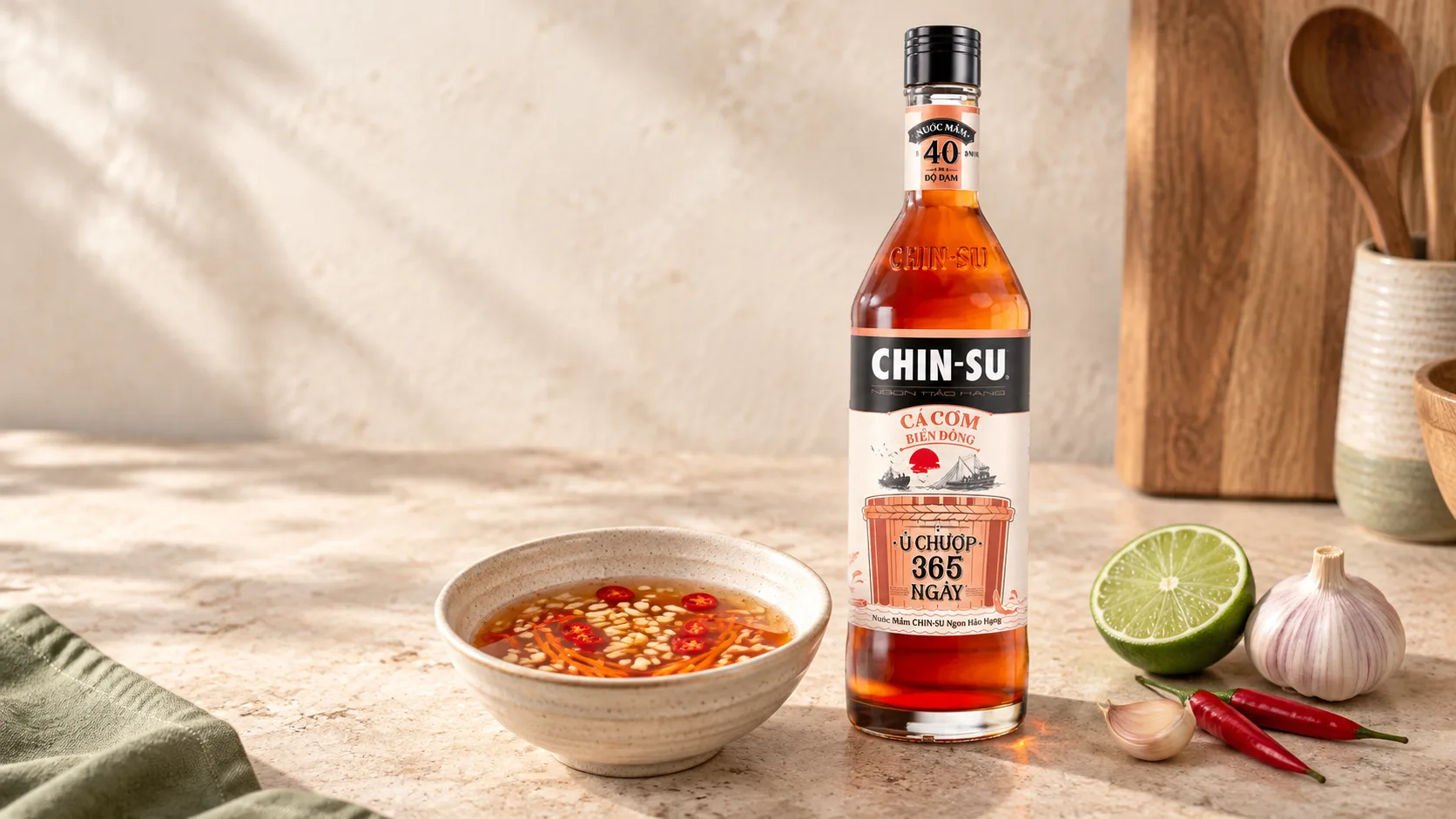
For a convenient everyday option, CHIN-SU FOODS East Sea Anchovy Fish Sauce 700ml is made in Vietnam with anchovy fish sauce plus additional seasonings; the current product listing does not state a third-party certification, and it is better suited to cooks seeking an accessible everyday base than to those specifically looking for a two-ingredient traditional fish sauce. The product is currently available at ROOTS at a competitive price, with a genuine-product guarantee and express delivery within one hour for customers in inner Ho Chi Minh City.
Whichever fish sauce you choose, read the ingredient list and taste it before committing to the full amount—the best dipping sauce is the one balanced around the bottle and the food in front of you.