
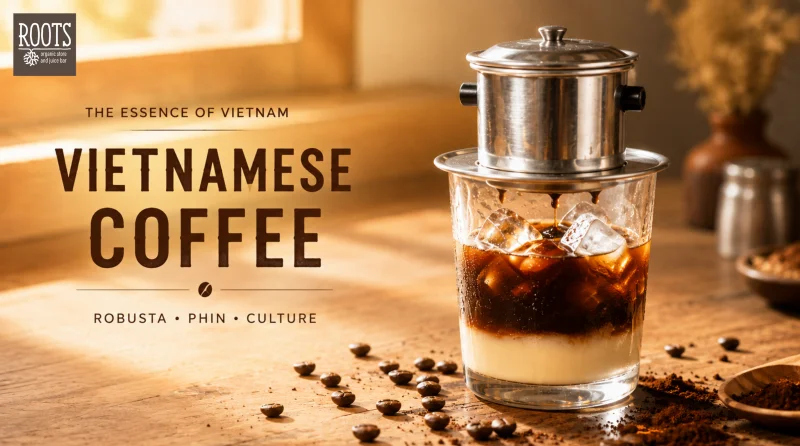
The Ultimate Vietnamese Coffee Guide: Robusta, Brands & How to Brew Phin
Vietnamese coffee is traditionally associated with dark-roasted Robusta beans, a metal Phin filter, and sweetened condensed milk. The result is a bold, full-bodied cup with pronounced bitterness, chocolate-like notes and relatively high caffeine, which is why Vietnamese coffee has developed a distinctive identity compared with many Arabica-focused coffee cultures.
But Vietnamese coffee is no longer limited to the familiar strong, dark-roasted style. From Buôn Ma Thuột Robusta to Arabica from Cầu Đất and a new generation of higher-quality Fine Robusta, Vietnam's coffee landscape now spans traditional, specialty and modern brewing styles. This guide explains what makes Vietnamese coffee distinctive, how Robusta compares with Arabica, which brands and styles are worth trying, and how to brew a balanced Phin at home.
What Makes Vietnamese Coffee So Special?
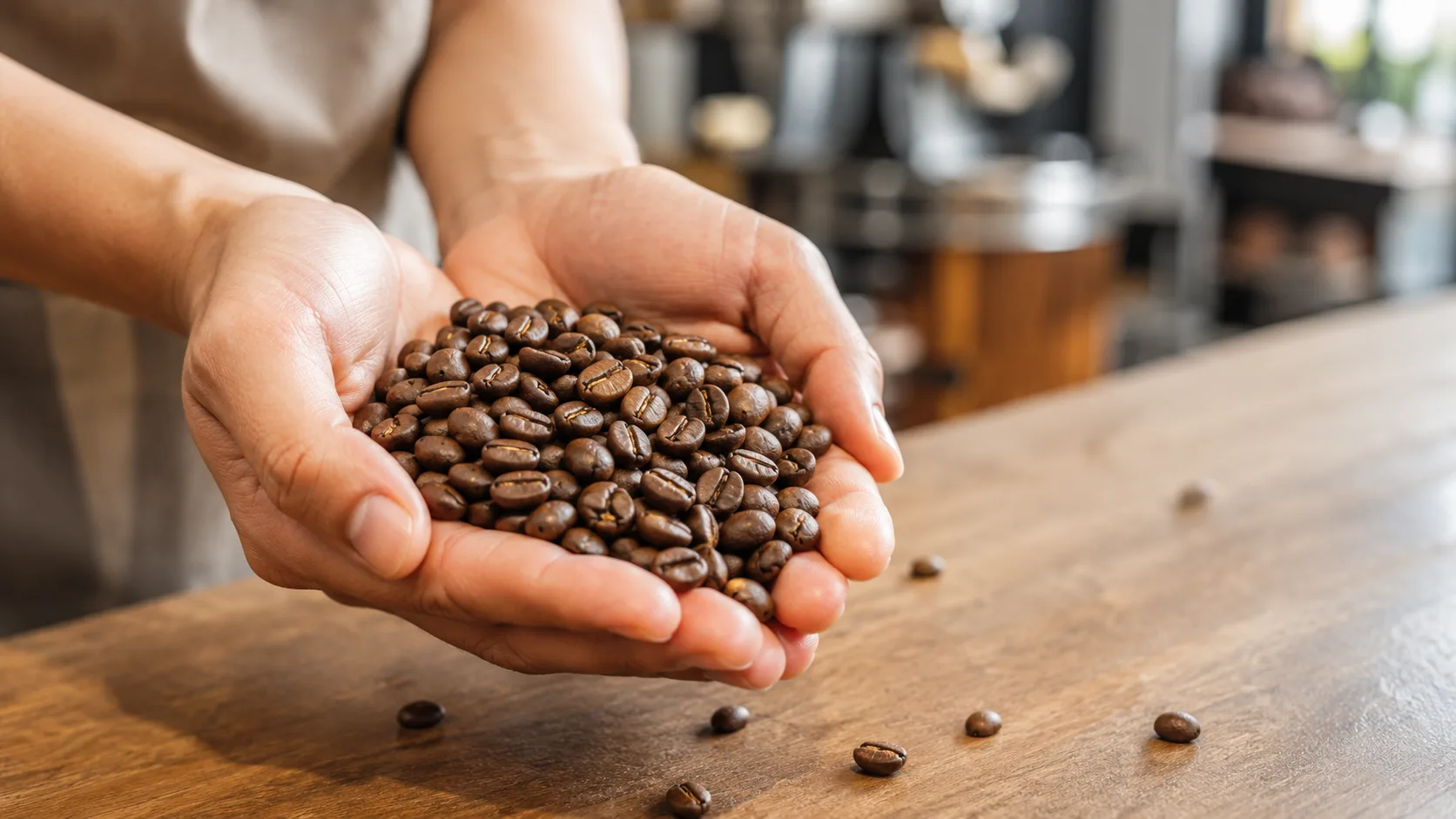
Vietnamese coffee stands out because of the combination of Robusta, the Phin brewing method and a strong café culture built around condensed milk and creative variations. The Phin is a small gravity-fed metal brewer that slowly filters hot water through coffee grounds, producing a concentrated and textured cup.
Vietnam is one of the world's most important Robusta-producing origins, particularly in the Central Highlands. The bean's naturally higher caffeine content and fuller body make it particularly suitable for the intense profile associated with traditional Vietnamese coffee.
The second defining element is the Phin filter. Unlike espresso, which relies on pump pressure, the Phin uses gravity and a perforated metal chamber. This slow-drip process became an integral part of Vietnamese coffee culture and is closely associated with drinks such as cà phê đen and cà phê sữa đá.
Condensed milk is not simply an added sweetener. In traditional cà phê sữa đá, its sweetness and creamy texture provide a counterpoint to the concentrated bitterness of dark-roasted coffee. Vietnam Tourism's traditional recipe, for example, combines brewed Robusta with sweetened condensed milk and ice.
Vietnamese coffee culture has also expanded well beyond classic black and iced milk coffee. Egg coffee, coconut coffee and salted cream coffee demonstrate how Vietnamese cafés continue to reinterpret the same strong coffee base.
The rise of Fine Robusta
Fine Robusta is changing the way high-quality Vietnamese coffee is discussed. Instead of treating Robusta as merely an inexpensive commodity bean, specialty producers are applying better variety selection, harvesting, fermentation, drying and sorting to create cleaner and more complex cups.
Recent specialty activity in Vietnam reflects this shift, with producers presenting Robusta lots featuring cocoa, spice, fruit and greater sweetness rather than only heavy bitterness. Fine Robusta therefore should be understood as a quality category and production approach, not simply another name for conventional Robusta.
For consumers, that means Vietnamese coffee can now offer two very different experiences: the familiar dark, powerful Phin cup and a cleaner, more nuanced Robusta designed to be evaluated more like specialty coffee.
Vietnamese Robusta vs. Arabica: Which Bean is Right for You?
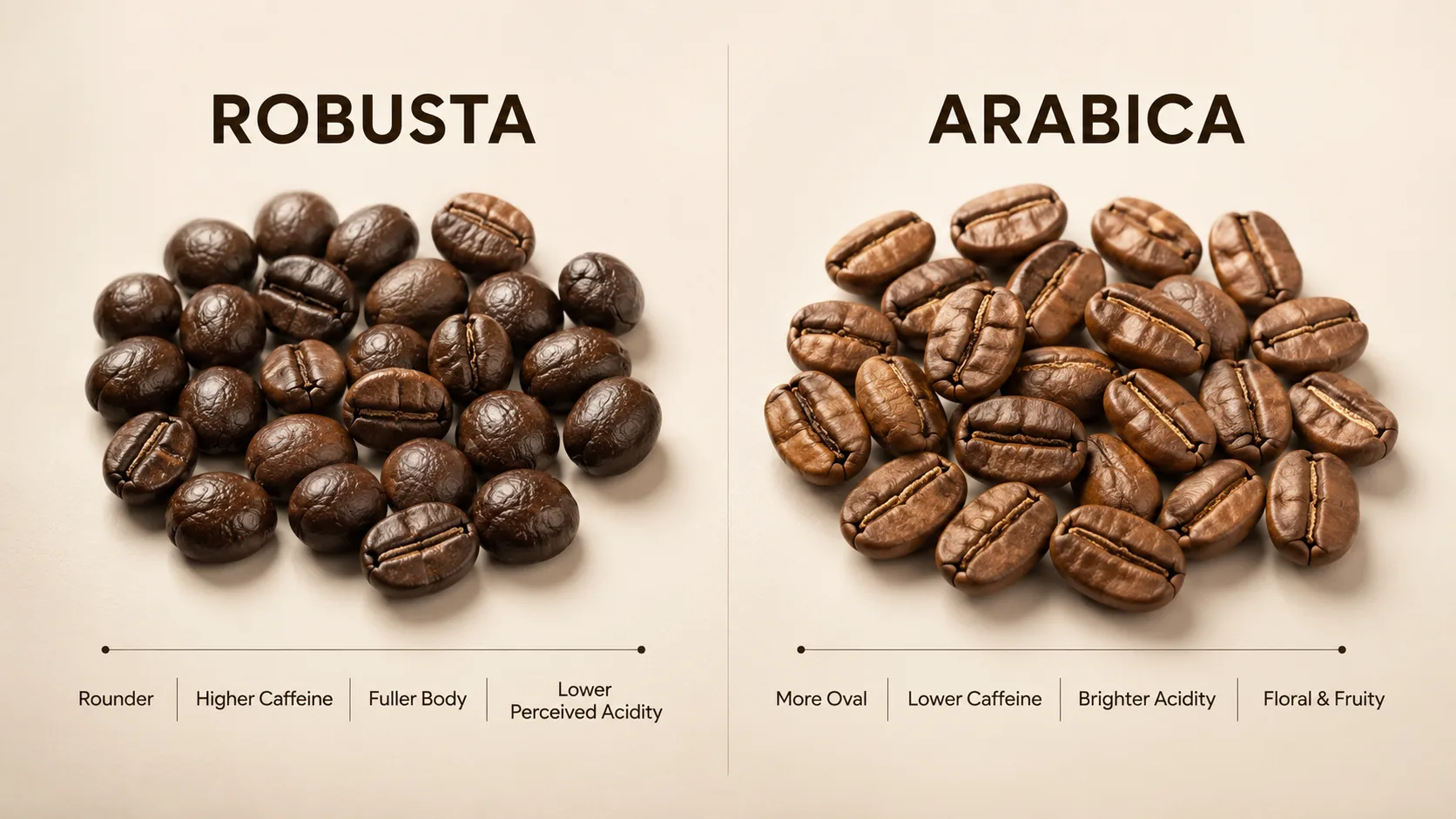
The simplest distinction is this: Robusta tends to deliver more caffeine, more body and stronger bitterness, while Arabica generally offers greater aromatic complexity, acidity and fruit or floral characteristics. The exact profile still depends heavily on origin, variety, processing, roast level and brewing method.
Vietnamese Robusta
Robusta, or Coffea canephora, is the foundation of traditional Vietnamese coffee. Its caffeine content is naturally higher than Arabica, while its heavier body and more pronounced bitterness make it particularly compatible with condensed milk and ice.
Literature reviews commonly report roughly 1.7–4.0% caffeine in green Robusta beans, compared with about 0.8–1.4% in green Arabica, although actual values vary considerably by cultivar and growing conditions.
Robusta also tends to contain more chlorogenic acids and less lipid than Arabica. These differences contribute to the sensory and chemical distinction between the two species, but they should not be interpreted as a simple ranking of one bean as healthier or better than the other.
Traditional dark-roasted Vietnamese Robusta often works especially well when paired with sweetened condensed milk. The coffee's body and bitterness remain noticeable even after dilution with ice and milk.
Vietnamese Arabica
Vietnamese Arabica is often associated with higher-altitude growing regions such as Cầu Đất in Lâm Đồng. Compared with conventional dark-roasted Robusta, Arabica can present brighter acidity, softer bitterness and more noticeable floral, citrus, caramel or fruit characteristics.
Arabica is often a better starting point for drinkers who enjoy pour-over or lighter roasting styles. It can also work in Vietnamese-style brewing, although the result will usually taste less aggressive than a traditional Robusta-heavy Phin.
Robusta vs. Arabica at a glance
|
Tiêu chí |
Robusta |
Arabica |
|
Botanical species |
Coffea canephora |
Coffea arabica |
|
Typical caffeine in green beans |
Higher, about 1.7–4.0% reported |
Lower, about 0.8–1.4% reported |
|
Body |
Heavy, dense |
Lighter to medium |
|
Bitterness |
Usually more pronounced |
Usually softer |
|
Acidity |
Often perceived as lower, but highly dependent on roast and brewing |
Generally more pronounced |
|
Chlorogenic acids |
Generally higher |
Generally lower |
|
Lipids |
Generally lower |
Generally higher |
|
Typical flavor direction |
Cocoa, nuts, spice, dark chocolate, woody notes |
Floral, citrus, fruit, caramel |
|
With condensed milk |
Excellent for traditional cà phê sữa đá |
Works, but produces a lighter profile |
|
Best starting point |
Strong Phin, milk coffee, espresso blends |
Pour-over, filter, lighter specialty styles |
The chemical differences are real, but coffee flavor cannot be predicted from species alone. Roast level, processing and extraction can substantially change how acidity, bitterness, sweetness and aroma are perceived.
One important correction concerns acid reflux. Robusta should not automatically be recommended to people with reflux simply because it is sometimes described as “low acid.” Coffee contains multiple compounds that can affect digestion, and individual tolerance varies. A 2026 systematic review found a small statistical association between coffee consumption and GERD, although the clinical significance was unclear and the evidence does not support a universal recommendation for everyone with GERD to avoid coffee.
For someone with a sensitive stomach, the better approach is to test a smaller serving, avoid drinking coffee on an empty stomach if that triggers symptoms, and choose the roast and preparation that the individual tolerates best.
Top Best Vietnamese Coffee Brands to Try in 2026
The best Vietnamese coffee brand depends on the flavor profile you want. Traditional commercial brands are useful for a familiar strong Phin style, while specialty roasters are more interesting for consumers who want traceability, lighter roasting or Fine Robusta.
1. Trung Nguyên Legend
Trung Nguyên Legend is one of the most recognizable names associated with Vietnamese coffee culture. Its current product range includes Robusta-focused coffees, Arabica-Robusta blends, Culi Robusta and multiple roasted-bean profiles designed for different brewing preferences.
Best for: people who want a recognizable Vietnamese-style profile and easy access to beans suited to Phin brewing.
Strengths: wide range, strong Vietnamese identity and several blends suitable for traditional coffee.
Watch for: different products within the same brand can have substantially different roast and flavor profiles, so checking the exact product rather than buying based only on the brand name is important.
2. Specialty and Fine Robusta roasters
A different category is made up of Vietnamese specialty roasters and producers working with traceable Robusta lots. These coffees are often less focused on the classic “very dark and very bitter” profile and more focused on sweetness, cleanliness and origin character.
Best for: drinkers who want to understand what high-quality Vietnamese Robusta can taste like without heavy flavoring or an overly dark roast.
When choosing this category, look for the origin, harvest information, processing method, roast date and tasting notes. A named farm or region and a clear processing method usually provide more useful information than vague claims such as “premium coffee.”
3. How to choose Vietnamese coffee without relying on the brand name
A good coffee label should answer several practical questions:
-
What beans are used? Look for the Robusta percentage or Arabica-Robusta blend ratio.
-
When was it roasted? Roast date is more useful than a generic expiration date when judging freshness.
-
Is it roasted or flavored? Consumers seeking a clean coffee profile should check whether butter, flavoring or other ingredients are added.
-
What is the recommended brewing method? A coffee designed for espresso or pour-over may need a different grind from one intended for Phin.
-
What is the origin? Vietnamese coffee does not automatically mean one single flavor profile; Buôn Ma Thuột, Cầu Đất and other origins can produce very different coffees.
For example, MR. VIET Good Morning Vietnam Ground Coffee is a Vietnam-origin ground coffee currently listed at ROOTS at 175,000 VND for 250g. The product is positioned for a Vietnamese coffee experience and provides a convenient option for people who want pre-ground beans rather than buying a grinder.
How to Brew Vietnamese Coffee with a Phin Filter
A reliable starting recipe for Vietnamese coffee is 15g of medium-fine to medium-coarse coffee with about 60g of brewing water, giving a 1:4 coffee-to-water ratio. For traditional cà phê sữa đá, about 20–25g of sweetened condensed milk is a practical starting point, with sweetness adjusted to taste.
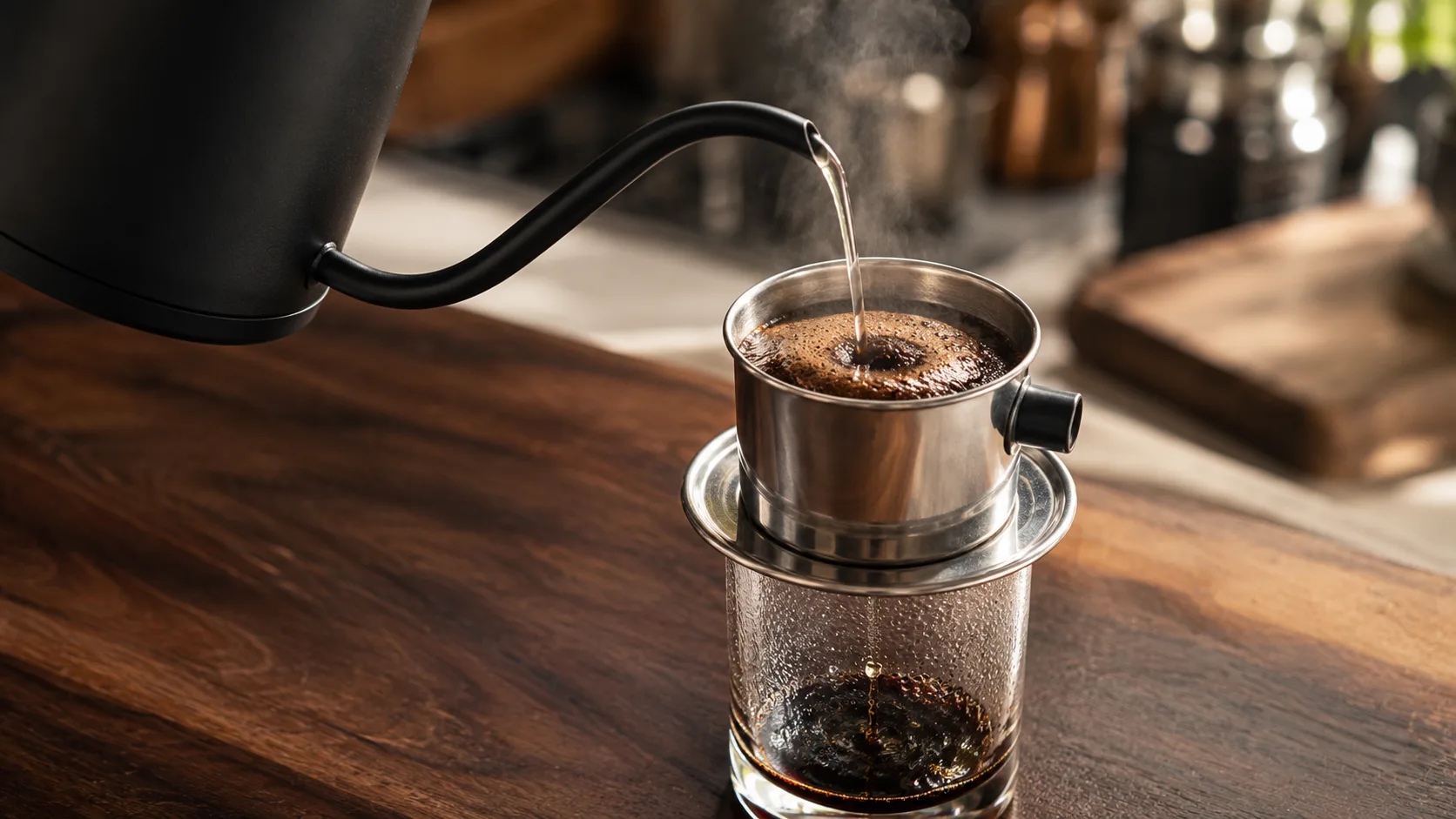
There is no single scientifically established “correct” Phin temperature for every Robusta and Arabica coffee. A practical brewing range is around 90–95°C, while grind size, dose and contact time must be adjusted together. Vietnam Tourism's own Phin guidance similarly places hot water around this range.
Ingredients and equipment
-
15g Vietnamese coffee
-
60g hot water at approximately 90–95°C
-
20–25g sweetened condensed milk for cà phê sữa đá
-
Ice
-
1 metal Phin filter
-
1 serving glass
4 steps to brew
-
Preheat the Phin. Rinse the Phin with hot water before brewing. This helps reduce temperature loss when the brewing water is added.
-
Add and level the coffee. Place 15g of medium-fine or medium-coarse coffee into the brewing chamber. Shake gently to level the bed, then place the filter press on top without excessive force.
-
Bloom the grounds. Add around 20–30g of hot water and let the coffee bloom for approximately 30–45 seconds. The goal is to wet the coffee evenly rather than aggressively saturate or stir the bed. A contemporary Phin recipe from Nguyen Coffee Supply uses a 45-second bloom before the main pour.
-
Complete the brew. Add the remaining water slowly until you reach about 60g total. Allow gravity to complete the extraction. Pour the brewed coffee over 20–25g condensed milk, stir until combined, then add ice for cà phê sữa đá.
The 1:4 ratio is a starting point, not a universal law. If the drink tastes overly concentrated, increase the water; if it tastes thin, consider a finer grind or slightly higher coffee dose before simply adding more brewing time.
Phin Brewing Troubleshooting: Why is My Coffee Bad?
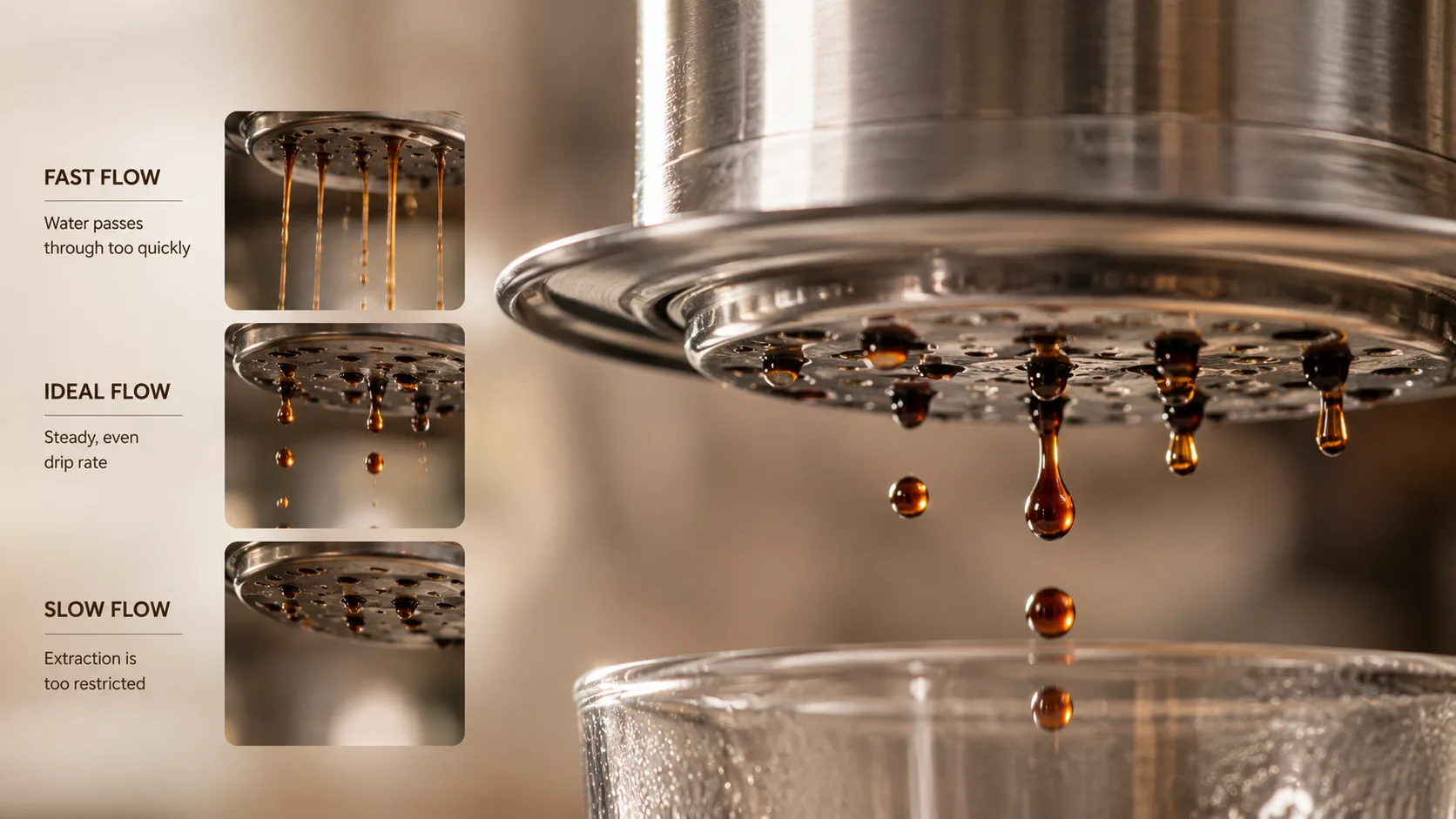
When Vietnamese coffee tastes wrong, the problem is often grind size, flow rate, water temperature or dose, rather than the beans themselves.
|
Problem |
Likely cause |
What to adjust |
|
Water runs through too quickly |
Grind too coarse or coffee bed too loose |
Grind slightly finer or increase resistance |
|
Water barely drips |
Grind too fine or filter pressed too tightly |
Grind coarser or loosen the press |
|
Coffee tastes bitter and harsh |
Over-extraction, excessive contact time or very dark roast |
Use a slightly coarser grind, reduce contact time or lower the brewing temperature |
|
Coffee tastes sour or thin |
Under-extraction or insufficient contact |
Grind slightly finer or slow the flow |
|
Coffee tastes burnt |
Very dark roast combined with overly aggressive extraction |
Reduce temperature and contact time |
|
Cup tastes weak despite good aroma |
Too much water relative to coffee |
Reduce brew water or increase dose |
A Phin should not be treated like a mechanical timer where every drip must happen at exactly the same speed. The optimal flow depends on the coffee, grind distribution, roast and the specific Phin design.
Vietnam Tourism's recipe also recommends adjusting the filter pressure when water flows too quickly or stops flowing altogether, reinforcing that the press position is an important variable in traditional Phin brewing.