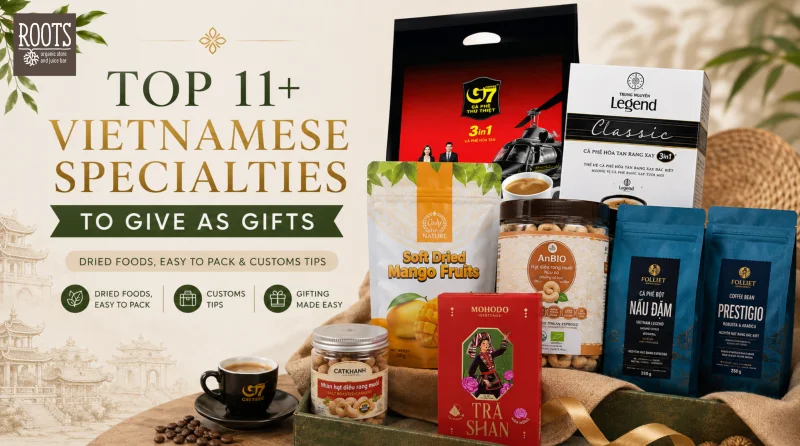
Top 11+ Vietnamese Specialties to Give as Gifts: Dried Foods, Easy to Pack & Customs Tips
The best Vietnamese specialties to give as gifts, especially when traveling overseas, include Vietnamese coffee, lotus tea, roasted cashews, traditional packaged snacks, and dried fruit. These products are generally easier to store, pack, and transport than fresh foods or products containing meat. However, choosing a good Vietnamese food gift is not only about taste. Travelers should also consider ingredients, packaging, shelf life, and the food import regulations of their destination country.
This guide covers the best Vietnamese specialties to give as gifts, with practical suggestions by region, recipient, budget, and travel destination. You will also find important tips for packing Vietnamese dried food, bringing food on international flights, and checking customs requirements before leaving Vietnam.
Why Choose Packaged Vietnamese Dried Foods as Gifts?
Packaged Vietnamese dried foods are practical gifts because they are generally lightweight, have a longer shelf life, and are easier to store than fresh foods. Factory-sealed packaging also makes it easier to identify the ingredients, origin, and product information during customs inspections.
For international travel, however, a dried product is not automatically allowed into every country. Import rules depend on the destination, ingredients, country of origin, and applicable agricultural or biosecurity requirements.
Easy to Pack and Store
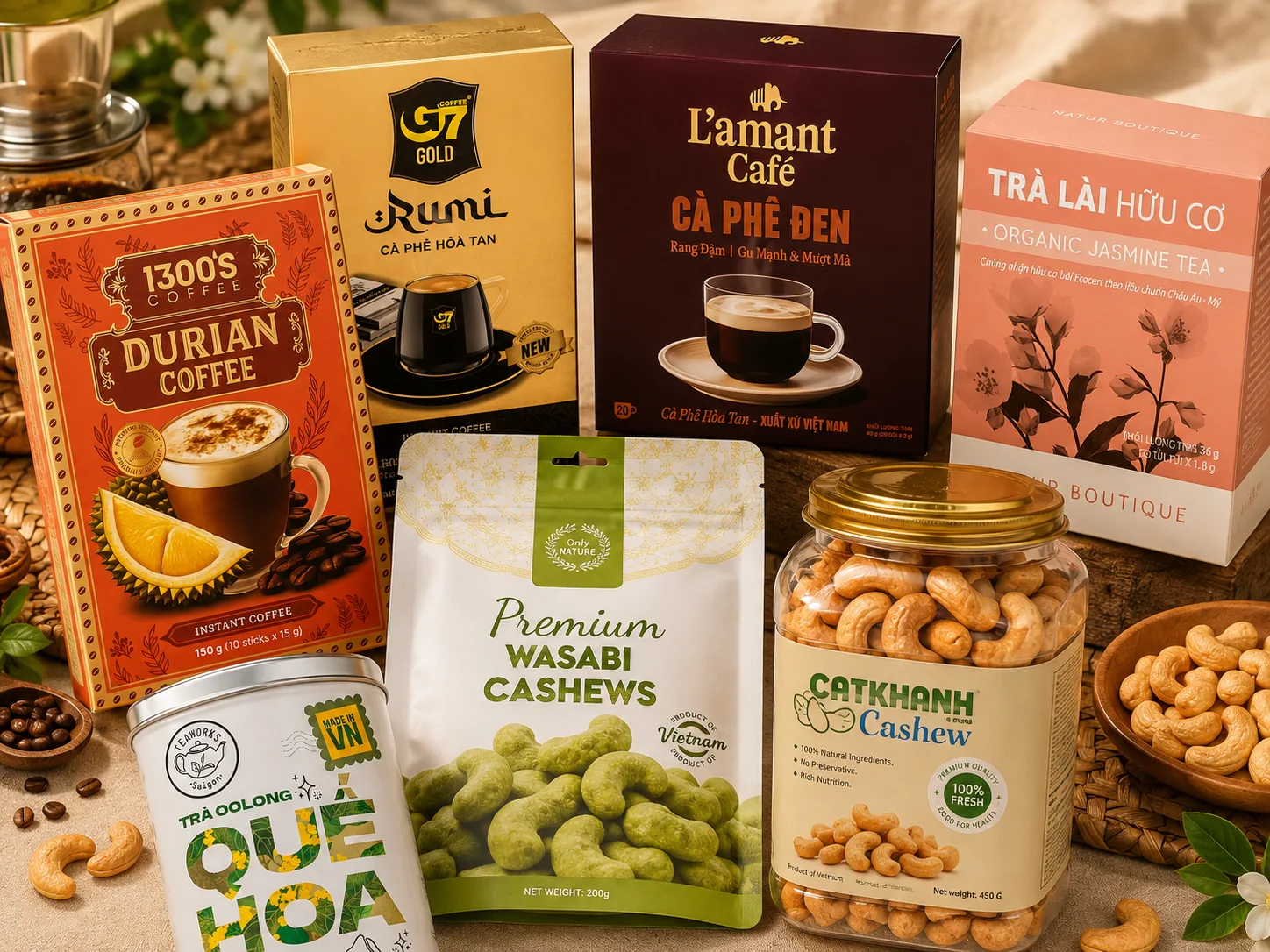
Vietnamese coffee, tea, roasted nuts, cookies, and certain dried fruits are convenient choices for travelers because they usually do not require refrigeration when stored according to the manufacturer's instructions.
Dry food also takes up relatively little luggage space and is less likely to leak or spoil compared with fresh or liquid foods. For long-distance travel, factory-sealed products are generally more practical than food repacked into unlabelled bags.
Longer Shelf Life for Gifting
A longer shelf life gives the recipient more time to enjoy the gift. Vietnamese coffee, packaged tea, roasted nuts, cookies, and many commercially packaged snacks can be stored for extended periods when kept under the recommended conditions.
Before buying Vietnamese food gifts, check the production date, expiration date, and storage instructions. If the gift will travel internationally or be shipped overseas, products with a reasonably long remaining shelf life are preferable.
Original Packaging Makes Inspection Easier
Products with clear labels, ingredients, country of origin, and original packaging are easier for customs officers to identify than food packed in unlabelled bags. For travelers entering the United States, USDA APHIS recommends keeping original packaging and receipts for agricultural products when available.
Vacuum-sealed packaging can help protect food during transportation, but it does not automatically make a restricted food item admissible. Import decisions depend on the product itself and the regulations of the destination country.
Top Vietnamese Specialties to Give as Gifts That Travel Well
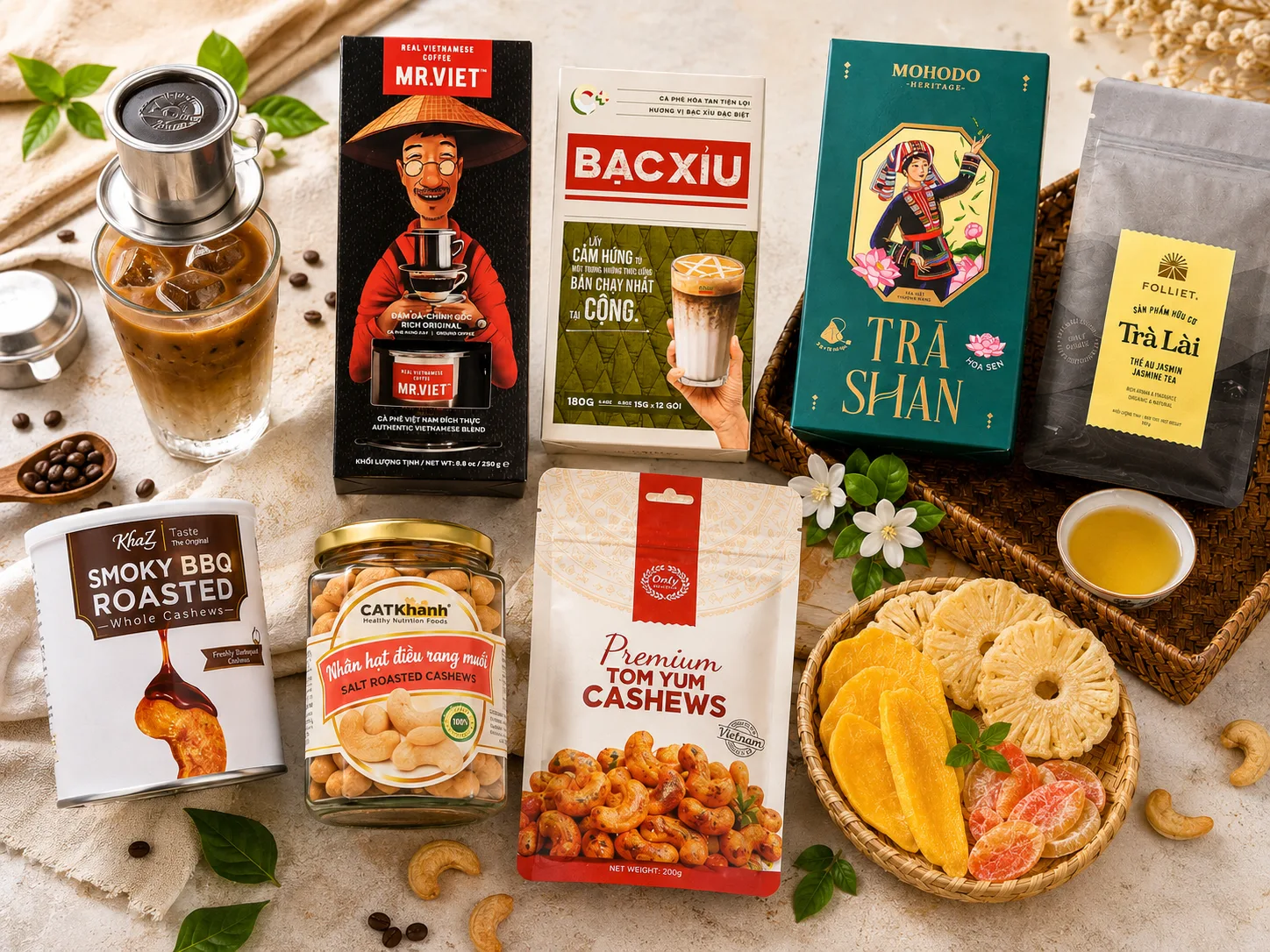
If portability and storage are priorities, Vietnamese coffee, tea, roasted nuts, packaged snacks, and certain dried fruits are among the most practical choices. Products made from animals, such as dried meat, dried shrimp, or dried squid, require additional attention because they may be subject to strict animal-product or biosecurity regulations.
Northern Vietnamese Specialties
1. Vietnamese Lotus Tea or Shan Tuyet Tea
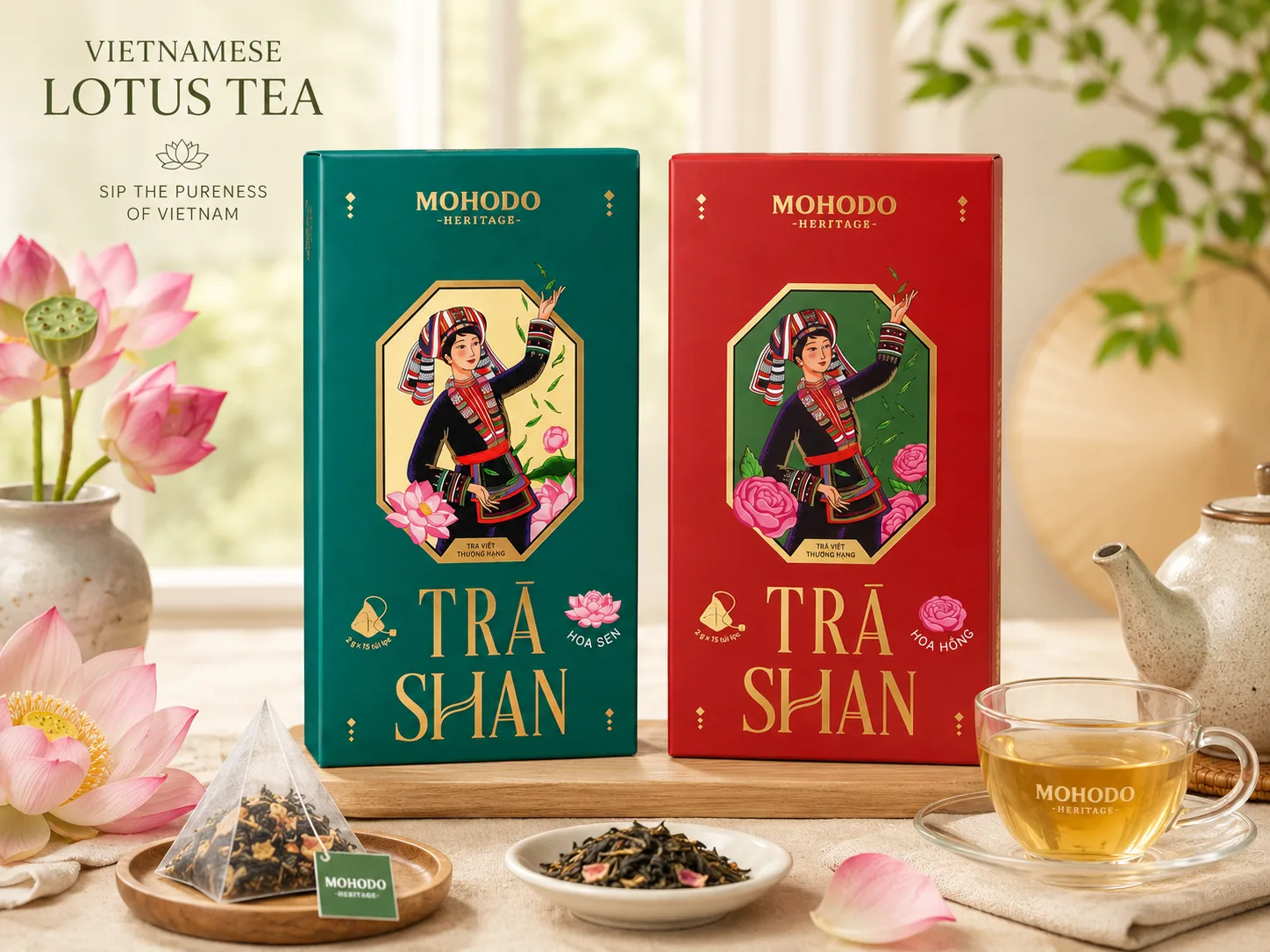
Vietnamese tea makes an elegant and lightweight gift with a strong connection to local culture. Lotus tea is especially suitable for people who appreciate traditional Vietnamese tea culture, while Shan Tuyet tea offers an opportunity to explore tea from Vietnam's mountainous regions.
For international travel, choose commercially packaged tea with the product name, ingredients, net weight, country of origin, and expiration date clearly displayed.
For travelers entering the United States, USDA APHIS lists certain tea products made from Camellia sinensis, including black, green, oolong, and white tea, among products that may be permitted. Agricultural products must still be declared when required.
2. Vietnamese Ô Mai — Preserved Dried Fruit
Ô mai is a traditional Vietnamese snack made from preserved fruits and known for its distinctive sweet, sour, salty, and sometimes spicy flavor. It is compact, easy to share, and strongly associated with Vietnamese food culture.
Commercially packaged ô mai can make a memorable Vietnamese food gift, particularly for someone who enjoys trying unfamiliar flavors. Because it contains fruit or other plant-based ingredients, travelers should still check the destination country's plant quarantine rules before packing it.
3. Vietnamese Glass Noodles and Dried Mushrooms
Packaged glass noodles and dried mushrooms can be useful gifts for Vietnamese families living overseas or anyone interested in cooking Vietnamese food at home. Their dry format makes them considerably easier to store than fresh ingredients.
However, plant-based products can still be subject to import restrictions. Travelers should check the specific requirements for grains, mushrooms, seeds, spices, and other plant materials before international travel.
Central Vietnamese Specialties
4. Dried Squid or Sun-Dried Squid
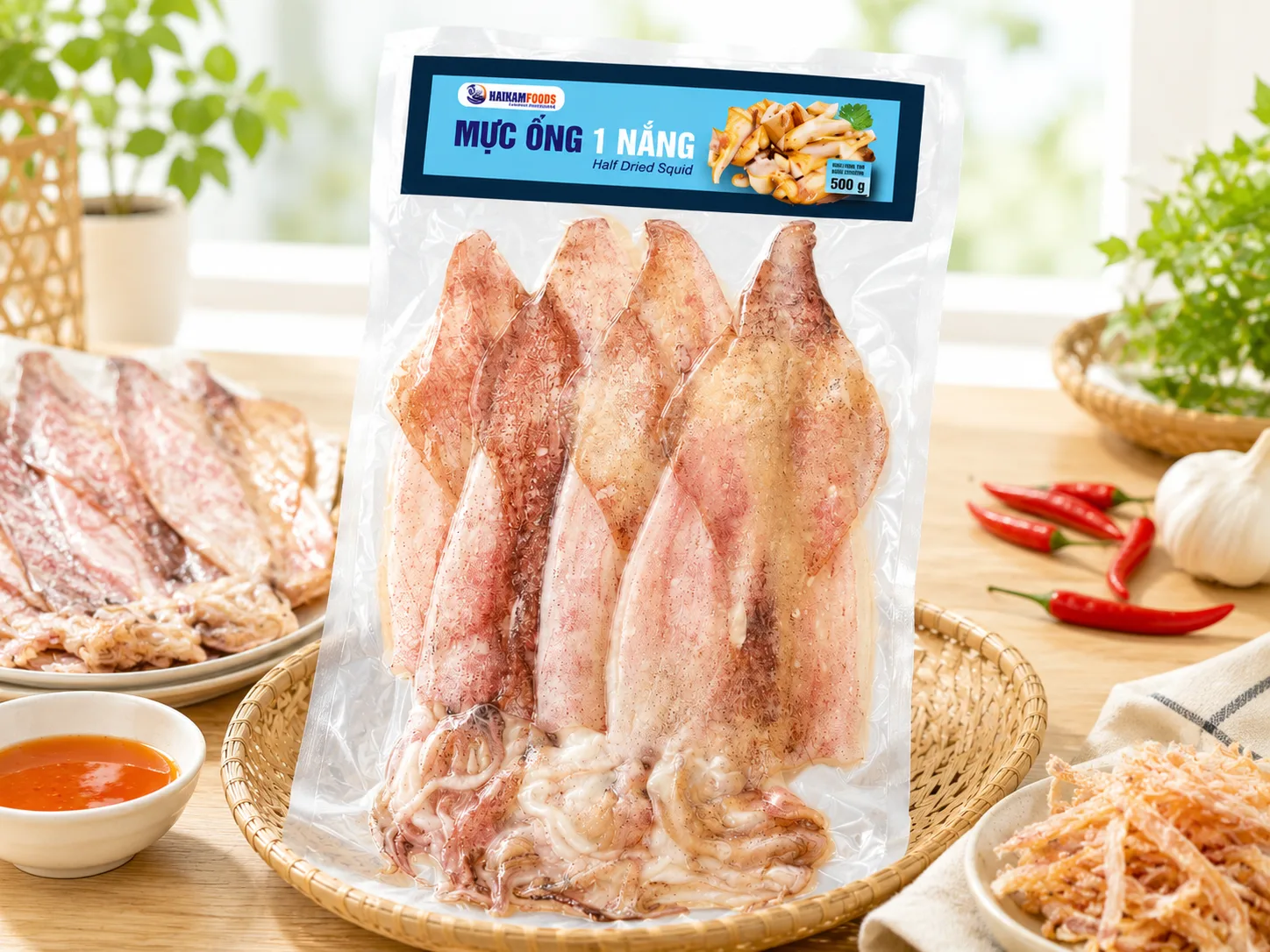
Dried squid is a distinctive Vietnamese seafood specialty and a popular choice for gifting to family members and Vietnamese communities overseas.
However, dried seafood should not be treated as a universally travel-friendly gift. Animal-derived products may be subject to inspection or import restrictions depending on the destination country.
Japan, for example, maintains strict controls on meat and many animal products, while Australia has comprehensive biosecurity requirements covering animal-derived foods. Vacuum-sealed packaging does not automatically exempt a product from these requirements.
5. Vietnamese Rice Paper and Packaged Traditional Snacks
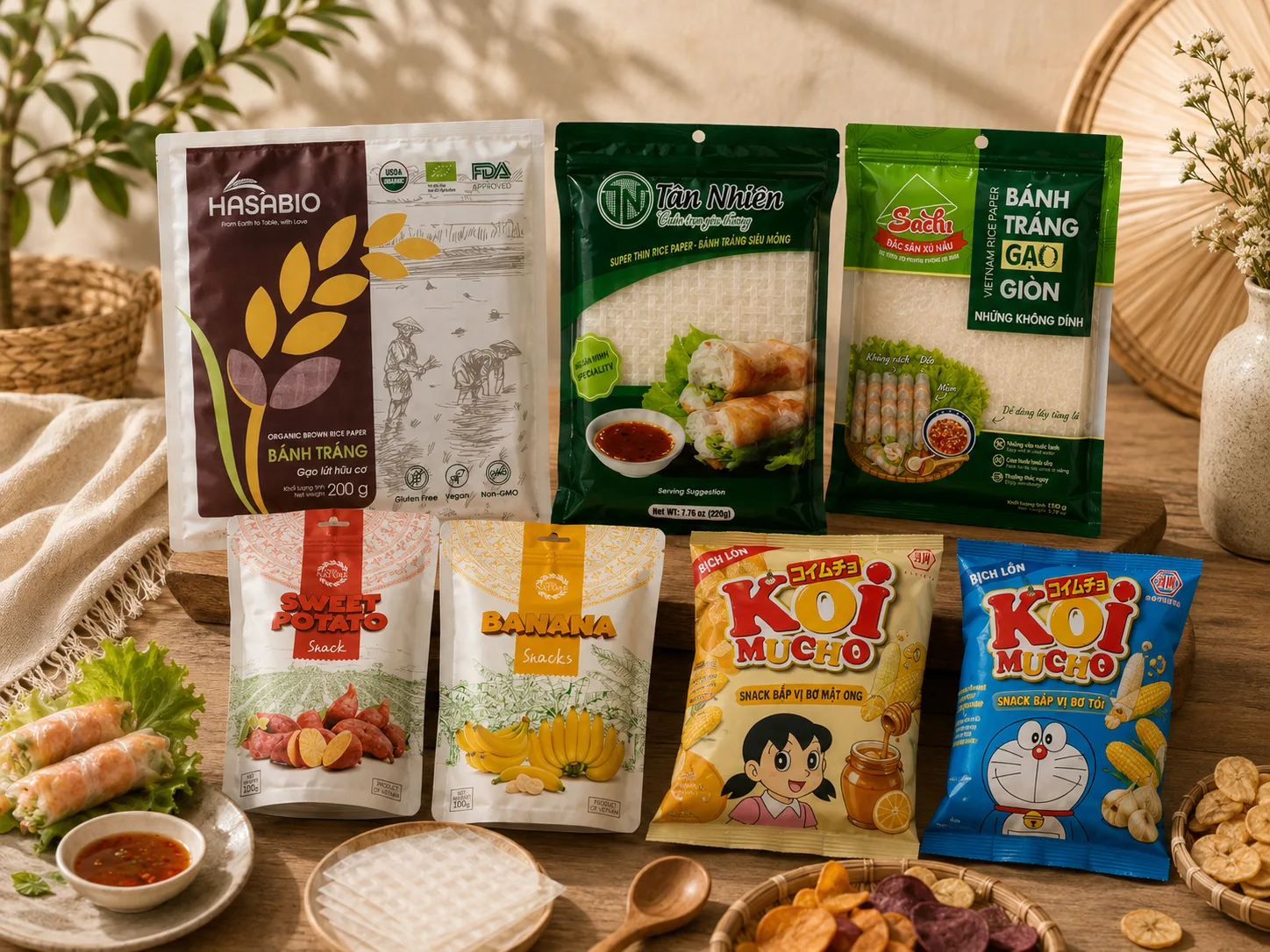
Vietnamese rice paper and other packaged dry snacks are lightweight and easy to divide among several recipients. They can be a good option when you want a simple food souvenir that still reflects Vietnamese cuisine.
Check the ingredient list carefully if the product contains meat, eggs, dairy, or other animal-derived ingredients. Products with these ingredients may face different import requirements from simple plant-based snacks.
6. Hue Royal Tea
Hue Royal Tea is a culturally meaningful gift for travelers looking for something connected to Vietnam's imperial heritage. Attractive tea boxes can also work well as gifts for business partners or international visitors.
When choosing herbal tea, check the full ingredient list rather than relying only on the word "tea" on the package. Herbal blends containing flowers, seeds, roots, or other plant materials can be subject to different import rules from conventional Camellia sinensis tea.
Southern Vietnamese Specialties
7. Vietnamese Roasted Coffee
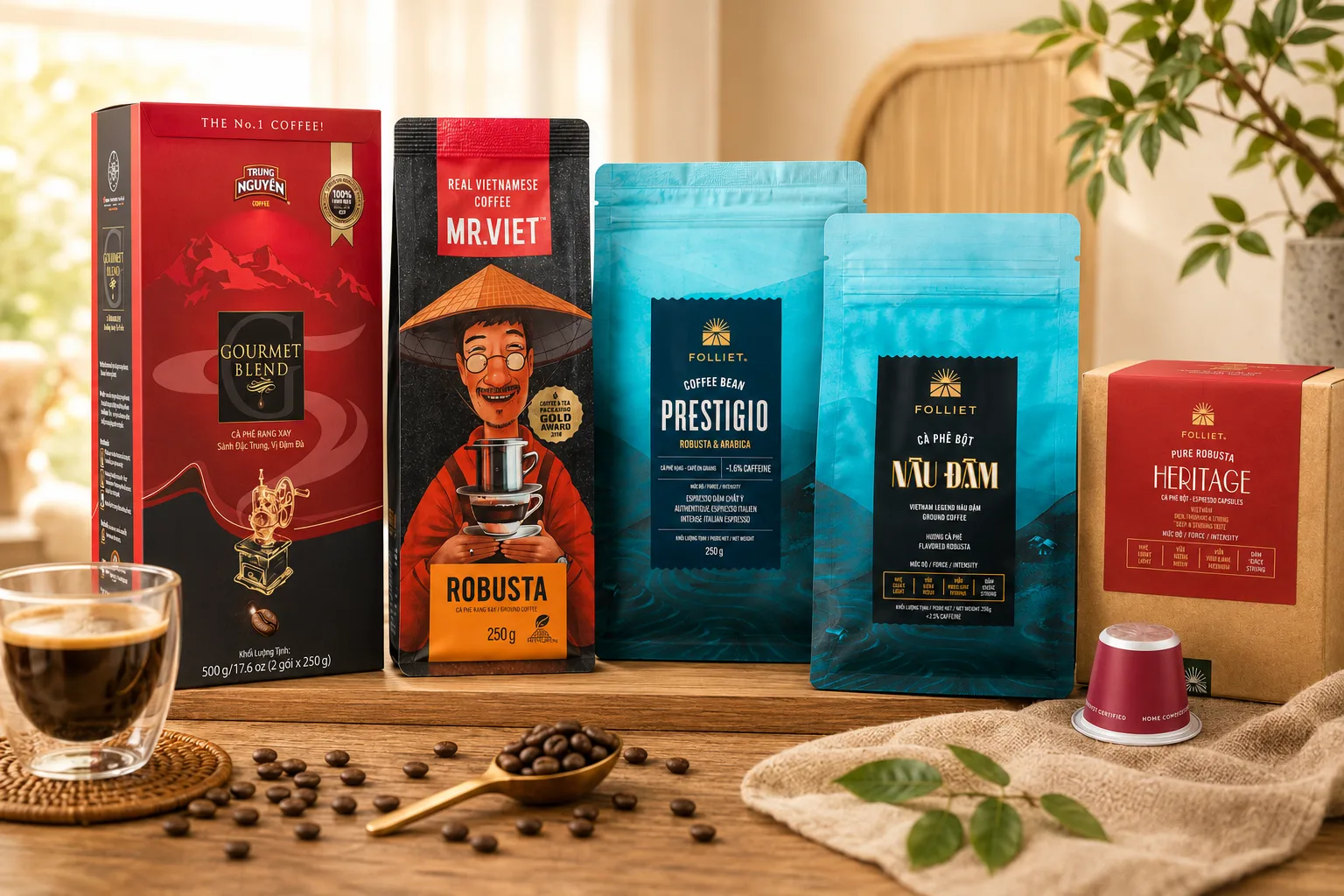
Vietnamese coffee is one of the easiest Vietnamese specialties to introduce to international friends, colleagues, and family members. Robusta from Vietnam's Central Highlands is particularly well known for its bold flavor, while Arabica and blended coffees offer different flavor profiles.
Coffee is also a practical Vietnamese souvenir because it is compact, relatively easy to store, and closely associated with Vietnam's coffee culture. Coffee and coffee-related gifts are frequently highlighted in current Vietnamese souvenir guides as travel-friendly choices.
For travelers entering the United States, USDA APHIS states that roasted coffee can be brought into the country, while agricultural products still need to be declared when required.
At ROOTS, Vietnamese coffee options such as FOLLIET Ideal Pure Robusta Ground Coffee 250 g are available with original commercial packaging, Vietnamese origin information, and product details clearly provided.
8. Binh Phuoc Roasted Cashews
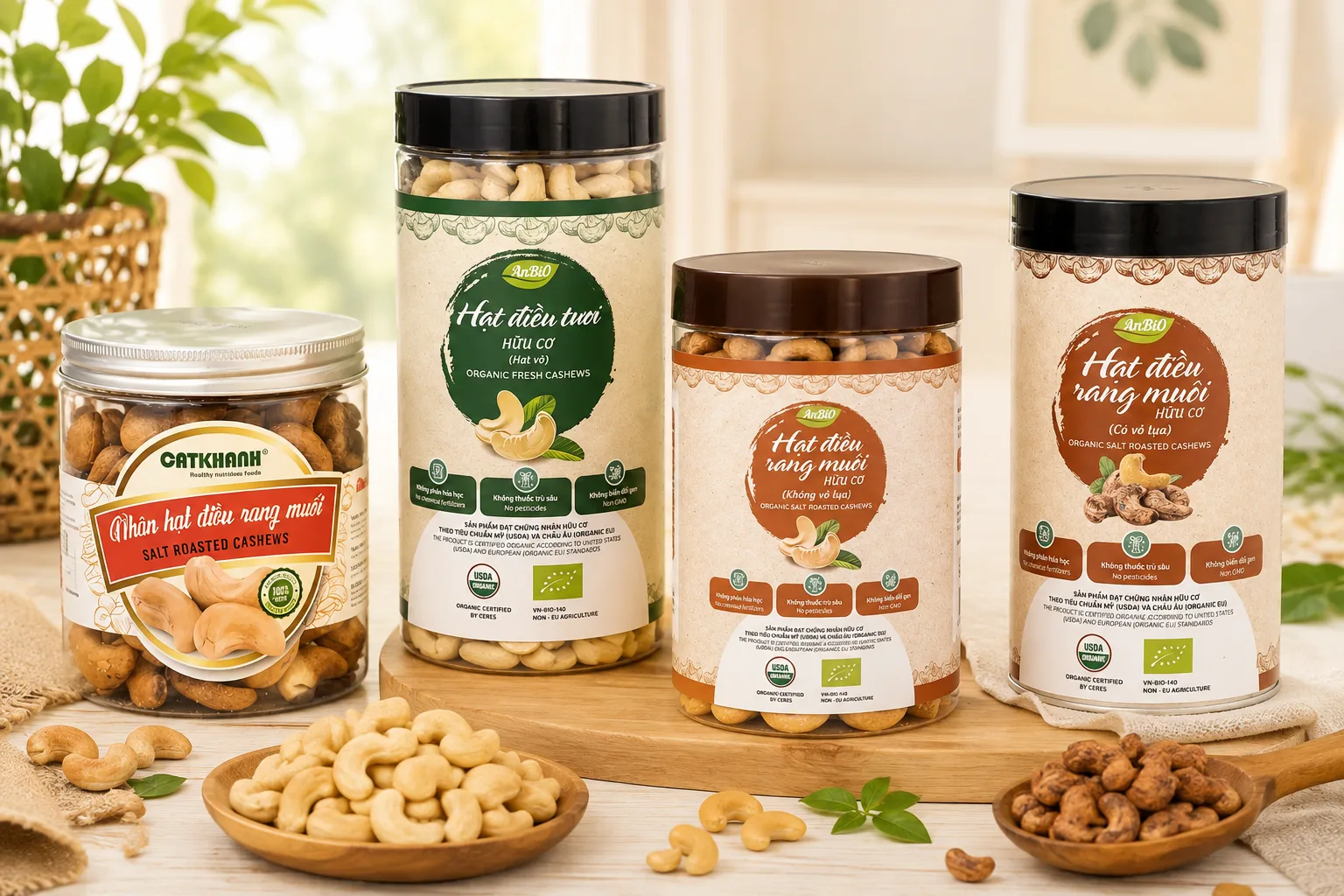
Vietnamese roasted cashews are an excellent choice for people who enjoy savory snacks. Their crunchy texture, rich flavor, and compact packaging make them suitable for family gifts, business gifts, and international visitors.
USDA APHIS lists processed nuts, including nuts that have been roasted, boiled, baked, ground, or otherwise processed, among products that may be permitted under applicable conditions. Travelers should still declare agricultural products when required, and final admission is determined at the port of entry.
Australia follows its own biosecurity requirements, so rules for the United States should not automatically be applied to Australian travel. Travelers should check Australia's current import conditions before packing nuts or other plant products.
9. Dried Ca Mau Shrimp
Dried shrimp from Ca Mau is a distinctive Vietnamese specialty with strong culinary and regional associations. It can be an especially meaningful gift for Vietnamese people living overseas who miss traditional Vietnamese ingredients.
However, dried shrimp is an animal-derived product and should not be grouped with low-risk travel gifts such as coffee or tea. Before bringing dried shrimp to the United States, Australia, Japan, or another country, check the destination's current import requirements.
10. Vietnamese Soft-Dried Tropical Fruit
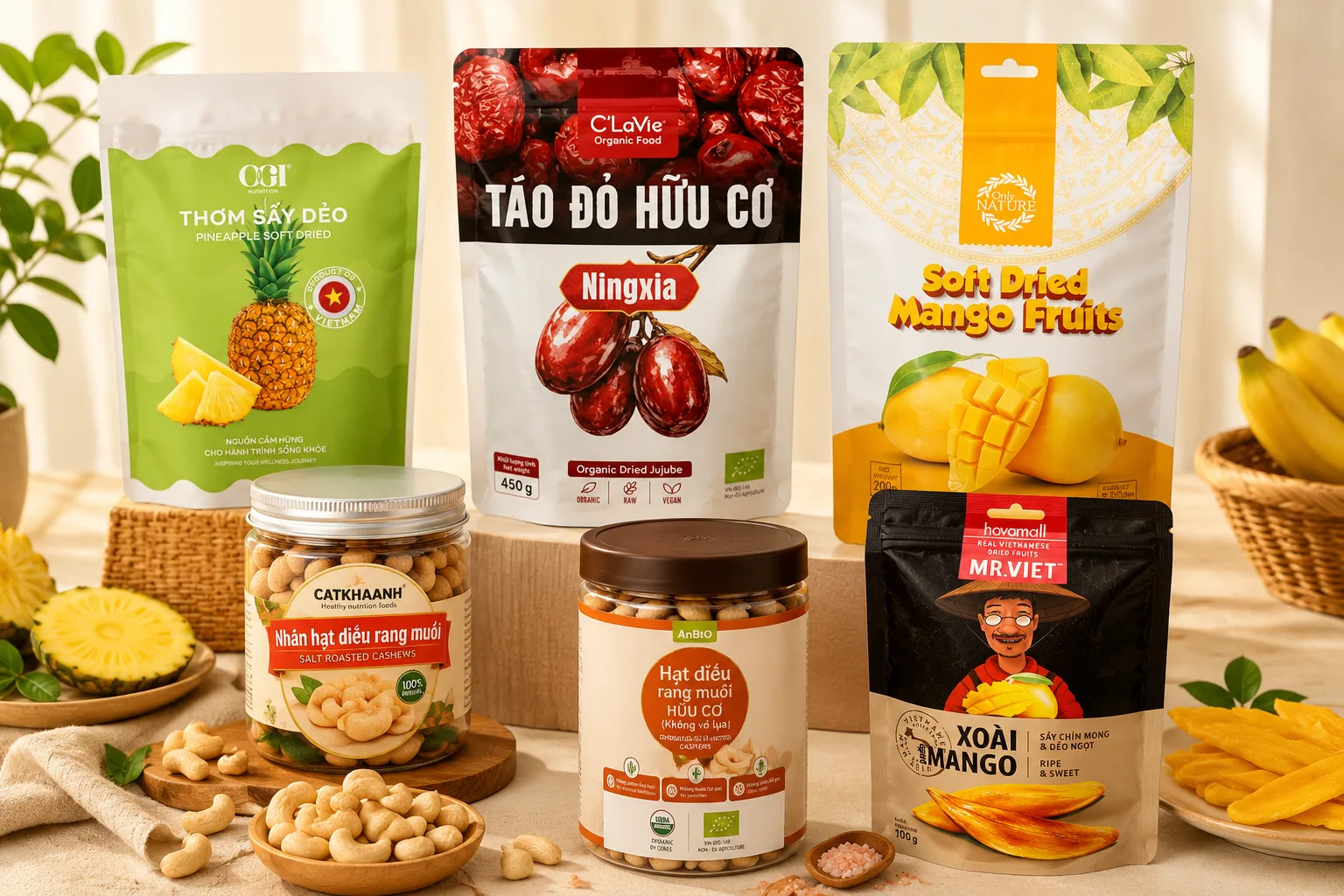
Dried mango, jackfruit, and other tropical fruits are attractive Vietnamese food gifts because they showcase ingredients associated with Vietnam's tropical climate. Dried fruit is also generally easier to transport than fresh fruit.
Nevertheless, dried fruit can still be subject to plant-health regulations. Australia's Department of Agriculture, Fisheries and Forestry, for example, applies specific conditions to different dried fruit and plant products. Travelers should check the requirements for the exact product rather than assuming all dried fruit is treated the same way.
11. Vietnamese Coconut Candy and Traditional Sweets
Ben Tre coconut candy, mung bean cakes, sesame-based sweets, and other packaged Vietnamese confectionery can make affordable and easy-to-share gifts. Individually wrapped products are especially convenient when buying gifts for several people.
Choose factory-sealed products with clear ingredient and expiration information. If a sweet contains milk, eggs, meat, or other animal-derived ingredients, check the destination country's import conditions before traveling.
12. Vietnamese Instant Coffee
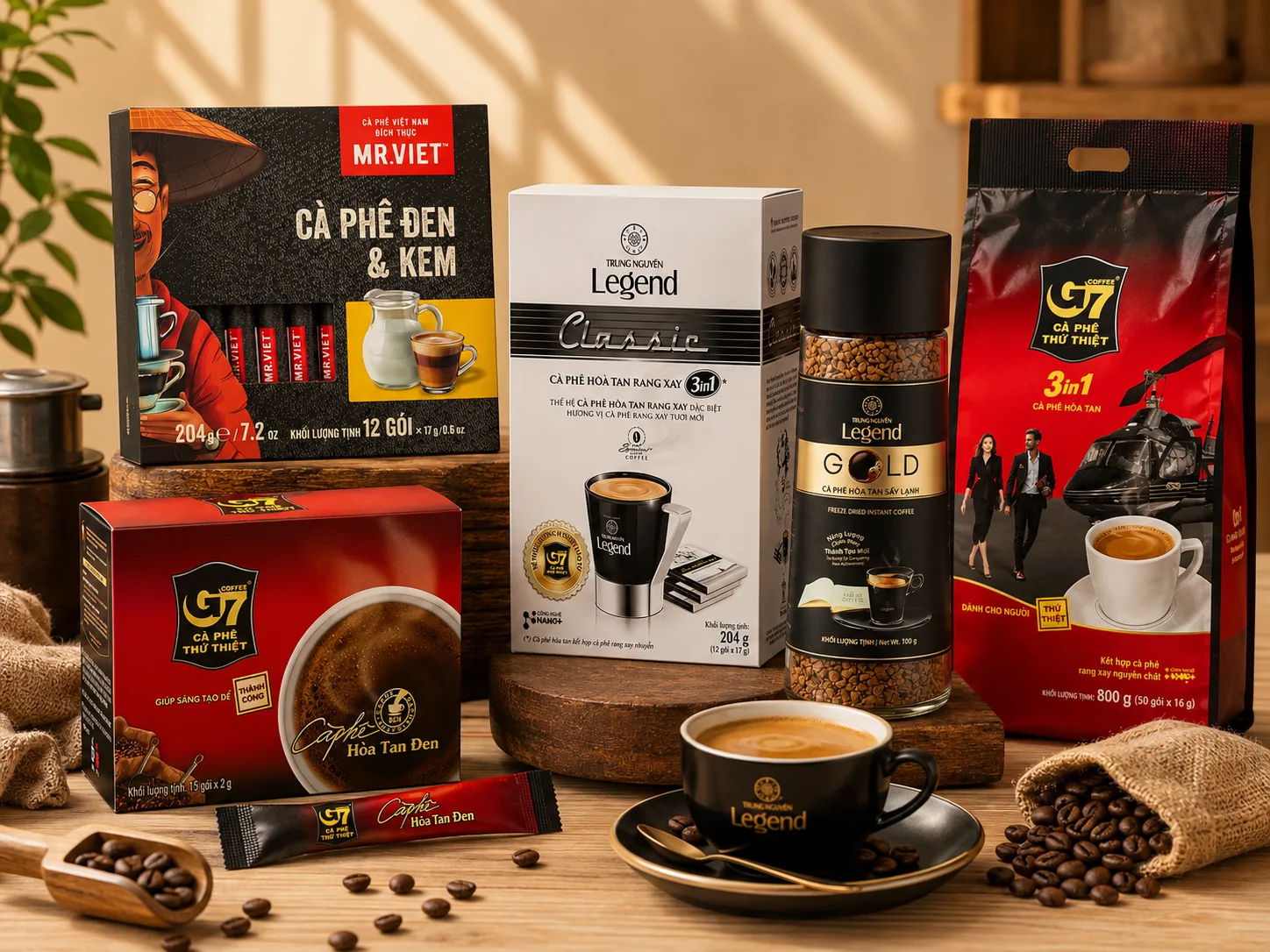
Vietnamese instant coffee is a practical choice for people who may not be familiar with traditional phin brewing or who want something convenient for work and travel.
Individual sachets are lightweight and easy to divide into gift sets. G7 3-in-1 Instant Coffee by Trung Nguyen, for example, is available at ROOTS in a 21-sachet format, making it convenient for gifting and sharing.
How to Choose Vietnamese Food Gifts for Different Recipients
The best Vietnamese food gift depends on the recipient's taste, relationship, budget, and travel destination. For international business partners, compact and easy-to-explain products such as premium coffee or tea are often practical; for Vietnamese family members overseas, traditional flavors may be more meaningful.
|
Recipient |
Recommended Vietnamese Gifts |
Approx. Budget* |
Taste & Gift-Giving Notes |
|
Foreign visitors |
Vietnamese coffee, tea, cashews, dried fruit |
VND 100,000–500,000 |
Choose approachable flavors and moderate sweetness |
|
Vietnamese expats |
Coffee, ô mai, traditional sweets, permitted dried seafood |
VND 150,000–700,000 |
Traditional Vietnamese flavors can feel especially familiar |
|
Business partners |
Premium tea, specialty coffee, roasted nuts |
VND 300,000–1,000,000+ |
Prioritize attractive packaging and clear product information |
|
Older recipients |
Tea, mild coffee, low-sugar snacks |
VND 150,000–600,000 |
Consider sweetness and caffeine content |
|
Families with children |
Packaged sweets, suitable dried fruit |
VND 100,000–400,000 |
Check sugar, allergens, and ingredients |
*Prices are general estimates and vary by brand, product size, quality, and packaging.
When a gift crosses an international border, customs eligibility should take priority over price or how "special" the food is. A commercially packaged bag of Vietnamese coffee may be a more practical international gift than an expensive dried seafood product if the destination has strict animal-product regulations.
Important Tips for Bringing Vietnamese Dried Food on Flights and Through Customs
The most important distinction when traveling with Vietnamese food is that airline security rules and food import rules are not the same thing. A food item may be allowed in your luggage but still be prohibited from entering your destination country.
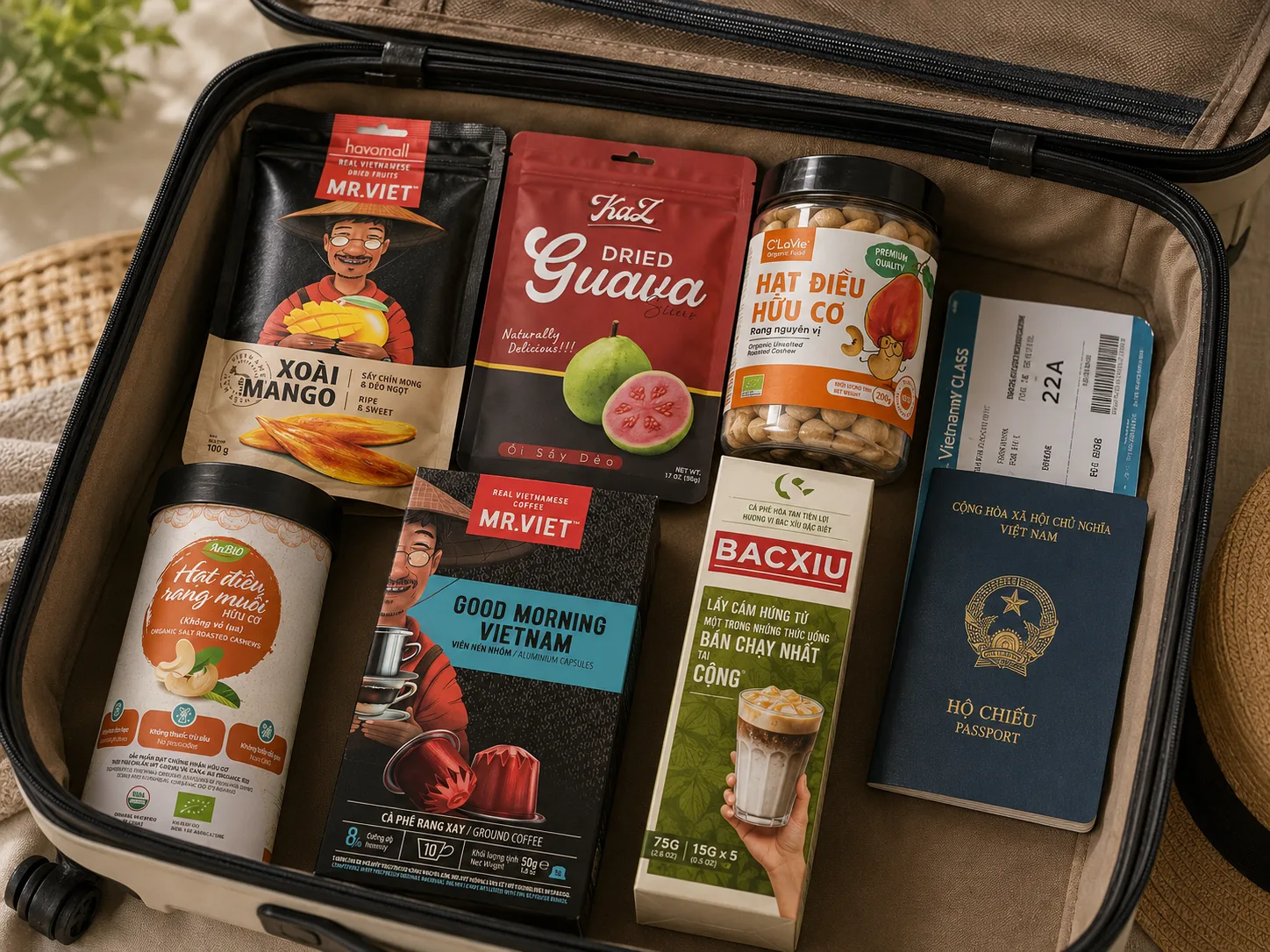
Vacuum-Sealed Does Not Mean Customs-Approved
Vacuum sealing can reduce odors, protect the product, and make packaging more secure during travel. It does not change the nature of the food or create an exemption from import restrictions.
Japan is a clear example. Japanese authorities state that meat and meat products are generally not permitted without meeting the country's quarantine requirements, including products that are vacuum-packed or cooked.
Traveling to the United States: Declare Agricultural Products
Travelers entering the United States should declare agricultural products and other regulated items when required. USDA APHIS explains that if a traveler declares an agricultural product and it is subsequently found to be inadmissible, the product can be refused entry without the traveler being penalized simply because the declared item was not allowed.
For Vietnamese food gifts such as coffee, tea, nuts, or dried fruit, keeping the original packaging and receipt can make the product easier to identify during inspection.
The safest approach is to declare the food when required rather than attempting to conceal it in your luggage.
Traveling to Australia: Check Biosecurity Requirements
Australia maintains strict biosecurity controls over food, plant materials, and animal products. Travelers are required to declare relevant food and other biosecurity risk items, which may then be inspected before entry is granted.
Meat and meat products, fruits, vegetables, nuts, seeds, and other plant materials can be subject to restrictions. Australia's Department of Agriculture, Fisheries and Forestry recommends checking the specific import conditions through BICON before bringing or mailing goods into Australia.
Traveling to Japan: Be Especially Careful With Meat and Plant Products
Japan has strict controls covering meat, meat products, and many fruits and vegetables. Dried meat, jerky, sausages, salami, bacon, and foods containing meat can be restricted or prohibited depending on the applicable requirements.
Vacuum sealing does not create an exemption from Japanese quarantine requirements. Travelers should check the latest information from Japan's animal and plant quarantine authorities before packing food products.
What Should a Food Gift Label Include?
For international travel, prioritize Vietnamese food products with:
-
A clear product name
-
Full ingredient list
-
Net weight
-
Country of origin
-
Production date and expiration date
-
Storage instructions
-
Manufacturer or responsible company information
-
Original, intact packaging and seal
Avoid transferring food into unlabelled zip bags when traveling internationally. Original commercial packaging gives customs officers more information about what the product contains and where it came from.
Carry-On and Checked Baggage Have Different Considerations
Food import eligibility is separate from airline baggage restrictions. Liquids, gels, sauces, and foods with high liquid content may be subject to airline or airport security rules.
For Vietnamese gifts such as fish sauce, sauces, drinks, or other bottled products, check the airline and departure airport's current liquid restrictions before packing. A product being legal to import into the destination country does not automatically mean it can be carried in the cabin.
Conclusion
The best Vietnamese specialties to give as gifts combine authentic Vietnamese flavor with practical packaging, reasonable shelf life, and suitability for the recipient. Vietnamese coffee, tea, roasted cashews, packaged traditional sweets, and selected dried fruits are strong options when you want a gift that is compact and relatively easy to transport.
For international travel, however, customs rules should come before convenience or price. Check the destination country's current import requirements, keep food in its original packaging, and declare food products when required. Vacuum sealing can improve packaging but does not make restricted meat, seafood, or plant products automatically admissible.
Vietnamese coffee brands such as FOLLIET and Trung Nguyen are available at ROOTS, with original products and product information provided; promotions and delivery options may vary by time and location. Before buying any Vietnamese food gift, check the ingredients, expiration date, packaging, and destination-country import rules so the gift arrives safely and is suitable for the person receiving it.