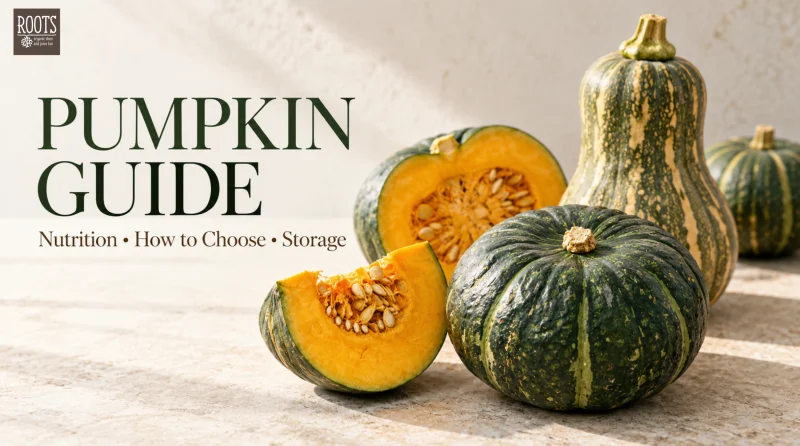
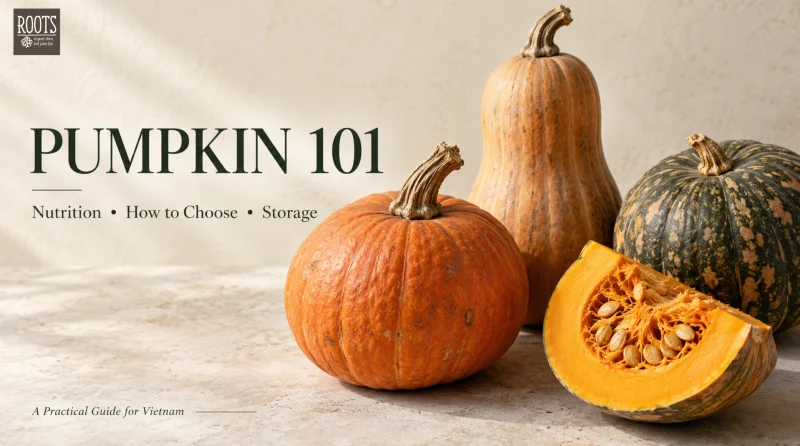
Pumpkin is relatively low in calories and provides carotenoids such as beta-carotene, which the body can convert to vitamin A. But when you are actually shopping for pumpkin in Vietnam, knowing its nutrition is only part of the job.
You may also need to work out what names such as bí đỏ tròn or bí hồ lô refer to, whether a darker orange pumpkin is necessarily better, what to inspect before buying a whole pumpkin, and how your storage method should change once the pumpkin has been cut.
The most useful rule is simple: judge a pumpkin mainly by its physical condition, not by rind color alone.
This guide covers general food and nutrition information, not individualized medical or dietary advice.
What nutrition does pumpkin provide?
Pumpkin is relatively low in calories and provides carotenoids including beta-carotene. When comparing nutrition figures, however, it is important to check whether the data refers to raw or cooked pumpkin.
Cooking changes the food's water content and composition by weight, so a value listed for 100 g of raw pumpkin should not automatically be treated as identical to a value for 100 g of cooked pumpkin.
How many calories are in pumpkin?
The raw pumpkin food-composition record lists 26 kcal per 100 g, while the boiled pumpkin record lists 20 kcal per 100 g.
|
Food state |
Reference amount |
Energy |
|
Raw pumpkin |
100 g |
26 kcal |
|
Boiled pumpkin |
100 g |
20 kcal |
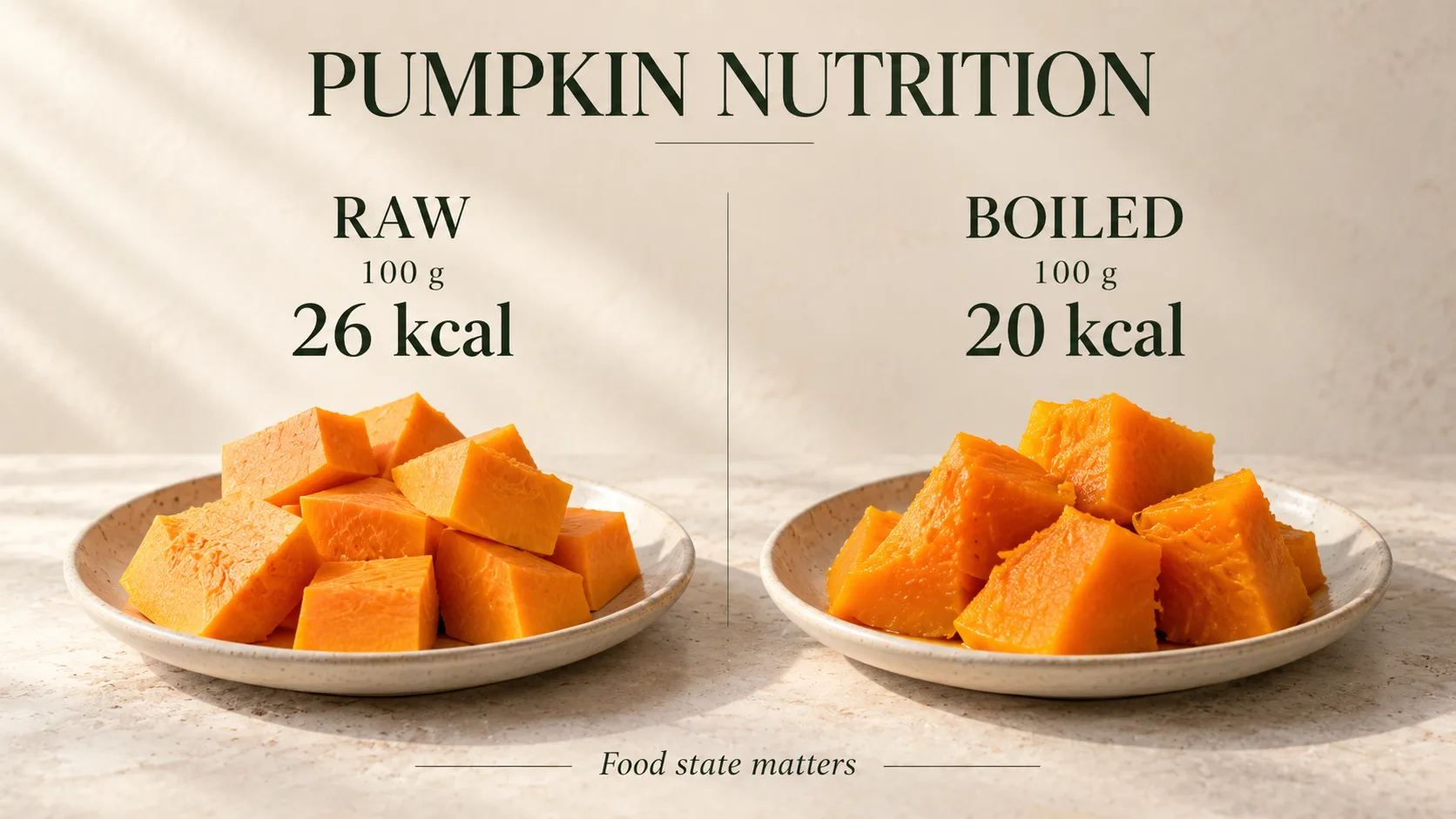
The key point is not the six-calorie difference by itself. It is that nutrition figures only make sense when you know what food state and reference amount they describe.
If you see a pumpkin nutrition number elsewhere, check whether it refers to:
-
raw pumpkin;
-
boiled or otherwise cooked pumpkin;
-
a 100 g reference amount;
-
a serving or household portion;
-
or a specific packaged pumpkin product.
Those are not interchangeable.
The values above describe pumpkin as a food in general. They should not be assigned to a particular pumpkin variety or ROOTS product unless that exact product has its own verified nutrition information.
What does beta-carotene have to do with vitamin A?
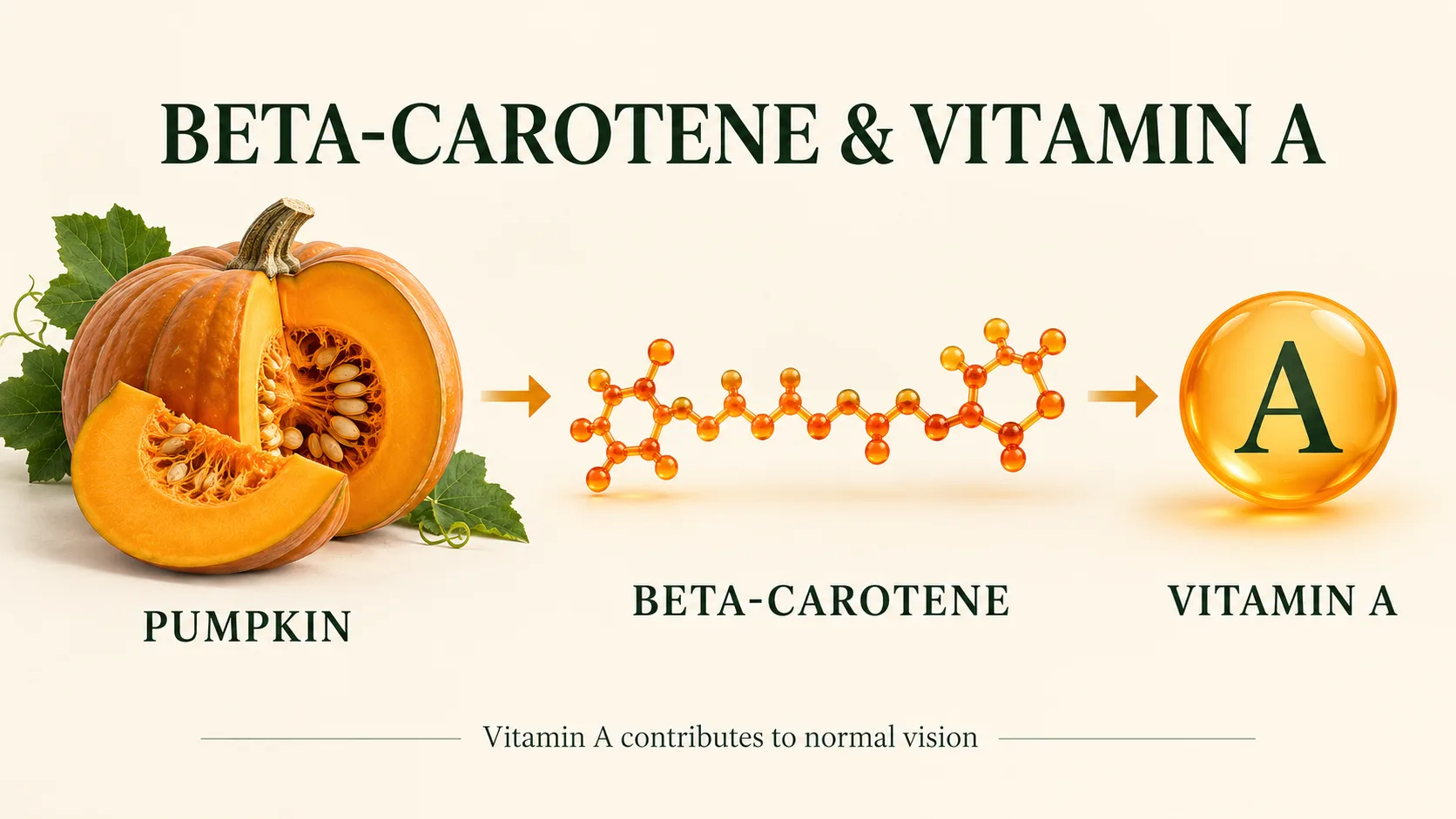
Pumpkin provides carotenoids, including beta-carotene. Beta-carotene is known as a provitamin A carotenoid, meaning the body can convert it into vitamin A.
The NIH Vitamin A and Carotenoids consumer fact sheet explains that vitamin A supports several normal functions in the body, including normal vision.
That distinction matters because nutrition articles often turn a correct statement into a much stronger claim.
It is reasonable to say:
Pumpkin provides beta-carotene, which can contribute to vitamin A intake.
It is not the same as saying:
Eating pumpkin improves your eyesight.
The first statement describes a nutrient relationship. The second would imply a health outcome that the nutrition information alone does not establish.
For everyday shopping, you do not need to rank pumpkins according to which one looks the "most nutritious." Choosing produce in good condition and eating a varied diet is more useful than trying to judge nutrient content from the outside of a single pumpkin.
What do pumpkin names in Vietnam mean?
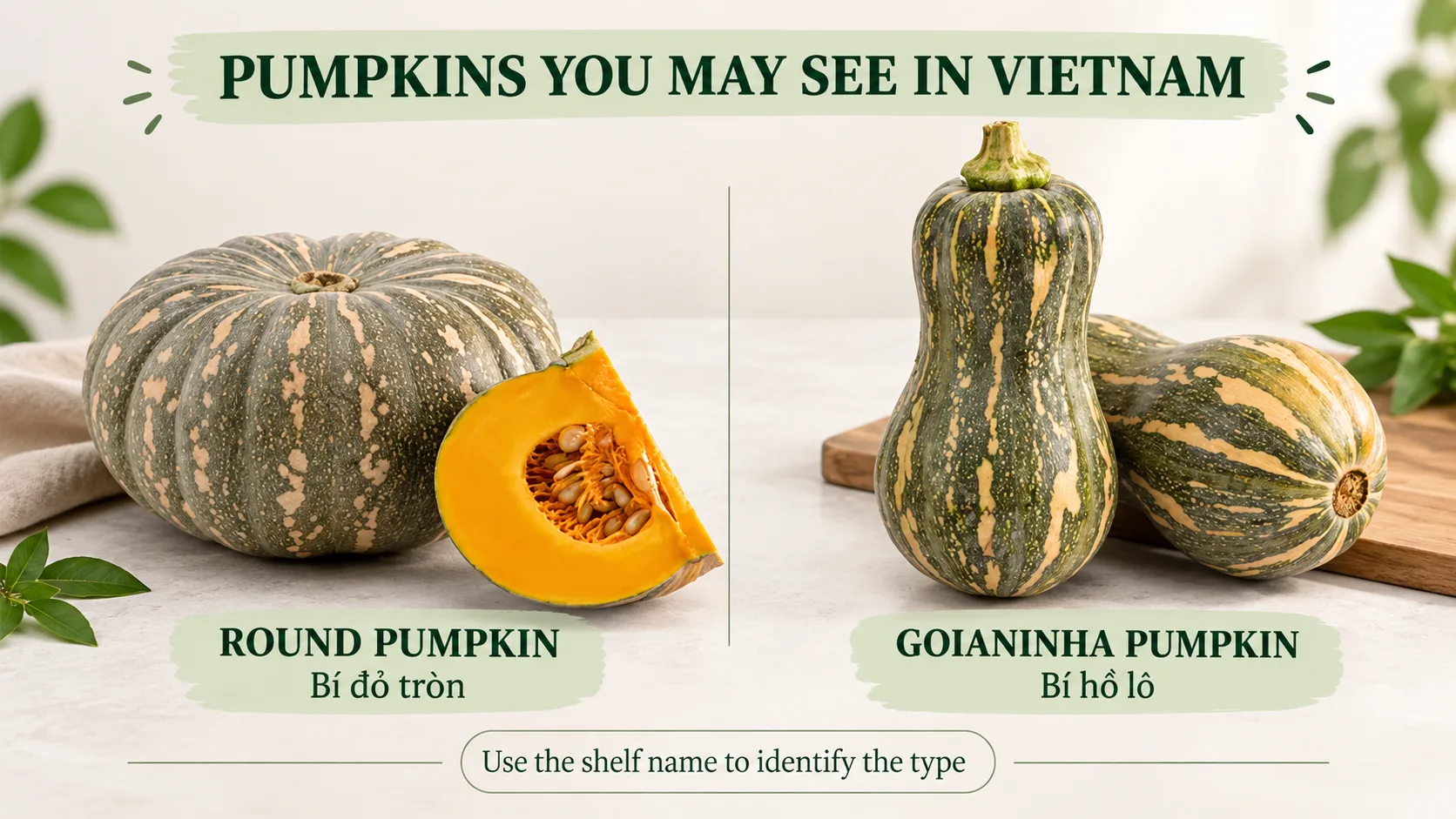
English-speaking shoppers in Vietnam may run into a surprisingly simple problem: the names on the shelf do not always match the pumpkin terminology they already know.
You may see terms such as:
-
bí đỏ;
-
bí đỏ tròn;
-
bí hồ lô;
-
or an English product name alongside a Vietnamese one.
These are useful first and foremost as shopping and identification terms.
They should not automatically be treated as exact botanical categories, nor should a difference in name or shape be turned into a claim that one pumpkin is universally sweeter, softer, healthier or better for a particular dish.
Bí đỏ tròn: Round Pumpkin
One local example is the Round Pumpkin / Bí Đỏ Tròn from THAO NGUYEN XANH, whose product page is in Vietnamese.
For an English-speaking shopper, the useful information here is visual: this gives you an example of what a product sold specifically as bí đỏ tròn may look like.
A round pumpkin can therefore act as a recognizable reference when you are scanning a produce shelf, even if you do not yet know every Vietnamese produce term.
What you should not do is transfer the general nutrition figures above directly onto this individual product. General food-composition data and product-specific data serve different purposes.
Bí hồ lô: Goianinha Pumpkin
Another example is the Goianinha Pumpkin / Bí Hồ Lô from THAO NGUYEN XANH, also on a Vietnamese-language product page.
Compared visually with a round pumpkin, bí hồ lô provides a second shape that English-speaking shoppers may encounter locally.
That visual difference is useful for recognition.
It does not, by itself, tell you that one option contains more nutrients, tastes sweeter or will always cook better than the other.
If your goal is simply to buy a good pumpkin, the next step is more practical: inspect the actual fruit in front of you.
How do you pick a good pumpkin?
A good in-store check does not need to be complicated.
Look for a pumpkin with a firm rind and a sound stem area, then inspect the entire surface for soft spots, punctures or obvious damage.
Do not use rind color alone as your quality test.
Use this 20-second pumpkin check
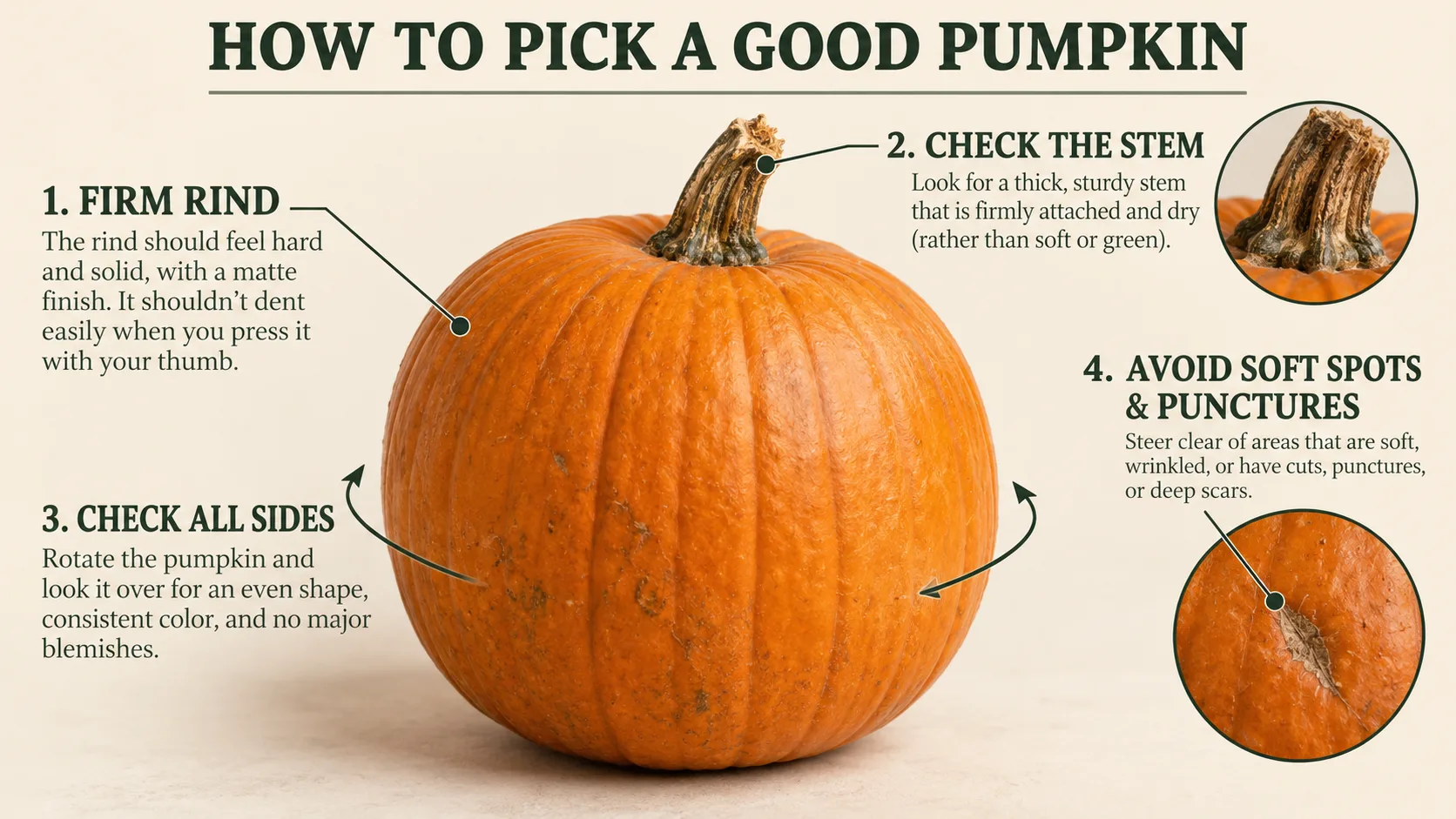
You can make the decision in four quick steps.
1. Feel the rind
The rind should feel firm rather than soft.
You do not need to squeeze aggressively. The goal is simply to notice whether the surface feels sound or whether part of the pumpkin is clearly softer than the rest.
A visually attractive pumpkin is not automatically the better choice if one area already feels compromised.
2. Check the stem area
Take a quick look around the stem and the area where it joins the fruit.
You are looking for a sound, intact-looking area rather than obvious damage or deterioration.
The stem area is easy to ignore when pumpkins are displayed with their most attractive side facing the shopper, so it is worth checking deliberately.
3. Turn the pumpkin around
Do not inspect only the side facing outward on the shelf.
Pick the pumpkin up if appropriate and look around the whole surface, including the lower side and any section that may have rested against another pumpkin or the display.
This is often where a quick visual check becomes much more useful.
4. Avoid obvious damage
Soft areas, punctures and significant surface damage are all good reasons to choose another pumpkin.
The goal is not to find a cosmetically perfect fruit. Fresh produce naturally varies in appearance.
Instead, distinguish ordinary variation from signs that the pumpkin itself is no longer in sound condition.
Colorado State University Extension's guidance on pumpkins and squash likewise emphasizes physical maturity and condition when handling these crops.
Does a darker orange rind mean a better pumpkin?
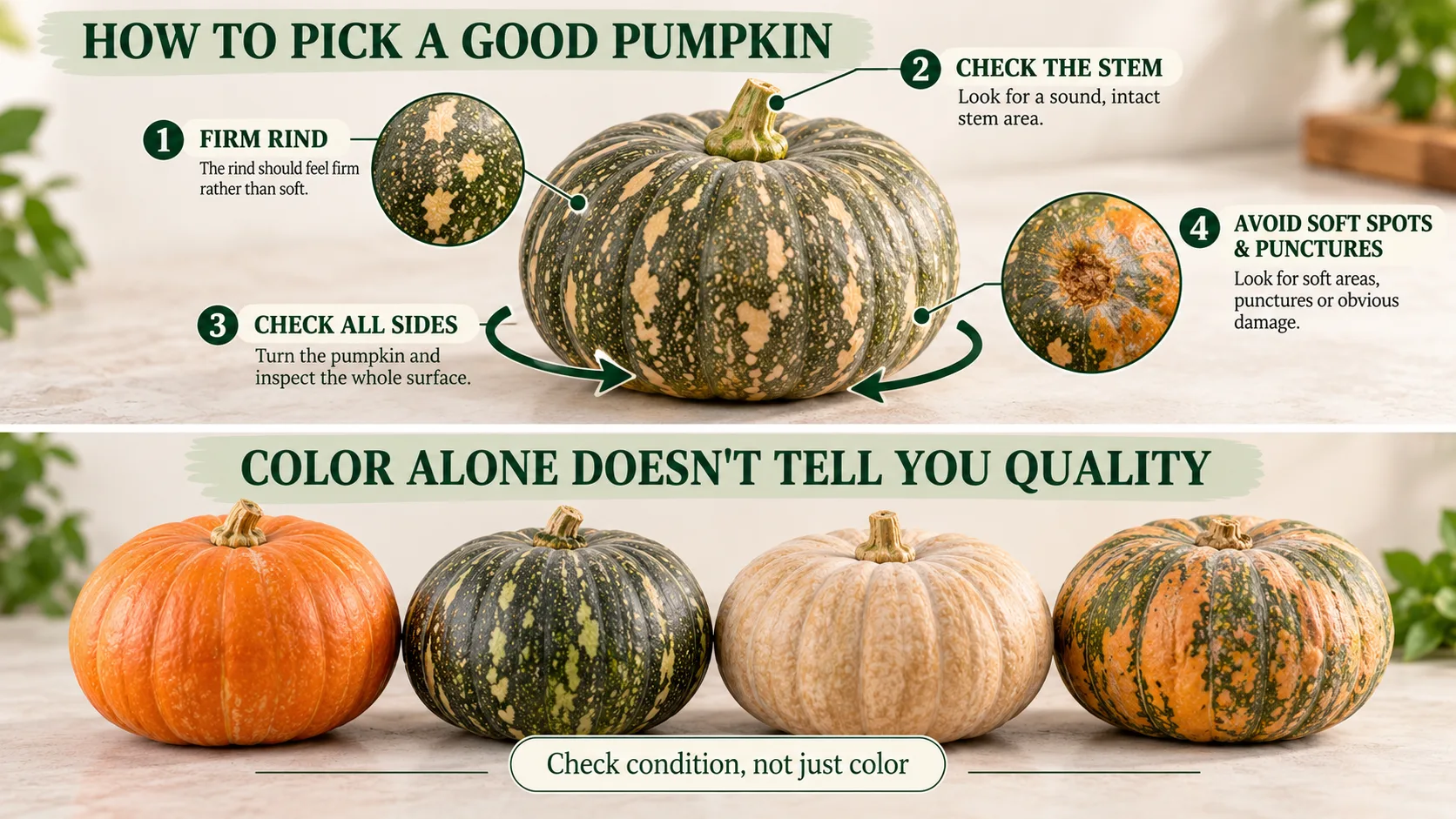
No.
Rind color alone is not a reliable quality test.
Pumpkins and related squash can naturally have different exterior colors. A good pumpkin does not have to be the darkest orange one in the display.
Depending on the type, you may encounter:
-
orange;
-
green;
-
pale;
-
mottled;
-
or mixed-color rinds.
This is why a shopper who relies only on "the more orange, the better" can easily use the wrong criterion.
Color is useful for identifying what type of pumpkin you are looking at. It is much less useful as a standalone test of whether that individual pumpkin is the best one to take home.
When deciding between two pumpkins, go back to the physical checklist:
firm rind → sound stem area → check all sides → avoid obvious damage.
That sequence tells you more than color alone.
What should you check when buying cut pumpkin?
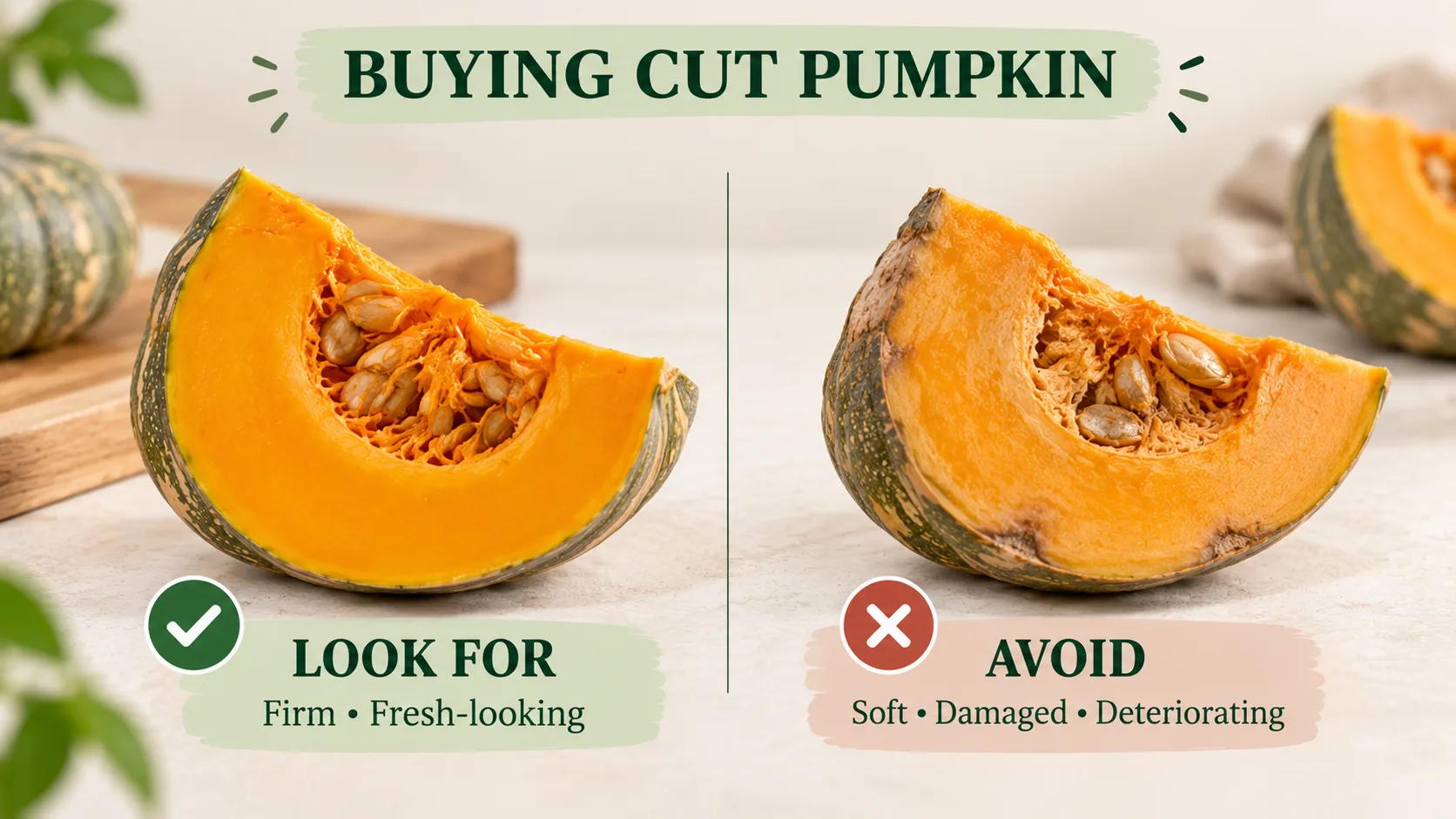
Buying a pre-cut piece changes the shopping decision because the flesh is already exposed.
You can inspect more of the pumpkin directly, but the cut surface also means the food needs different handling after purchase.
Start by looking for a piece that appears to be in sound condition without obvious deterioration or damaged areas.
If several pieces are available, compare them rather than automatically taking the first one.
You do not need to select the deepest orange flesh purely because it looks more colorful. As with rind color, appearance alone should not be turned into a nutritional ranking without evidence for the specific pumpkin.
The more important practical difference comes after purchase:
once a pumpkin has been cut, it should be handled as a refrigerated food rather than stored like an intact whole pumpkin.
That distinction is easy to miss if you regularly buy whole pumpkins and only occasionally buy a pre-cut portion.
Whole pumpkin or cut pumpkin: which is more practical?
Neither option is automatically better. They solve different shopping needs.
A whole pumpkin makes sense when you want the intact fruit and have a suitable place to keep it before cutting.
A cut portion may be more practical when you need less pumpkin at once or want to see the flesh before buying.
The trade-off is storage.
Once the fruit is cut, you lose the simplicity of keeping an intact pumpkin in appropriate cool, dry conditions. The cut portion needs to be covered or sealed and refrigerated.
So the practical decision is not really:
Which one is better?
It is:
Which amount will you realistically use, and can you store it correctly after buying?
That question is especially useful when shopping for a smaller household.
How should you store whole and cut pumpkin?
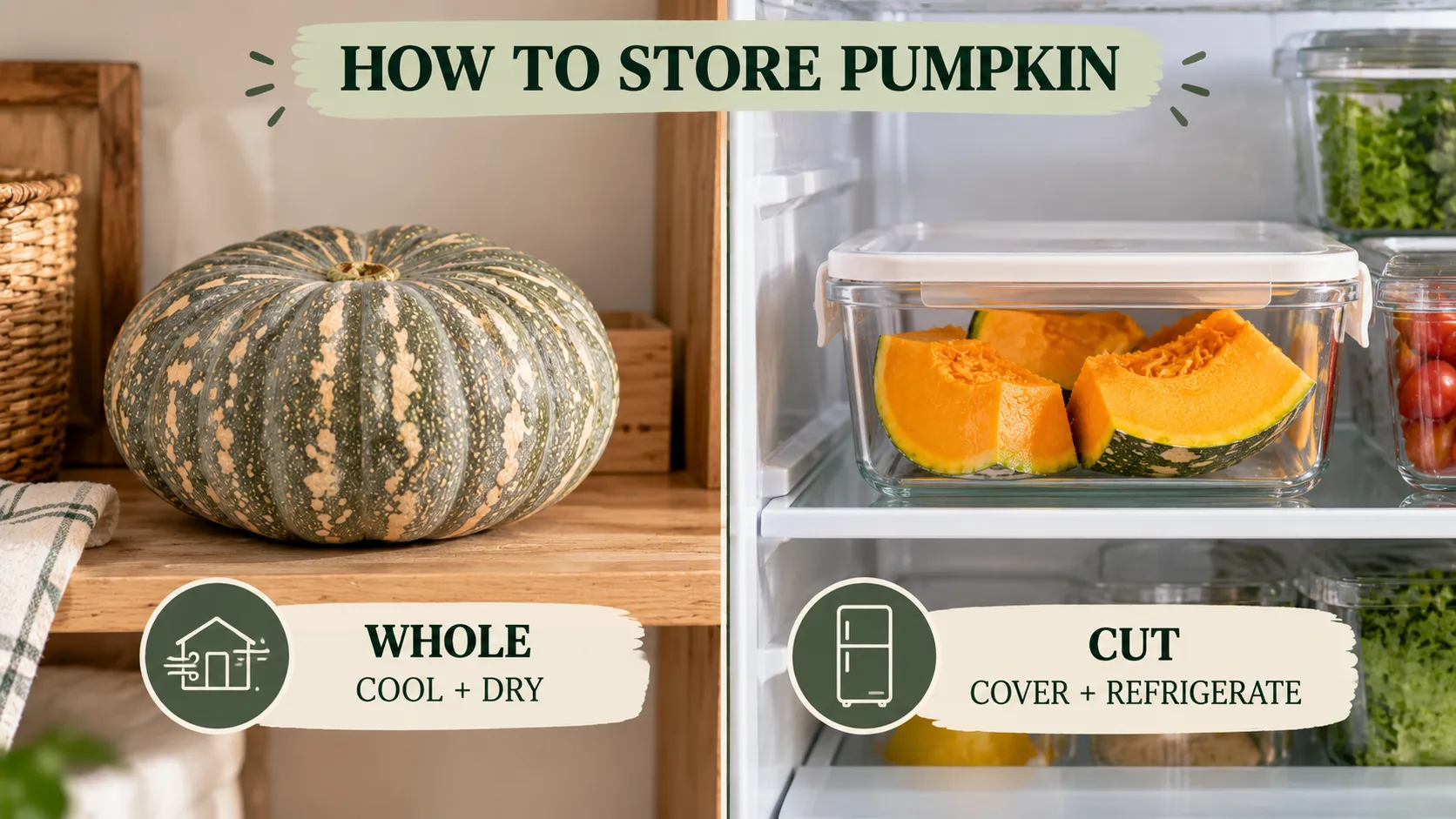
A whole pumpkin and a cut pumpkin should not be treated the same way.
Keep an intact pumpkin in an appropriately cool, dry place. Once the pumpkin has been cut, cover or seal it and refrigerate it.
Storing a whole pumpkin
For an intact pumpkin, choose a storage area that is:
-
cool;
-
dry;
-
protected from obvious physical damage;
-
and suitable for keeping the pumpkin whole.
The word cool matters.
Many English-language storage guides are written for climates where a naturally cool pantry, cellar or seasonal room temperature is realistic. That assumption may not always match a home in Vietnam.
If the place where you intend to keep a pumpkin is hot or humid, do not assume it provides the same storage conditions simply because it is away from direct sunlight.
The safest practical principle is therefore to focus on the condition of the storage environment rather than blindly applying a rule written for another climate.
You also do not need to cut a whole pumpkin immediately simply to make storage easier. Keeping it intact preserves the distinction between whole-produce storage and refrigerated cut-food handling.
Storing cut pumpkin
Once the pumpkin has been cut, the storage rule changes.
Cover or seal the cut pumpkin and place it in the refrigerator.
This applies whether:
-
you bought the pumpkin already cut;
-
you cut a whole pumpkin at home;
-
or you only used part of it for cooking.
The FoodSafety.gov guidance on maintaining food safety while reducing food waste includes refrigeration as an important part of handling perishable foods safely.
The mistake to avoid is treating the remaining cut pumpkin as though it were still an intact whole fruit.
If the whole pumpkin was previously sitting outside the refrigerator, that does not mean the cut portion should remain there as well.
Common mistakes when choosing pumpkin
A few shortcuts sound reasonable but are not especially useful once you look at what actually helps you decide.
Choosing only by color
Dark orange is not automatically better.
Use color to help identify the type, then inspect condition.
Assuming a different shape means better nutrition
Round pumpkin and bí hồ lô are visually different examples, but shape alone does not establish which one is nutritionally superior.
Use verified product information when comparing specific products.
Looking only at the front
A pumpkin can look fine from the shelf-facing side.
Turn it and inspect the full surface.
Treating whole and cut pumpkin the same way
An intact pumpkin and an opened pumpkin have different storage needs.
Once cut, cover or seal the pumpkin and refrigerate it.
Applying general nutrition figures to a specific product
A value such as 26 kcal per 100 g of raw pumpkin describes the food represented by that nutrition record.
It does not automatically become the exact nutrition value of every pumpkin sold in every store.
For a specific packaged or labelled product, use its own verified nutrition information when available.
A simple way to choose pumpkin in Vietnam
If you want one practical sequence to remember at the store, use this:
-
Identify what you are looking at.
Read the English and Vietnamese product name rather than guessing from shape alone. -
Check the rind.
Look for a firm surface. -
Inspect the stem area.
Avoid obvious deterioration or damage. -
Turn the pumpkin around.
Check more than the display-facing side. -
Ignore the urge to rank purely by color.
Different pumpkin types naturally look different. -
Decide whole or cut based on how much you will use.
-
Change the storage method once it is cut.
Cover or seal cut pumpkin and refrigerate it.
That process is more useful than trying to identify one universally "best" pumpkin.
Conclusion
When choosing pumpkin, start with what you can actually inspect: the firmness of the rind, the stem area and the condition of the whole surface.
Use names and colors to understand what type of pumpkin you are looking at, not as shortcuts for quality or nutrition.
And once the pumpkin is cut, switch from whole-produce storage to refrigerated handling.